





CUSTOMER SERVICE
www.sensors.vn
Admin@sensors.vn
www.cambien.com.vn
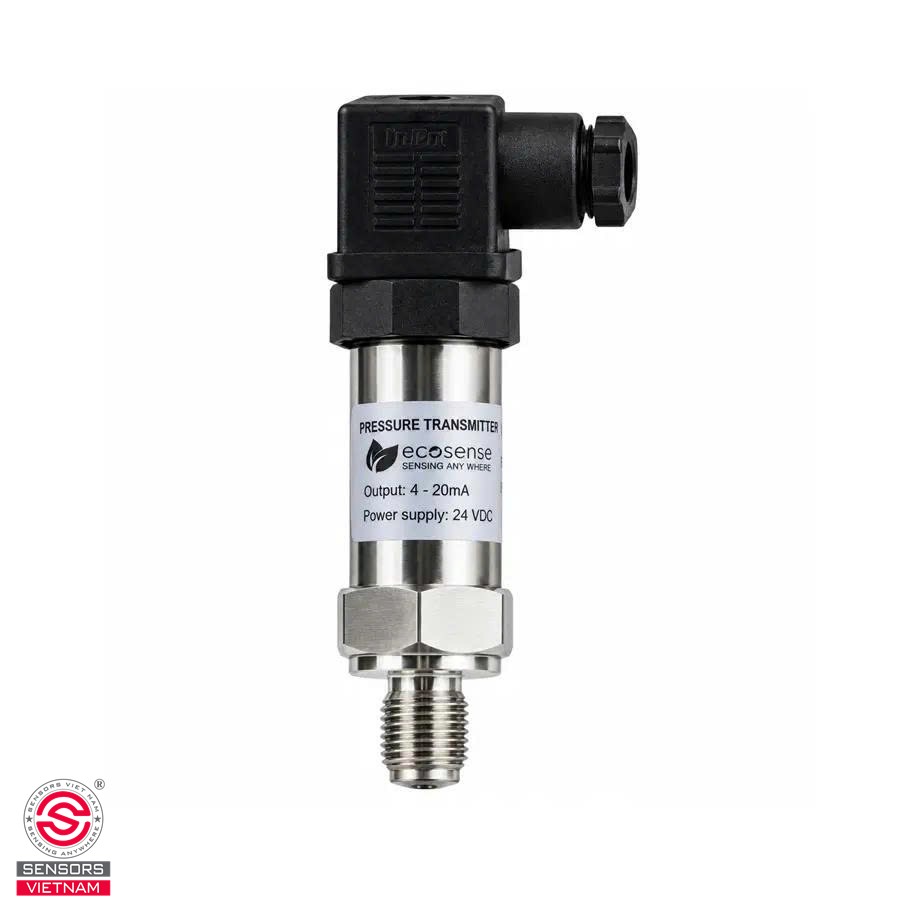
PRESSURE SENSOR 200 BAR ECOSENSE ECO-P-200-A (0-200 BAR, 4-20MA)
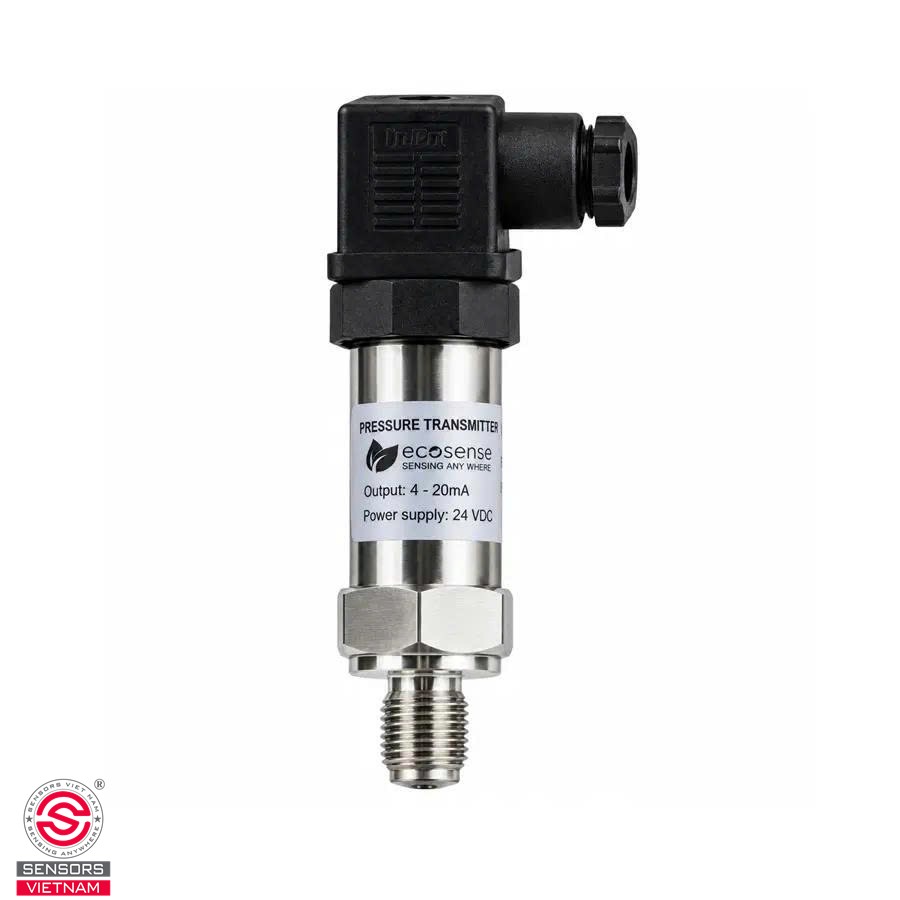
Describes: The ECO-P-200-A water pressure sensor, with 0-200 bar range, 4-20 mA output, and a 1/4-inch thread, is designed for HVAC, water supply, and pumping station applications.
ECO-P-200-A Water pressure sensor is part of the ECOSENSE pressure sensor series, designed to measure and monitor pressure in industrial systems. The product features a 0-200 bar measuring range with a 4-20mA analog output signal, suitable for water pressure measurement applications in water supply systems, HVAC systems, pump stations and chillers.
Besides water, this 0-200 bar pressure sensor is also compatible with various other media such as compressed air, oil and certain industrial fluids. With a compact design, 1/4" thread connection and stable 4-20mA signal output, the product integrates easily into control systems such as PLC, BMS, HMI and SCADA.
WHAT IS A PRESSURE SENSOR?
A pressure sensor is a device used to measure the pressure of liquids or gases, such as water, oil, compressed air and steam, then converts the measured value into an electrical signal for display, monitoring and control purposes.
When the process medium acts on the sensing diaphragm, the internal measuring element detects the deformation and converts it into an output signal corresponding to the actual pressure level. Common output signal types include 4-20mA, 0-10V and 0-5V, and some sensor series also support digital signals or industrial communication protocols.
Pressure sensors are available in various measuring ranges, from -1 to 0 bar, 0-6 bar, 0-10 bar, 0-16 bar, 0-25 bar up to 0-100 bar, 0-400 bar or higher depending on the actual requirements of each application.
In industry, pressure sensors are widely used in water supply systems, HVAC, chillers, pump stations, compressed air systems, hydraulic systems, water treatment and automation production lines. The measured signal is transmitted to PLC, HMI, BMS or SCADA systems to monitor pressure, control pumps, variable frequency drives (VFDs) and trigger alarms when pressure exceeds the set threshold.
WHAT IS A WATER PRESSURE SENSOR?
A water pressure sensor is a device used to measure water pressure in pipelines, tanks, pumps or circulation systems, then converts the measured value into an electrical signal transmitted to a PLC, HMI, BMS, SCADA or central controller.
Water pressure sensors are typically installed directly on the pipeline via a threaded connection. When water pressure acts on the sensing diaphragm, the internal measuring element detects the change and converts it into a corresponding output signal. Common signal types include 4-20mA, 0-10V or 0-5V, among which 4-20mA is preferred in industrial and HVAC applications thanks to its stable long distance signal transmission capability.
Depending on the working pressure of each system, water pressure sensors are available in various measuring ranges such as 0-1 bar, 0-4 bar, 0-6 bar, 0-10 bar, 0-16 bar, 0-25 bar, 0-40 bar and higher. Selecting the correct measuring range helps ensure accuracy and prevents the sensor from operating frequently near its maximum pressure limit.
Water pressure sensors are widely used in water supply systems, pump stations, pressure boosting systems, HVAC, chillers, cooling towers, water treatment, fire protection systems and various industrial production lines. Besides monitoring, the measured signal is also used to control pumps, variable frequency drives, trigger high or low pressure alarms and maintain stable pressure within the system.
WHAT IS A 4-20mA PRESSURE SENSOR?
A 4-20mA pressure sensor is a device that measures the pressure of liquids or gases, then converts the measured value into a 4-20mA analog current output signal. This signal is transmitted to a PLC, controller, BMS, HMI or monitoring system for display, control and pressure alarm purposes.
Within this signal range, 4mA corresponds to the lowest value of the measuring range, while 20mA corresponds to the highest value. For example, with a sensor having a 0-16 bar measuring range and 4-20mA output, a signal of 4mA corresponds to 0 bar, 12mA corresponds to approximately 8 bar and 20mA corresponds to 16 bar.
The 4-20mA signal is widely used in industry due to its long transmission distance capability, strong noise immunity and ease of detecting wire break or signal loss faults. 4-20mA pressure sensors are widely applied in HVAC systems, water supply and drainage, pumps, air compressors, hydraulic systems, pneumatic systems and industrial automation production lines.
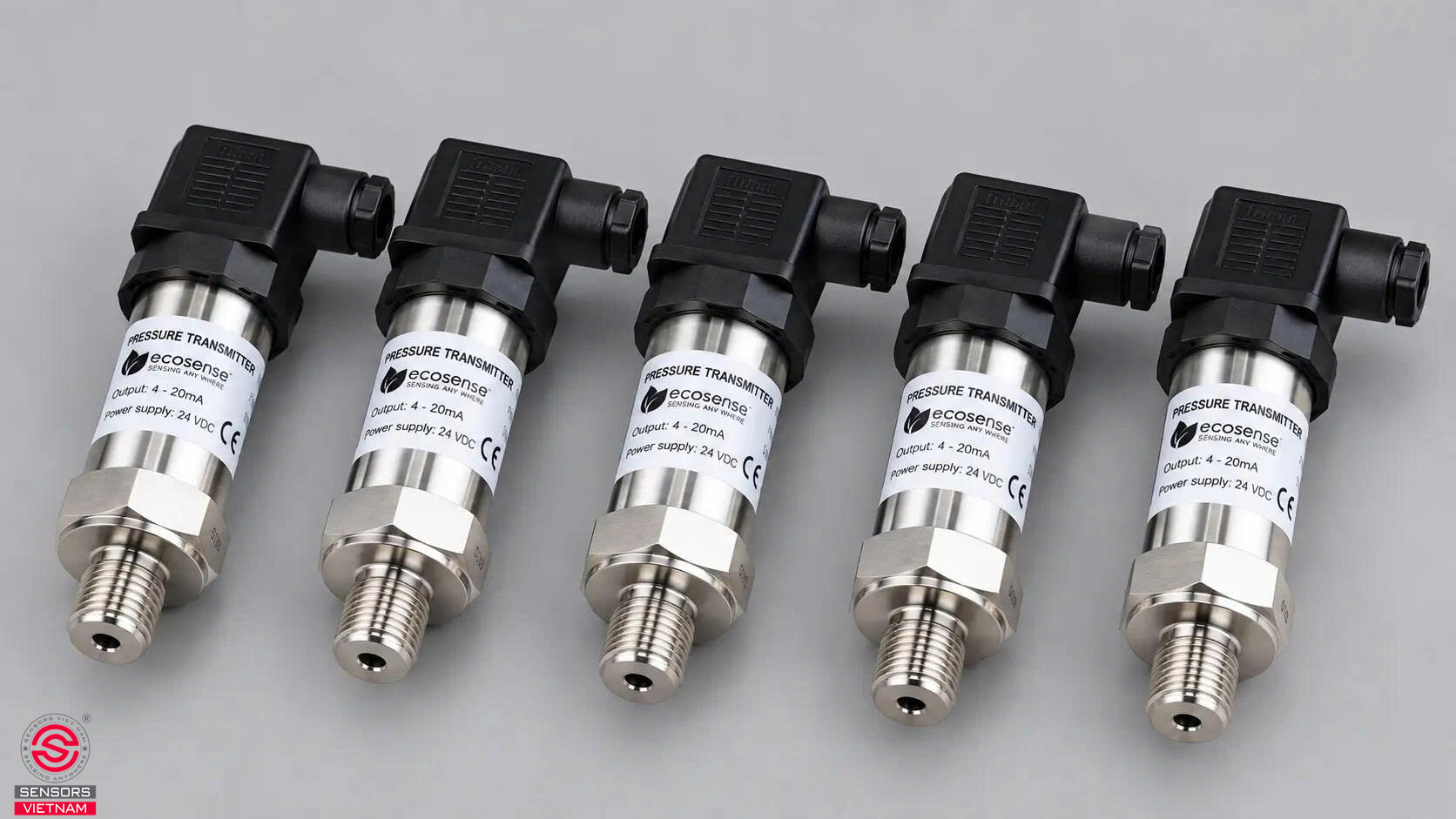 WHY CHOOSE A STAINLESS STEEL DIAPHRAGM PRESSURE SENSOR OVER A CERAMIC DIAPHRAGM SENSOR?
In many industrial applications, especially water, oil and compressed air pressure measurement, HVAC systems and machinery, sensors with a stainless steel diaphragm are often preferred due to their high mechanical durability and stable operation in harsh environments.
A stainless steel diaphragm offers excellent resistance to impact, vibration and pressure fluctuations. In systems that frequently experience pressure changes or pressure surges, metal construction generally has a mechanical durability advantage over ceramic, which is a hard but brittle material and can be more sensitive to strong mechanical impact.
Another advantage of a metal diaphragm is the ability to form a welded, sealed structure, reducing the need for gaskets in areas in contact with the process medium. This helps improve reliability and reduce the risk of leakage in suitable applications. In addition, stainless steel offers good corrosion resistance against many types of water, oil and other industrial media.
CONSTRUCTION AND DESIGN OF THE ECO-P-200-A WATER PRESSURE SENSOR
The ECO-P-200-A water pressure sensor features a compact, sturdy design, convenient for direct installation on pipelines and industrial equipment. The part in direct contact with the process medium uses a metal sensing diaphragm, capable of withstanding pressure and maintaining measurement stability throughout operation.
Inside the sensor is a pressure sensing element responsible for converting the mechanical action of pressure into an electrical signal. The outer housing protects the internal components during operation, while the 1/4" thread connection makes installation, replacement and maintenance more convenient.
With a simple construction and high durability, this 200 bar pressure sensor is suitable for systems requiring continuous pressure measurement in factories, buildings and water treatment systems.
OPERATING PRINCIPLE OF THE ECO-P-200-A 0-200 BAR PRESSURE SENSOR
Pressure sensors operate based on the change in the sensing element when subjected to the pressure of the process medium. When water, compressed air, oil or other fluids act on the sensing diaphragm, the deformation of the diaphragm is detected by the measuring element and converted into an electrical signal corresponding to the actual pressure value.
Within the 0-200 bar measuring range, the sensor converts the measured value into a 4-20mA analog signal. This signal type can be transmitted over relatively long distances and is minimally affected by electrical interference, making it suitable for industrial automation systems.
When powered by a 24VDC power supply, the 4-20mA signal can be sent directly to a PLC, controller, HMI, BMS or SCADA system for pressure display, monitoring, alarm and control purposes.
ADVANTAGES OF THE ECO-P-200-A PRESSURE SENSOR
One of the standout advantages of the ECO-P-200-A is its 0-200 bar measuring range combined with a standard 4-20mA output, allowing the product to integrate easily into existing control and monitoring systems. The compact design helps save installation space, especially in pipeline clusters, control cabinets and pump stations.
The common 1/4" thread connection makes installation and replacement convenient. The 4-20mA signal is also well suited to industrial environments, where sensors are often installed far from the PLC or central controller.
WIRING GUIDE FOR CONNECTING ECOSENSE PRESSURE SENSORS TO PLC AND CONTROLLERS
ECOSENSE ECO-P series pressure sensors commonly use a 4-20mA signal, 2 wire connection and a rated 24VDC power supply, suitable for transmitting pressure signals to a PLC, controller, BMS or monitoring system.
For the 4-20mA 2 wire version, the wiring is done as follows. Pin 1 (+VDC) connects to the positive terminal of the 24VDC power supply. Pin 2 (4-20mA) sends the current signal to the AI+ input of the PLC or controller. The AI/COM terminal of the PLC or controller is connected to the negative terminal (0VDC) of the power supply to complete the 4-20mA current loop.
After wiring is complete, configure the analog input of the PLC or controller to 4-20mA mode and scale it according to the sensor's measuring range. For example, with the ECO-P-200-A having a 0-200 bar measuring range, a 4mA signal corresponds to 0 bar and 20mA corresponds to 200 bar.
TECHNICAL SPECIFICATIONS OF THE ECO-P-200-A PRESSURE SENSOR
- Model: ECO-P-200-A
- Pressure measuring range: 0-200 bar
- Output signal: 4-20mA
- Power supply: 24VDC
- Pressure connection: 1/4" thread
- Sensing diaphragm: stainless steel
- Origin: ECOSENSE/Taiwan
- Warranty: 12 months
- Certificate: full CO/CQ
Sensors Vietnam supplies ECOSENSE pressure sensors in Vietnam, offering consultation on selecting the appropriate measuring range, guidance on 4-20mA signal wiring and proposing pressure measurement solutions for HVAC, BMS, water treatment and industrial automation applications.
Latest products


SENSORS VIETNAM CO., LTD
VAT CODE: 0313 355 473
Head Office: 03rd Floor, Indochina Tower, 04 Nguyen Dinh Chieu, Tan Dinh Ward, Ho Chi Minh City, Vietnam.
HCM Branch: 92/14/9A Vuon Lai Str., An Phu Dong Ward, Ho Chi Minh City, Vietnam.
Hanoi Branch: S106 Tower, Vinhomes Smart City, Tay Mo Ward, Hanoi City, Vietnam.

® Registered trademark – National Office of Intellectual Property Vietnam
OUR SERVICES
Specializing in the import and distribution of industrial sensors.
Sensors for HVAC/R systems and building automation applications.
Supplying gauges, transmitters, switches, controllers, PLCs, HMIs, and gas detectors.
Providing integrated consulting services for sensor and controller systems.


CONTACT US
Email: sales(at)sensors.vn
Hotline: +84 0911 660 660
Asia Commercial Bank Account (ACB):
VND: 357 246 888 | USD: 1357 246 888
Support Online ZALO Official Account
(From 8:00 am to 5:00 pm)





SENSORS VIETNAM CO., LTD
- Specialized in the import and distribution of sensors and controllers.
- Integrated data acquisition systems and industrial communication solutions.
- Design and installation of smart home systems and industrial equipment.
- Stack lights, signal beacons, LED warning horns, and RGB warning lights.