





DỊCH VỤ KHÁCH HÀNG
www.sensors.vn
Admin@sensors.vn
www.cambien.com.vn
ĐỒNG HỒ ÁP SUẤT CHÂN ĐỨNG 4 BAR MASS 100-WPS-S-L-04-L-0/4 BAR-=-CD4
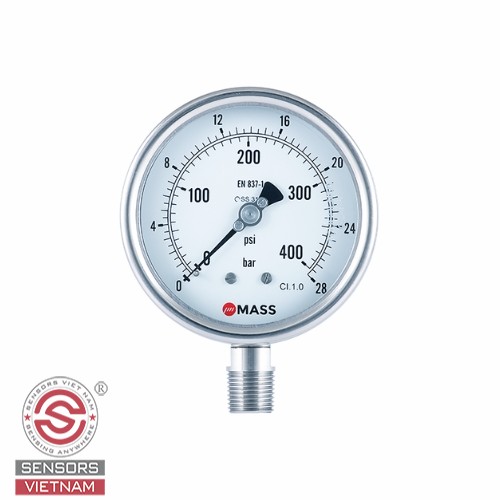
Mô tả: ĐỒNG HỒ ÁP SUẤT CHÂN ĐỨNG 4 BAR 100-WPS-S-L-04-L-0/4 BAR-=-CD4, ĐỒNG HỒ ĐO ÁP SUẤT 1 BAR, ĐỒNG HỒ ĐO ÁP SUẤT, ĐỒNG HỒ ĐO ÁP SUẤT NƯỚC, ĐỒNG HỒ ĐO ÁP SUẤT KHÍ, ĐỒNG HỒ ÁP LỰC, ĐỒNG HỒ ÁP LỰC NƯỚC, ĐỒNG HỒ ÁP SUẤT
Pressure gauges 100-WPS-S-L-04-L-0/4 BAR-=-CD4 MASS - INDIA which are devices that measure the internal pressure of media within a system, are among the most often used instruments in any given industrial facility. Pressure measurement is, along with temperature measurement, one of the most important measurements for operations in a wide variety of applications – especially industrial applications – and it is essential in ensuring both the quality of a product and the safety of a facility and its personnel.
A pressure gauge is a method of measuring fluid, gas, water, or steam intensity in a pressure powered machine to ensure there are no leaks or pressure changes that would affect the performance of the system. Pressure systems are designed to operate within a specific pressure range. Any deviation from the acceptable norms can seriously affect the workings of the system.
Pressure gauges have been used for more than a hundred years and have been constantly evolving to fit the needs of new applications. The implementation and use of pressure gauges has made them a necessity as more and more pressure systems become operational.
The variations in pressure gauges are dependent on where the gauge will be used, with different sizes, styles, and materials designed to fit specific applications. There are several ways pressure gauges are categorized and defined, including by usage, media, and the method used to measure pressure.
Pressure is determined by the perpendicular force applied per unit area of a surface, a calculation that is determined through the use of different techniques and methods. The correct measurement of pressure is dependent on the reference the pressure reading is measured against. Pressure gauges are divided into hydrostatic and mechanical.
Hydrostatic Pressure: Hydrostatic pressure is generated by the weight of a liquid above a measurement point when the liquid is at rest. The height of the liquid influences the hydrostatic pressure. The hydrostatic properties of a liquid are not constant and are influenced by liquid density and gravity, (both of which determine hydrostatic pressure).
Mechanical Pressure: Mechanical pressure is measured by a bellows, diaphragm, or Bourdon tube that converts fluid pressure into force.
In the discussion of pressure, it is important to understand some of pressure‘s other dynamics, which are absolute, gauge, differential, and atmospheric. Everyone is familiar with atmospheric pressure; it is discussed as part of weather reports, it is the pressure of the air around us. Absolute, differential, and gauge pressure are methods for measuring pressure.
Absolute Pressure Absolute pressure is when pressure is measured relative to a vacuum.
Gauge Pressure: Gauge pressure is pressure relative to the atmospheric pressure. This form of pressure is positive when it is above atmospheric pressure and negative when it is below atmospheric pressure.
Differential Pressure: Differential pressure measurement is measuring the difference between two types of applied pressure. This form of pressure measurement does not have a reference but measures the two applied pressures.
Absolute pressure gauges are used to measure pressure independent of the natural fluctuations in atmospheric pressure. A reference vacuum is attached to the side of the measuring element, which is not subject to pressure; it has zero pressure with no variation. A diaphragm separates the media chamber from the vacuum chamber and deforms into the vacuum chamber as pressure rises. The deformation and change is converted into a pressure value.
Unlike other pressure gauges, absolute pressure gauges are not influenced by changes in altitude, which makes them ideal for use in aeronautics, HVAC systems, and distillation processes.
Bourdon tube pressure gauge has an elastic tube that is soldered or welded on one end into a socket. A change in pressure causes deflection in the tube; this is proportional to the applied pressure and is sent to a rotary gear with a pointer. The operating principle of a Bourdon pressure gauge is that a curved tube will straighten when pressure is applied; this is indicated by a dial or digital readout.
Bourdon tube pressure gauges are used to measure pressure up to 1000 bar and down to -1 bar of gas, steam, or fluids. They have accuracy between ± 0.1% and ± 2.5% of full scale deflection and are made of brass, stainless steel, or monel, a nickel alloy.
Sản phẩm mới


SENSORS VIỆT NAM
Trụ sở chính: Tầng 03, Tòa nhà Indochina, 04 Nguyễn Đình Chiểu, Phường Tân Định, Tp. Hồ Chí Minh.
VP HCM: 92/14/9A Vườn Lài, Phường An Phú Đông, TP. Hồ Chí Minh.
VP Hà Nội: Toà nhà S106, Vinhomes Smart City, Phường Tây Mỗ, Tp. Hà Nội.
VAT CODE: 0313 355 473
Ngân Hàng TMCP Á Châu (ACB) - CN Trần Khai Nguyên | VND: 357 246 888 | USD: 1357 246 888


GIẢI PHÁP & DỊCH VỤ
Phân Phối Cảm Biến, Bộ Điều Khiển, Gauge, Transmitter, PLC, HMI, Thiết Bị Điện.
Cảm biến HVAC, Cảm biến Khí Gas, Cảm Biến Công Nghiệp, Đồng Hồ Áp Suất, Nhiệt Độ.
Cung Cấp Thiết Bị Công Nghiệp.
Tư Vấn Giải Pháp & Công Nghệ Tự Động Hóa.
Tích Hợp Hệ Thống Thu Thập Dữ Liệu, IoT System.
Thi Công Cơ Điện, Nhiệt, Lạnh, Tủ Điều Khiển.

HỖ TRỢ & BÁO GIÁ
Hỗ trợ trực tuyến qua ZALO - Sensors Việt Nam
(Quý khách vui lòng liên hệ để được tư vấn và báo giá)
Email: admin@sensors.vn
Phone: 0822 404 888 | Ms Ngọc Thi
Phone: 0822 342 888 | Mr Hoàng Hỷ
Phone: 0822 414 888 | Ms Hana Hoa
Phone: 0822 545 888 | Mr Minh Đức
Review & Đánh Giá Cảm Biến
.png)


CÔNG TY TNHH SENSORS VIỆT NAM
- Chuyên nhập khẩu và phân phối cảm biến, thiết bị đo lường và điều khiển
- Tích hợp hệ thống tự động giám sát thu nhập dữ liệu, truyền thông công nghiệp
- Thiết kế & lắp đặt hệ thống báo động, cảnh báo, đèn tín hiệu, đèn tháp báo động
- Sensors Việt Nam là thương hiệu được bảo hộ bởi Cục Sở Hữu Trí Tuệ Việt Nam
- Phát triển bởi đội ngũ sensors.vn, bằng cả con tim!