





CUSTOMER SERVICE
www.sensors.vn
Admin@sensors.vn
www.cambien.com.vn
CH4 SENSOR
Date 27/Oct/2025 at 09:53 AM - View: 160

Methane (CH4) is a colorless, odorless, and highly flammable gas that plays a significant role in both energy production and environmental challenges. As the primary component of natural gas, methane is a valuable energy resource. However, it is also a potent greenhouse gas with a global warming potential (GWP) approximately 25 times greater than carbon dioxide over a 100-year period. Moreover, methane is highly explosive at certain concentrations in air, making it a major safety concern in industries like oil and gas, mining, agriculture, and wastewater treatment.
To monitor methane accurately and reliably, CH4 sensors are essential. These sensors detect the presence and concentration of methane in the environment, helping to prevent accidents, protect human health, and minimize environmental impact.
What is a CH4 Gas Sensor?
A CH4 gas sensor (Methane gas sensor) is a device designed to detect and measure the concentration of methane (CH4) in the air. Methane is a flammable, colorless, and odorless gas that serves as the primary component of natural gas. Methane leaks pose serious fire and explosion hazards and are also a major contributor to the greenhouse effect.
The CH4 sensor operates by detecting changes in the chemical or physical properties of the surrounding environment when methane is present, then converting these variations into alarm signals or measurement data. This device is widely used in gas leak detection systems, industrial safety monitoring, oil and gas exploration, mining operations, gas compressor stations, and waste treatment facilities, ensuring both safety and environmental protection.
Working Principles of Methane Sensors
CH4 sensors operate based on different physical and chemical principles, depending on their design and application.
Catalytic Bead Sensors
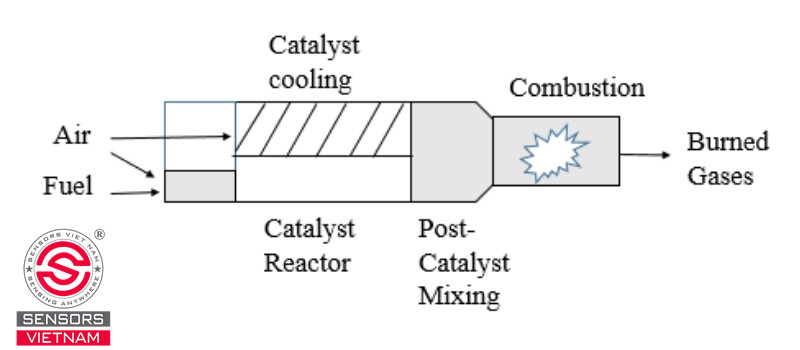
Also known as Pellistor sensors, catalytic bead sensors consist of two beads: an active bead coated with a catalyst and a reference bead without catalyst. When methane comes into contact with the heated catalyst, it oxidizes, releasing heat and changing the electrical resistance of the active bead.
Non-Dispersive Infrared (NDIR) Sensors
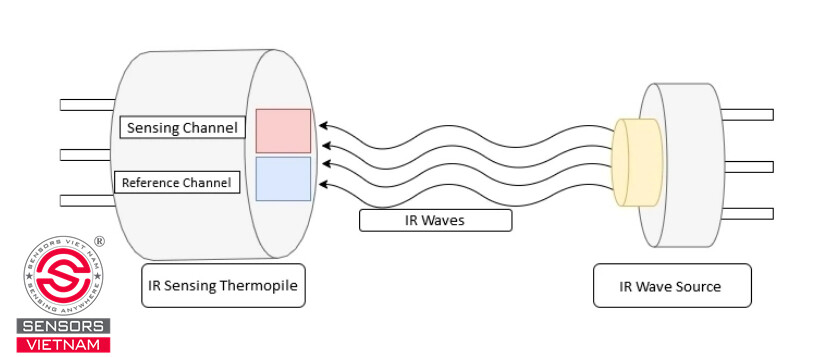
NDIR methane sensors use an infrared light source and detectors to measure the absorption of light by methane molecules at specific wavelengths (typically around 3.3 micrometers).
Semiconductor (Metal Oxide) Sensors
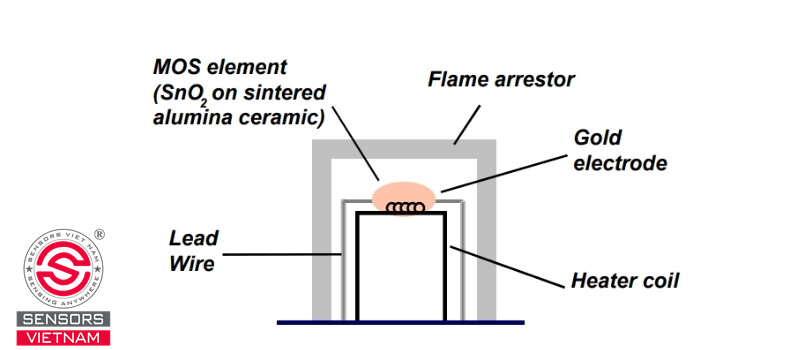
Semiconductor sensors use materials like tin dioxide (SnO₂) whose electrical resistance changes in the presence of methane gas.
Photoacoustic Sensors
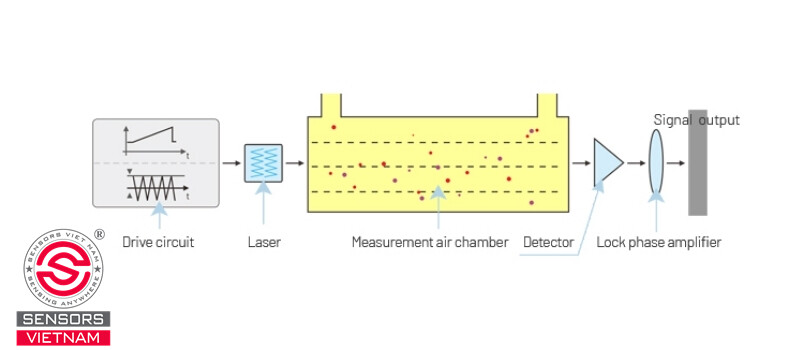
These sensors use laser beams tuned to the absorption wavelength of methane. When methane absorbs light energy, it generates sound waves that are detected by a microphone.
Applications of Methane (CH4) Gas Sensors
Oil and Gas Industry
Methane is a major component in natural gas production and transportation. CH4 sensors are used to continuously monitor wellheads, pipelines, storage tanks, gas processing facilities, and compressor stations. These sensors help detect leaks in real time, prevent explosions, and minimize environmental contamination, ensuring safe and efficient operation in oil and gas infrastructure.
Mining Industry
Methane accumulation in coal mines can lead to catastrophic explosions. Methane gas sensors play a crucial role by detecting rising gas levels, triggering automatic ventilation systems, and providing early warnings to protect miners’ safety. Their use is essential for maintaining safe working environments in underground operations.
Agriculture and Livestock
Methane is emitted from livestock and organic waste decomposition. CH4 sensors are deployed to monitor emissions from barns and waste management systems, enabling accurate greenhouse gas assessments. This data supports sustainable agricultural practices and helps reduce environmental impact.
Wastewater Treatment
Organic matter decomposition in wastewater produces methane as a byproduct. CH4 sensors are used to monitor biogas generation, ensure safe operating conditions, and optimize energy recovery processes. They play a key role in improving both safety and efficiency in wastewater treatment plants.
Residential and Commercial Buildings
Methane leak detectors are installed in facilities using natural gas to prevent fire and explosion risks. Common applications include residential heating systems, commercial kitchens, and gas-powered apartments, providing essential protection for occupants and property.
Environmental Monitoring
Methane sensors are employed in stationary and mobile monitoring stations to track emissions from landfills, wetlands, and urban areas. This data supports environmental management, climate research, and methane emission reduction strategies on both local and global scales.
Sensors Vietnam is one of the leading importers of industrial sensors and equipment in Vietnam. If you are looking for a CH4 gas sensor, please contact Sensors Vietnam for consultation and quotation.
PQD-3135-R – PROSENSE Explosion-Proof Methane Gas Sensor
Measuring range: 0–100% LEL
Output: 4–20mA / RS-485, Relay
Local OLED display
Power supply: 24VDC
Explosion-proof rating: ATEX II 2G Ex db IIC T5/T4 Gb
PQD-S-3135-SS-R – PROSENSE Explosion-Proof Methane Gas Sensor
Measuring range: 0–100% LEL
Output: 4–20mA / RS-485, Relay
Power supply: 24VDC
Explosion-proof rating: ATEX II 2G Ex db IIC T5/T4 Gb
PQD-S-3135-SS – PROSENSE Explosion-Proof Methane Gas Sensor
Measuring range: 0–100% LEL
Output: 4–20mA / RS-485
Power supply: 24VDC
Explosion-proof rating: ATEX II 2G Ex db IIC T5/T4 Gb
PQD-S-3135-R – PROSENSE Explosion-Proof Methane Gas Sensor
Measuring range: 0–100% LEL
Output: 4–20mA / RS-485, Relay
Power supply: 24VDC
Explosion-proof rating: ATEX II 2G Ex db IIC T5/T4 Gb
PQD-S-3135 – PROSENSE Explosion-Proof Methane Gas Sensor
Measuring range: 0–100% LEL
Output: 4–20mA / RS-485
Power supply: 24VDC
Explosion-proof rating: ATEX II 2G Ex db IIC T5/T4 Gb
Product reference link: https://cambien.com.vn/cam-bien-khi-ch4
Hot news


SENSORS VIETNAM CO., LTD
VAT CODE: 0313 355 473
Head Office: 03rd Floor, Indochina Tower, 04 Nguyen Dinh Chieu, Tan Dinh Ward, Ho Chi Minh City, Vietnam.
HCM Branch: 92/14/9A Vuon Lai Str., An Phu Dong Ward, Ho Chi Minh City, Vietnam.
Hanoi Branch: S106 Tower, Vinhomes Smart City, Tay Mo Ward, Hanoi City, Vietnam.

® Registered trademark – National Office of Intellectual Property Vietnam
OUR SERVICES
Specializing in the import and distribution of industrial sensors.
Sensors for HVAC/R systems and building automation applications.
Supplying gauges, transmitters, switches, controllers, PLCs, HMIs, and gas detectors.
Providing integrated consulting services for sensor and controller systems.


CONTACT US
Email: sales(at)sensors.vn
Hotline: +84 0911 660 660
Asia Commercial Bank Account (ACB):
VND: 357 246 888 | USD: 1357 246 888
Support Online ZALO Official Account
(From 8:00 am to 5:00 pm)





SENSORS VIETNAM CO., LTD
- Specialized in the import and distribution of sensors and controllers.
- Integrated data acquisition systems and industrial communication solutions.
- Design and installation of smart home systems and industrial equipment.
- Stack lights, signal beacons, LED warning horns, and RGB warning lights.