





CUSTOMER SERVICE
www.sensors.vn
Admin@sensors.vn
www.cambien.com.vn
CLO2 (CHLORINE DIOXIDE) DETECTOR
Date 21/Aug/2026 at 11:43 AM - View: 8
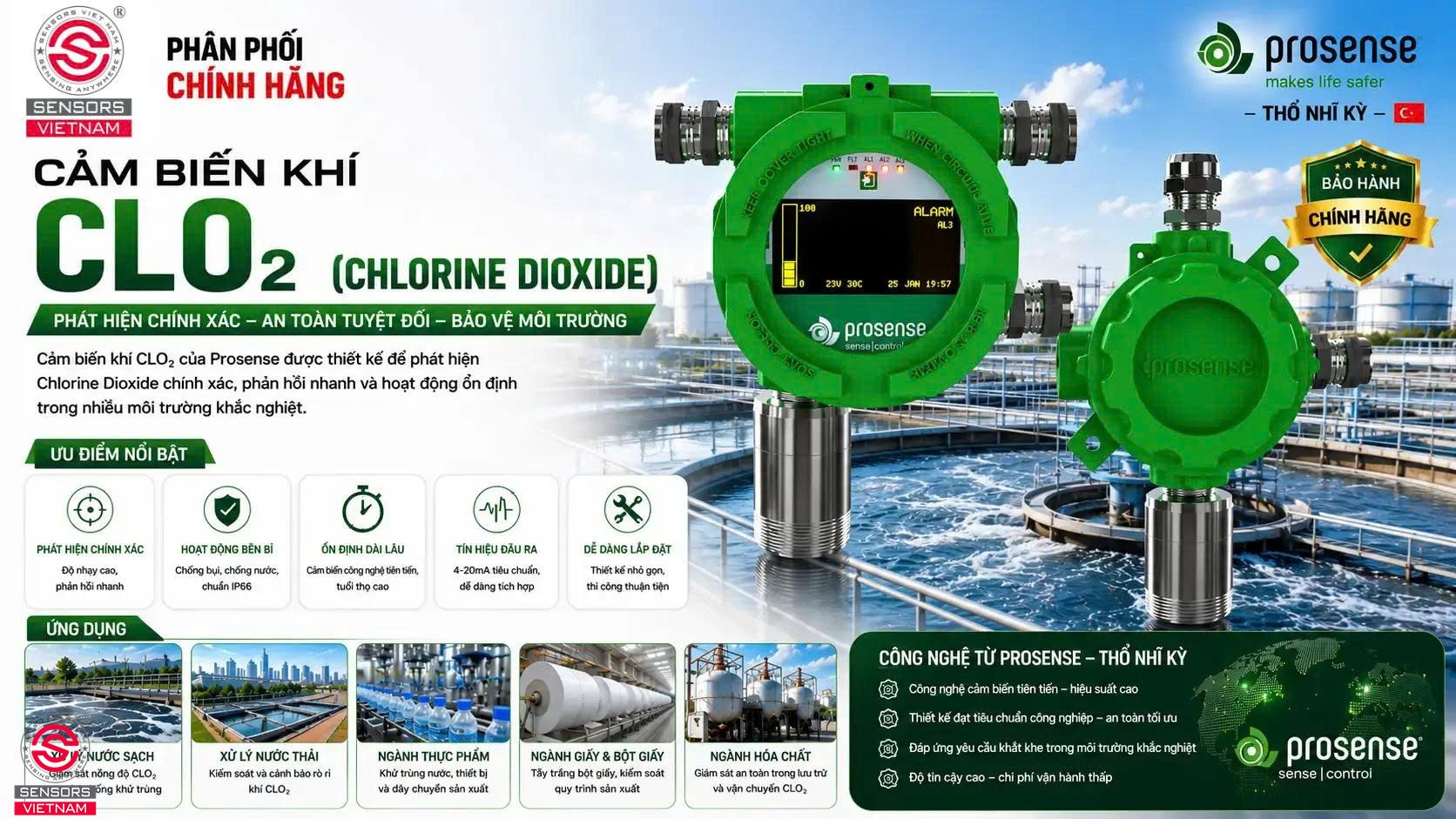
Many water treatment plants, food processing facilities and hospitals are turning to chlorine dioxide (ClO2) as a more effective disinfection solution than traditional chlorine, yet few realize that this same gas carries serious health risks if not properly controlled. ClO2 is a strongly oxidizing gas, and even a low concentration leak is enough to irritate the respiratory tract of operating personnel. This is exactly why the ClO2 gas detector is increasingly becoming mandatory equipment in any area where this chemical is used.
OVERVIEW OF ClO2 (CHLORINE DIOXIDE) GAS DETECTORS
ClO2 is a pale yellow-green gas compound with a sharp odor somewhat similar to, but distinct from, chlorine. It is widely used for its powerful disinfecting, sanitizing and deodorizing properties, without producing as many harmful byproducts as conventional chlorine. However, this same strong oxidizing property also makes ClO2 capable of irritating the eyes, nose and throat at low concentrations, and can cause serious lung damage with prolonged exposure at high concentrations.
The permissible exposure limit for ClO2 recommended by many occupational safety organizations is below 1 ppm as an 8-hour time-weighted average. With such a low safety threshold, relying on the human sense of smell alone to detect a leak is entirely unreliable, particularly in environments where other chemical odors may be present.
A ClO2 gas detector is a device specifically designed to detect and measure the concentration of chlorine dioxide gas in the air in real time, typically expressed in ppm or ppb depending on the application's requirements. The device issues a warning signal as soon as the gas concentration exceeds the configured safety threshold, giving operators enough time to address the issue before the risk spreads.
 WORKING PRINCIPLE OF ClO2 (CHLORINE DIOXIDE) GAS DETECTORS
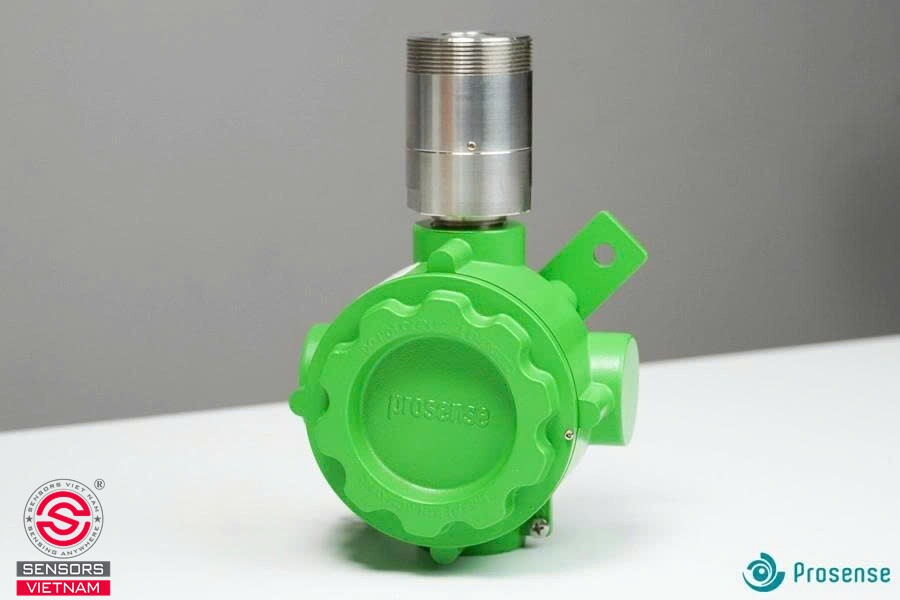
Most ClO2 gas detectors on the market today operate based on electrochemical technology. When ClO2 gas molecules contact the surface of the sensor electrode, an oxidation-reduction reaction occurs, generating an electrical current with an intensity proportional to the gas concentration in the surrounding environment. This electrical signal is then converted by the processing unit inside the detector into a specific concentration value, displayed directly on the screen or transmitted to the central control system.
A complete ClO2 sensor system typically consists of the following main components:
- The sensor head, responsible for direct contact with the environment and detection of gas molecules
- The signal processing unit, which converts the electrochemical reaction into a measured concentration value
- The controller and display, allowing the operator to monitor concentration in real time and configure alarm thresholds
- The on-site audible and visual alarm, which signals when the concentration exceeds the safety threshold
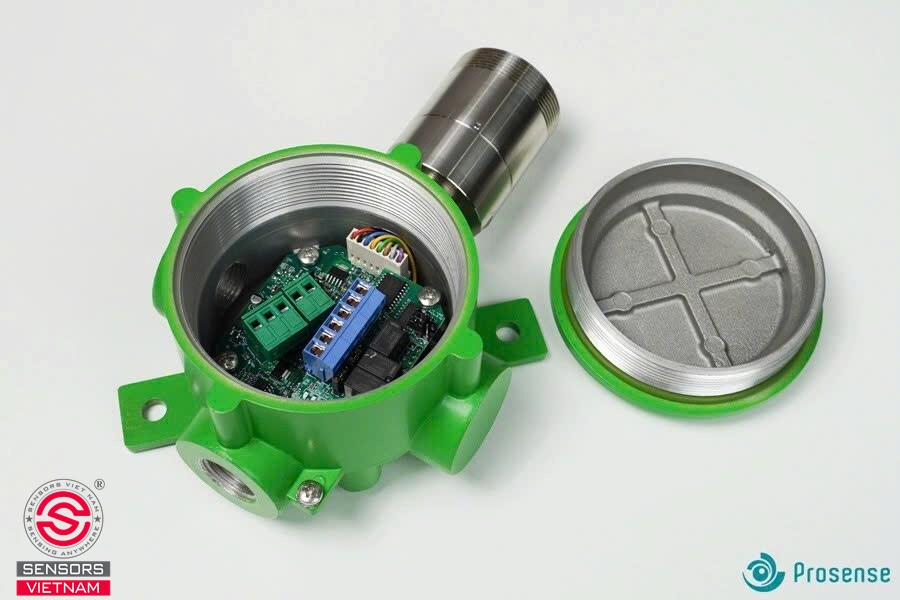
- Industrial signal outputs such as 4-20mA, relay or Modbus, connecting the device to the plant's control panel, PLC or SCADA system
Thanks to its fast response and high sensitivity, electrochemical technology remains the most common choice for industrial ClO2 monitoring applications, particularly well suited to areas requiring early warning at low concentrations.
WHERE ARE ClO2 (CHLORINE DIOXIDE) GAS DETECTORS APPLIED IN PRACTICE?
Chlorine dioxide is used across many different industries for its outstanding disinfecting capability, driving the need to install ClO2 gas detectors in the following areas:
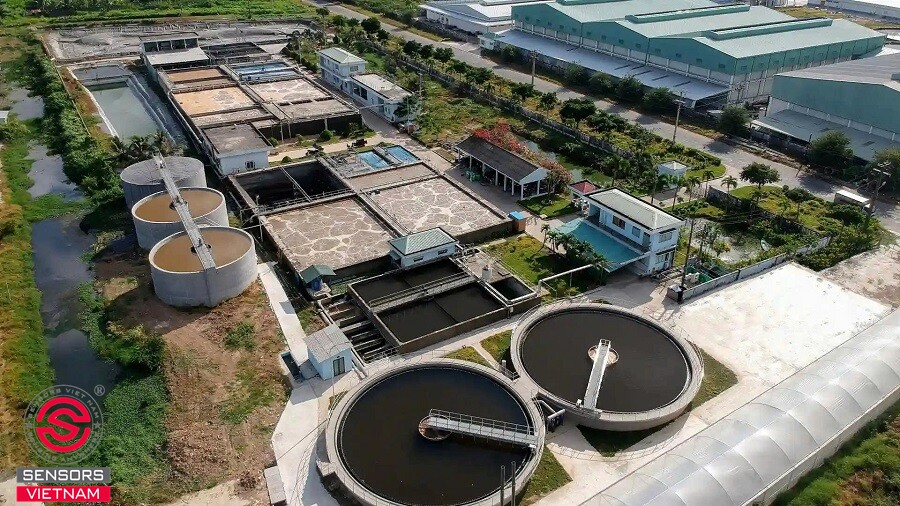
- Drinking water and wastewater treatment plants
- The food and beverage processing industry
- Hospitals and medical facilities
- Pulp and paper manufacturing
- Storage and centralized disinfectant chemical mixing areas at large-scale plants
In these areas, ClO2 gas detectors are typically installed near the point of generation or storage, integrated with automatic ventilation systems and interlocked with the central control system. When a leak exceeding the permissible threshold is detected, the system automatically triggers an alarm, activates emergency exhaust fans, and in many cases shuts off the chemical supply to ensure safety across the entire production area.
 PROSENSE ClO2 GAS DETECTORS - A GLOBALLY TRUSTED CHLORINE DIOXIDE SENSOR BRAND
The real value of a ClO2 gas detection system lies not only in issuing a warning signal, but also in accurate measurement, fast response and sustained stability throughout its service life. These are exactly the criteria Prosense has pursued in developing its specialized gas detector lines.
Prosense is a brand specializing in the manufacture of industrial sensors and measurement equipment, trusted by many plants around the world for its high accuracy and outstanding durability under harsh operating conditions. Prosense's ClO2 gas detector lines are designed with the following notable advantages:
- High sensitivity, capable of detecting ClO2 gas at low concentrations, meeting early warning requirements well in water treatment and disinfection areas
- Fast response time, allowing the alarm and safety interlock system to activate promptly, minimizing exposure risk
- Durable design with good corrosion resistance, suited to environments with high humidity and frequent exposure to disinfectant chemicals
- Industry standard signal outputs such as 4-20mA, relay and RS485/Modbus, easy to integrate with control panels, PLCs or existing SCADA systems
- Easy maintenance and periodic calibration, helping businesses save on long term operating costs
With a stable technology foundation and reliability proven across many countries, Prosense ClO2 gas detectors are a suitable choice for both small and medium-sized plants and large industrial facilities with strict gas monitoring requirements.
GUIDE TO CHOOSING THE RIGHT MEASUREMENT RANGE FOR A ClO2 (CHLORINE DIOXIDE) GAS DETECTOR
Choosing the appropriate measurement range is a decisive factor in the alarm effectiveness of a ClO2 gas detector. Selecting a range too wide for actual needs reduces sensitivity when detecting small leaks, while selecting a range too narrow can cause the sensor signal to saturate when gas concentration spikes suddenly.
For areas requiring early warning at very low concentrations, such as office spaces or work areas near a disinfection system, priority should be given to models with a narrow measurement range, typically between 0 and 1 ppm or 0 and 5 ppm, allowing accurate detection right from the earliest stage of a leak.
For chemical mixing and storage areas, or locations near a ClO2 generation source with a higher leak risk concentration, a wider measurement range should be selected, typically between 0 and 10 ppm or 0 and 20 ppm, depending on the specific production process and the actual risk level at each installation location.
Beyond the measurement range, businesses should also consider additional factors such as response time, an IP protection rating for the sensor housing suited to the installation environment, and signal integration capability with the existing control system. To ensure the most accurate selection, businesses should conduct an on-site survey at each installation location and consult with an authorized Prosense distributor before deciding to invest in a ClO2 gas detection system for their plant.
 BUY GENUINE CLO2 GAS DETECTORS AT SENSORS VIETNAM
Sensors Vietnam is a provider of advanced measurement, sensing and automation solutions, including ClO2 gas detectors. We offer a diverse portfolio of genuine products from leading global manufacturers, fully capable of meeting the full range of customer application needs.
Why choose a solution/product from Sensors Vietnam?
- 100% genuine products from leading global brands
- A comprehensive equipment ecosystem
- Highly competitive market pricing
- Fast nationwide delivery
- Completely free personalized solution consulting with a professional engineering team
- Committed product quality: genuine goods, complete CO/CQ documentation, long-term warranty
For detailed information or to order a ClO2 gas detector, please contact Sensors Vietnam directly for prompt and dedicated support.
Hot news


SENSORS VIETNAM CO., LTD
VAT CODE: 0313 355 473
Head Office: 03rd Floor, Indochina Tower, 04 Nguyen Dinh Chieu, Tan Dinh Ward, Ho Chi Minh City, Vietnam.
HCM Branch: 92/14/9A Vuon Lai Str., An Phu Dong Ward, Ho Chi Minh City, Vietnam.
Hanoi Branch: S106 Tower, Vinhomes Smart City, Tay Mo Ward, Hanoi City, Vietnam.

® Registered trademark – National Office of Intellectual Property Vietnam
OUR SERVICES
Specializing in the import and distribution of industrial sensors.
Sensors for HVAC/R systems and building automation applications.
Supplying gauges, transmitters, switches, controllers, PLCs, HMIs, and gas detectors.
Providing integrated consulting services for sensor and controller systems.


CONTACT US
Email: sales(at)sensors.vn
Hotline: +84 0911 660 660
Asia Commercial Bank Account (ACB):
VND: 357 246 888 | USD: 1357 246 888
Support Online ZALO Official Account
(From 8:00 am to 5:00 pm)





SENSORS VIETNAM CO., LTD
- Specialized in the import and distribution of sensors and controllers.
- Integrated data acquisition systems and industrial communication solutions.
- Design and installation of smart home systems and industrial equipment.
- Stack lights, signal beacons, LED warning horns, and RGB warning lights.