





CUSTOMER SERVICE
www.sensors.vn
Admin@sensors.vn
www.cambien.com.vn
ALCOHOL SENSORS
Date 23/Oct/2025 at 09:07 AM - View: 127
In the context of increasingly strict regulations on traffic safety and workplace environments, alcohol sensors have become indispensable devices across various fields. From measuring alcohol concentration in drivers’ breath, monitoring fermentation processes in the food industry, to detecting alcohol vapor in laboratory environments, these sensors ensure safety, accuracy, and compliance with international standards. Thanks to their ability to detect alcohol quickly and measure concentrations precisely, alcohol sensors are now widely integrated into electronic devices, gas analyzers, and smart IoT systems.
What is an Alcohol Sensor?
An alcohol sensor is a device designed to detect and measure the concentration of ethanol (alcohol) in air, breath, liquid, or blood. It operates based on the change in electrical properties of specific sensing materials when exposed to alcohol vapor, converting chemical reactions into measurable electrical signals. Modern alcohol sensors commonly use semiconductor, infrared (IR), or electrochemical technologies to deliver fast, accurate, and stable results over long periods.
Types of Alcohol Sensors
Alcohol sensors can be classified based on the technology they use to detect alcohol. The most common types include semiconductor sensors, fuel cell sensors, infrared sensors, and optical sensors. Each type has its unique working principle, advantages, and limitations.
Semiconductor C2H5OH Sensors
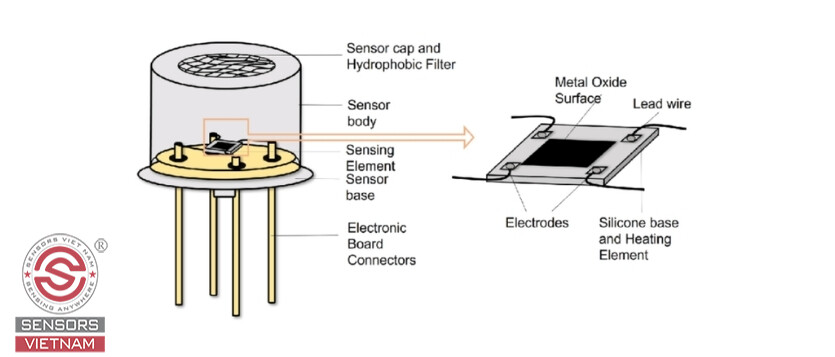
Semiconductor sensors, also known as metal-oxide-semiconductor (MOS) sensors, detect alcohol by measuring changes in the electrical resistance of a semiconductor material when it interacts with alcohol molecules.
The sensor consists of a heated semiconductor element, typically made of tin dioxide (SnO2). When alcohol vapor comes into contact with the semiconductor surface, it undergoes a chemical reaction that changes the electrical resistance of the material. This change in resistance is measured and correlated to the alcohol concentration.
Fuel Cell C2H5OH Sensors
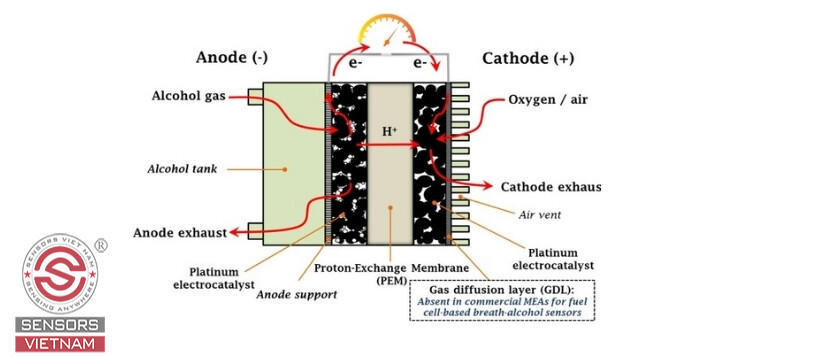
Fuel cell sensors are widely regarded as the most accurate and reliable type of alcohol sensors. They are commonly used in breathalyzers for law enforcement and personal use.
The sensor contains a porous membrane coated with a platinum catalyst. When alcohol vapor passes through the membrane, it is oxidized on the surface of the platinum catalyst, producing electrons and generating an electrical current. The magnitude of the current is directly proportional to the alcohol concentration.
Infrared C2H5OH Sensors
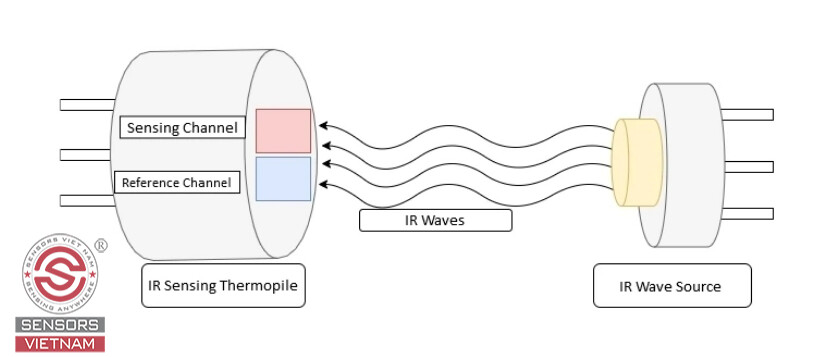
Infrared sensors detect alcohol by measuring the absorption of infrared light by alcohol molecules.
The sensor emits infrared light through a sample (e.g., breath or liquid). Alcohol molecules absorb specific wavelengths of infrared light. The sensor measures the amount of light absorbed, which is proportional to the alcohol concentration.
Optical C2H5OH Sensors
Optical sensors use the interaction of light with alcohol molecules to detect their presence and concentration.
These sensors utilize various optical techniques, such as fluorescence, Raman spectroscopy, or surface plasmon resonance, to detect changes in the optical properties of a medium when exposed to alcohol. The detected changes are then correlated to the alcohol concentration.
Applications of Alcohol Sensors
Alcohol sensors have a broad range of applications across different sectors, each with specific requirements and benefits.
Law Enforcement
Law enforcement officers use breathalyzers equipped with fuel cell or semiconductor sensors to conduct roadside alcohol tests on drivers suspected of being under the influence of alcohol. These tests are crucial for maintaining road safety and enforcing DUI laws. Blood alcohol concentration (BAC) measurements obtained from breathalyzers or blood tests are used as legal evidence in court cases involving impaired driving or alcohol-related offenses.
Workplace Safety
Employers use alcohol sensors to conduct regular or random alcohol tests to ensure a safe working environment, especially in safety-sensitive industries like transportation, construction, and manufacturing. Alcohol sensors are used to test employees involved in workplace accidents to determine if alcohol consumption was a contributing factor.
Medical Diagnostics
In emergency departments, blood or breath alcohol tests are conducted on patients to assess their level of intoxication and provide appropriate medical treatment. Alcohol sensors are used to monitor alcohol consumption in patients undergoing treatment for alcohol use disorders. This helps healthcare providers assess treatment efficacy and make necessary adjustments.
Industrial Applications
In the production of alcoholic beverages, alcohol sensors are used to monitor fermentation processes and ensure product quality and consistency. Alcohol sensors detect alcohol emissions in industrial waste streams and exhausts to prevent environmental contamination and comply with regulatory standards.
Consumer Products
Portable breathalyzers equipped with fuel cell or semiconductor sensors allow individuals to monitor their alcohol consumption and make informed decisions about their ability to drive or engage in other activities. Integration of alcohol sensors in wearable devices, such as smartwatches or fitness trackers, provides continuous monitoring of alcohol levels, helping users manage their alcohol intake and health.
Alcohol sensors are essential tools for detecting and measuring alcohol concentration in various settings, from law enforcement and workplace safety to medical diagnostics and consumer products. Understanding the different types of alcohol sensors, their working principles, applications, advantages, and limitations helps us appreciate their critical role in promoting safety, health, and regulatory compliance.
Sensors Vietnam is a leading importer and distributor of industrial sensors and automation equipment in Vietnam. For consultation and quotation on alcohol sensors, please contact Sensors Vietnam.
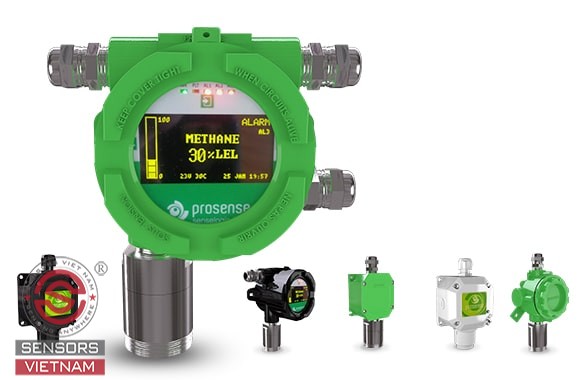
P-4235 – Prosense Explosion-Proof Ethyl Alcohol (C2H5OH) Gas Detector
Measuring range: 0–100% LEL
Output: 4–20mA / RS-485
Power supply: 24VDC
Explosion-proof certification: ATEX II 2G Ex db IIC T5/T4 Gb
PQD-4235 – Prosense Explosion-Proof Ethyl Alcohol (C2H5OH) Gas Detector
Measuring range: 0–100% LEL
Output: 4–20mA / RS-485
Power supply: 24VDC
Explosion-proof certification: ATEX II 2G Ex db IIC T5/T4 Gb
For more information: https://cambien.com.vn/cam-bien-do-khi-gas
Hot news


SENSORS VIETNAM CO., LTD
VAT CODE: 0313 355 473
Head Office: 03rd Floor, Indochina Tower, 04 Nguyen Dinh Chieu, Tan Dinh Ward, Ho Chi Minh City, Vietnam.
HCM Branch: 92/14/9A Vuon Lai Str., An Phu Dong Ward, Ho Chi Minh City, Vietnam.
Hanoi Branch: S106 Tower, Vinhomes Smart City, Tay Mo Ward, Hanoi City, Vietnam.

® Registered trademark – National Office of Intellectual Property Vietnam
OUR SERVICES
Specializing in the import and distribution of industrial sensors.
Sensors for HVAC/R systems and building automation applications.
Supplying gauges, transmitters, switches, controllers, PLCs, HMIs, and gas detectors.
Providing integrated consulting services for sensor and controller systems.


CONTACT US
Email: sales(at)sensors.vn
Hotline: +84 0911 660 660
Asia Commercial Bank Account (ACB):
VND: 357 246 888 | USD: 1357 246 888
Support Online ZALO Official Account
(From 8:00 am to 5:00 pm)





SENSORS VIETNAM CO., LTD
- Specialized in the import and distribution of sensors and controllers.
- Integrated data acquisition systems and industrial communication solutions.
- Design and installation of smart home systems and industrial equipment.
- Stack lights, signal beacons, LED warning horns, and RGB warning lights.