





CUSTOMER SERVICE
www.sensors.vn
Admin@sensors.vn
www.cambien.com.vn
INFRARED TEMPERATURE SENSOR
Date 13/Mar/2026 at 05:11 PM - View: 166

In the era of Industry 4.0, as manufacturing systems and HVAC systems become increasingly automated, temperature measurement and monitoring play a critical role in system performance. Temperature not only directly affects equipment efficiency but also determines the safety and lifespan of the entire system.
However, in many real-world situations such as high-temperature surfaces, hazardous areas, or harsh operating environments, traditional contact temperature sensors are no longer suitable. This is why infrared temperature sensors are becoming widely used in modern technical systems.
So what exactly is an infrared temperature sensor, how does it work, and where is it applied in industrial and HVAC systems? Let’s explore these topics in detail with Sensors Vietnam below.
What is an infrared temperature sensor?
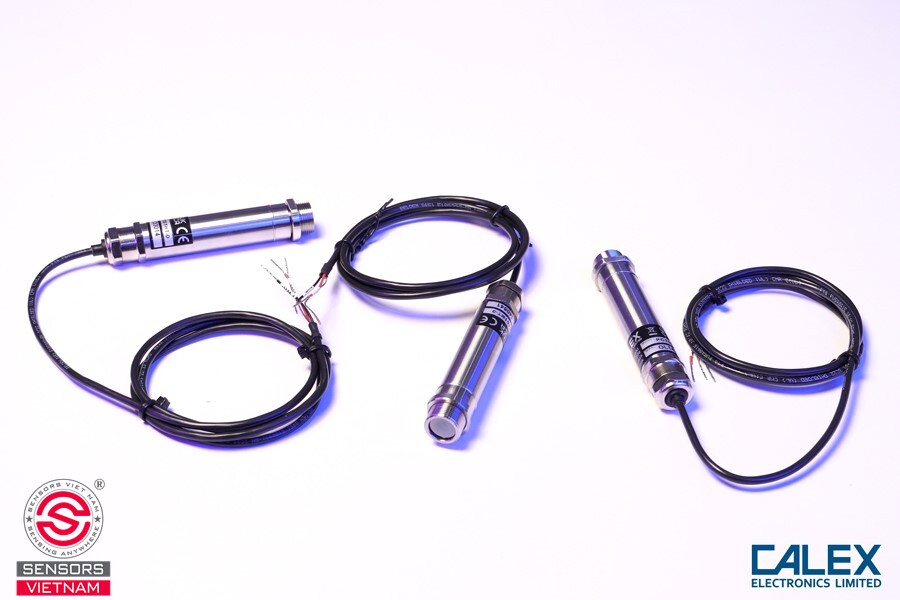
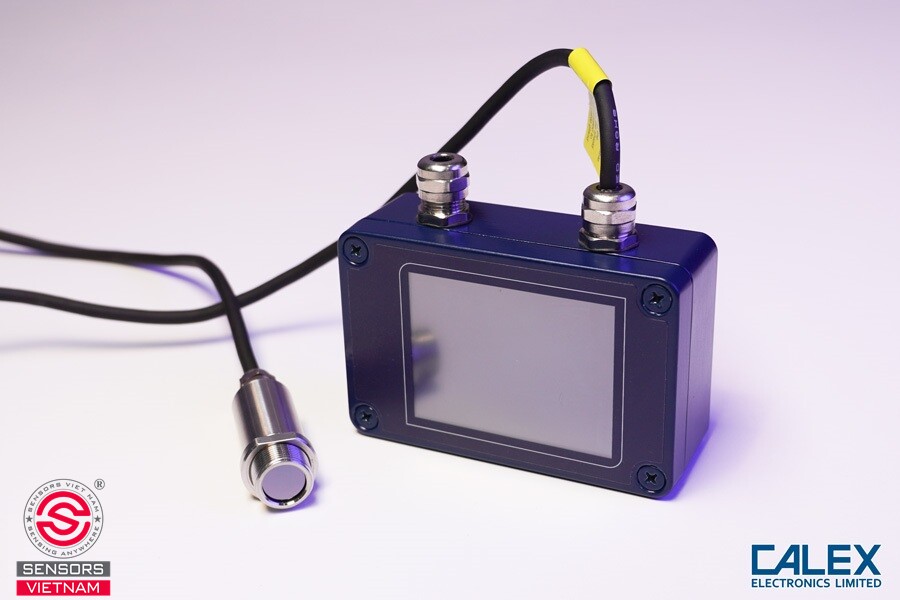
An infrared temperature sensor is a temperature measurement device that works by detecting infrared radiation emitted from an object or environment, and then converting that thermal energy into a corresponding electrical signal.
According to the laws of physics, any object with a temperature above absolute zero (-273.15°C) emits infrared radiation. The intensity of this radiation is proportional to the surface temperature of the object. By measuring and analyzing this radiation, the sensor can determine the temperature without making direct contact with the target.
Thanks to this principle, infrared temperature sensors are particularly suitable for measurement locations with special technical requirements, such as:
- Areas with very high or rapidly changing temperatures
- Locations where contact probes cannot be installed
- Environments that require strict operational safety
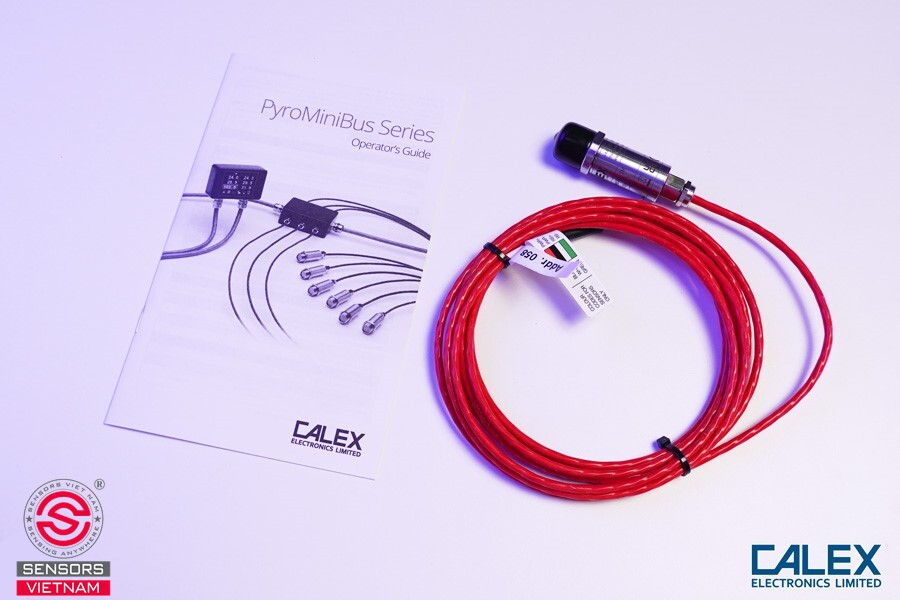
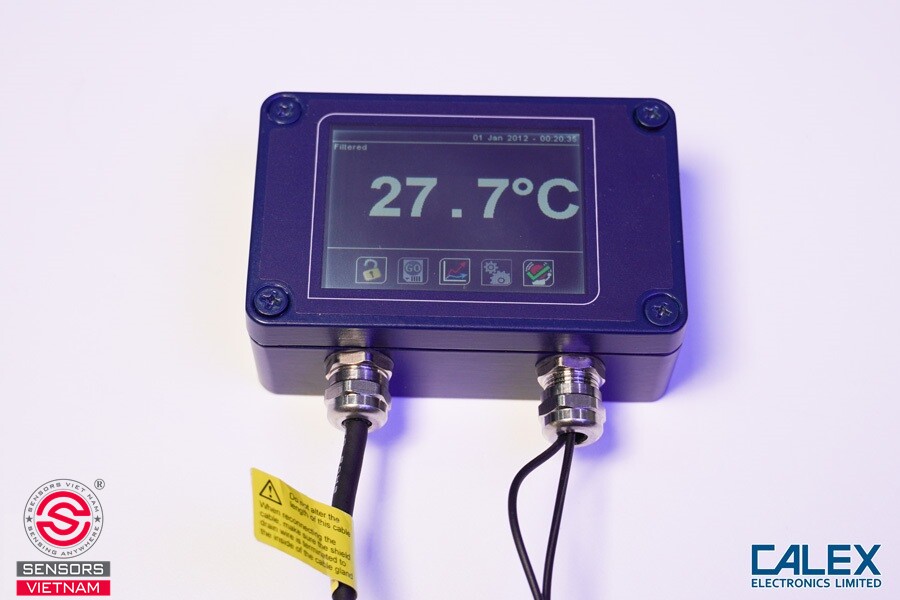
The measured temperature value is then converted into standard industrial signals and transmitted to control systems such as PLC, BMS, or SCADA for monitoring and automated control.
Working principle of infrared temperature sensors
Infrared temperature sensors operate based on the process of capturing, converting, and processing thermal radiation emitted by an object.
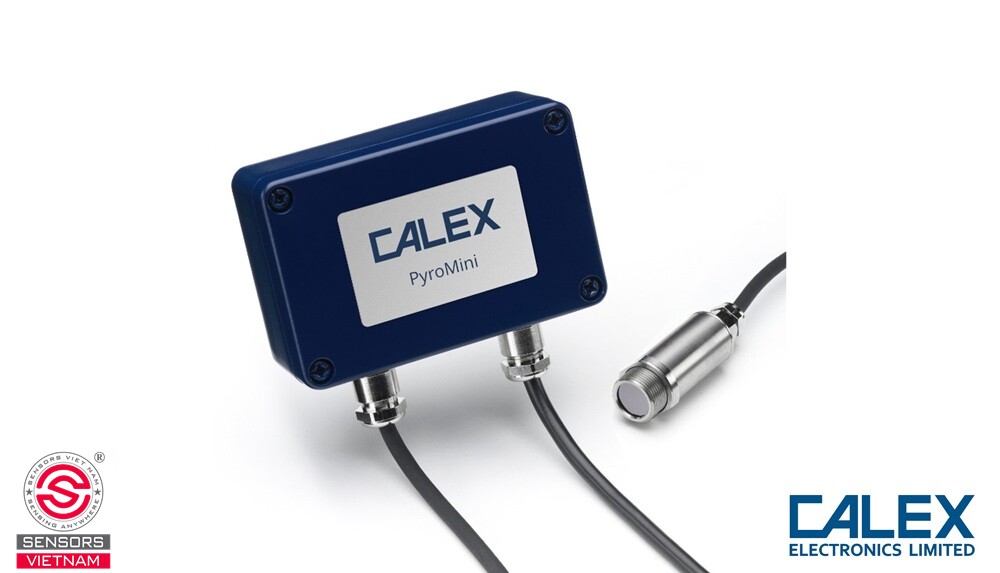
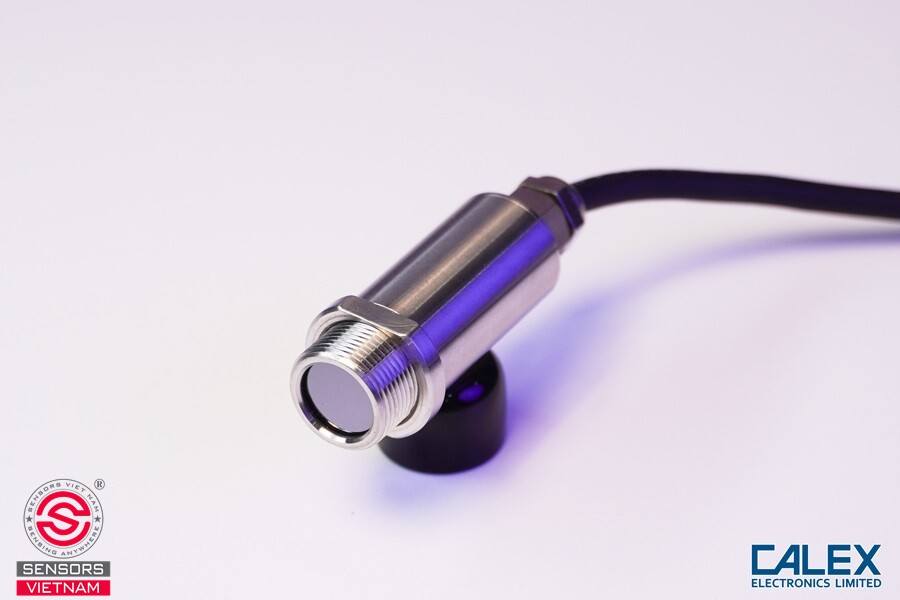
When an object emits infrared radiation, the sensor’s optical lens system collects and focuses this radiation onto a sensing element. This sensing element is typically a thermopile or pyroelectric sensor, which responds to changes in thermal energy.
As the radiation energy changes, the electrical characteristics of the sensing element change accordingly, generating an analog electrical signal proportional to the surface temperature of the measured object.
This signal is then amplified, linearized, processed, and converted into common output formats used in industrial and HVAC systems, such as:
- 4-20 mA analog signal
- 0-10 V analog output
- Digital communication protocols like Modbus RTU / RS485
Thanks to the non-contact measurement principle, infrared temperature sensors provide very fast response times while maintaining high stability, even in environments with fluctuating temperatures or strong vibrations.
Key features of infrared temperature sensors
In modern technical systems, infrared temperature sensors are not only measurement devices but also essential components for ensuring operational safety and system efficiency.
Non-contact temperature measurement for enhanced safety
The most significant advantage of infrared temperature sensors is their ability to measure temperature remotely without direct contact with the target object.
This feature is particularly important in environments with:
- Extremely high temperatures
- High voltage equipment
- Hazardous chemicals or toxic gases
- Hard-to-reach measurement points
Non-contact measurement reduces risks for operators and enables reliable monitoring in locations where traditional contact sensors cannot be installed.
Fast response time
Compared with contact temperature measurement methods, infrared sensors provide extremely fast response times, allowing them to detect temperature changes almost instantly.
This is especially important in:
- Automated production lines
- Continuous manufacturing processes
- Modern HVAC control systems
Fast response allows the system to detect overheating early, minimize equipment damage, and reduce unplanned downtime.
High accuracy and stability
Industrial-grade infrared temperature sensors are designed with high accuracy and low measurement error, meeting strict technical requirements across industries such as manufacturing, energy, and HVAC systems.
Applications of infrared temperature sensors
Thanks to their non-contact measurement capability, high safety level, and fast response, infrared temperature sensors are widely used across many industries.
Industrial manufacturing
In industrial environments, infrared temperature sensors are commonly used to monitor the surface temperature of equipment such as:
- Electric motors
- Bearings
- Electrical equipment
- Production machine surfaces
Remote temperature measurement helps detect abnormal temperature increases or overheating at an early stage, thereby reducing equipment damage and preventing unexpected downtime.
HVAC systems
In HVAC systems, infrared temperature sensors play an important role in monitoring temperature at difficult-to-access locations, including:
- Heat exchangers
- Electrical control panels
- Thermal pipelines
- Hot spots within air distribution systems
Temperature data collected by the sensor is transmitted to PLC or BMS systems, allowing HVAC systems to operate more efficiently while optimizing energy consumption.
Residential and smart building applications
In smart home systems, infrared temperature sensors are often integrated to support the automatic control of devices such as:
- Air conditioning systems
- Lighting systems
- Household electrical appliances
With their non-contact measurement capability, these sensors improve comfort, convenience, and safety for users in modern living environments.
Hot news




SENSORS VIETNAM CO., LTD
VAT CODE: 0313 355 473
Head Office: 03rd Floor, Indochina Tower, 04 Nguyen Dinh Chieu, Tan Dinh Ward, Ho Chi Minh City, Vietnam.
HCM Branch: 92/14/9A Vuon Lai Str., An Phu Dong Ward, Ho Chi Minh City, Vietnam.
Hanoi Branch: S106 Tower, Vinhomes Smart City, Tay Mo Ward, Hanoi City, Vietnam.

® Registered trademark – National Office of Intellectual Property Vietnam
OUR SERVICES
Specializing in the import and distribution of industrial sensors.
Sensors for HVAC/R systems and building automation applications.
Supplying gauges, transmitters, switches, controllers, PLCs, HMIs, and gas detectors.
Providing integrated consulting services for sensor and controller systems.


CONTACT US
Email: sales(at)sensors.vn
Hotline: +84 0911 660 660
Asia Commercial Bank Account (ACB):
VND: 357 246 888 | USD: 1357 246 888
Support Online ZALO Official Account
(From 8:00 am to 5:00 pm)





SENSORS VIETNAM CO., LTD
- Specialized in the import and distribution of sensors and controllers.
- Integrated data acquisition systems and industrial communication solutions.
- Design and installation of smart home systems and industrial equipment.
- Stack lights, signal beacons, LED warning horns, and RGB warning lights.