





CUSTOMER SERVICE
www.sensors.vn
Admin@sensors.vn
www.cambien.com.vn
OVERVIEW OF DAMPER ACTUATOR
Date 27/May/2026 at 03:38 PM - View: 8
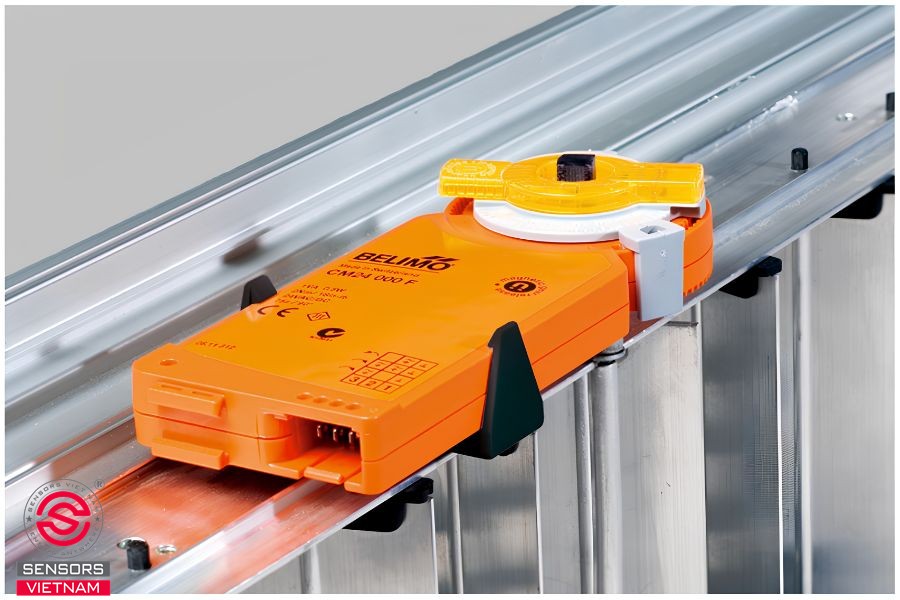
In any residential, commercial, or industrial facility equipped with a central air conditioning system, mechanical ventilation system, or Air Handling Unit (AHU), the air damper actuator is one of the most quietly essential yet critically important components. This device converts electrical or control signals into mechanical movement, thereby regulating the opening angle of air dampers to control airflow volume, direction, and pressure inside duct systems.
Follow the article below to gain a comprehensive understanding of air damper actuators, including their structure, working principle, classification, and practical applications across various industries.
1. WHAT IS AN AIR DAMPER ACTUATOR?
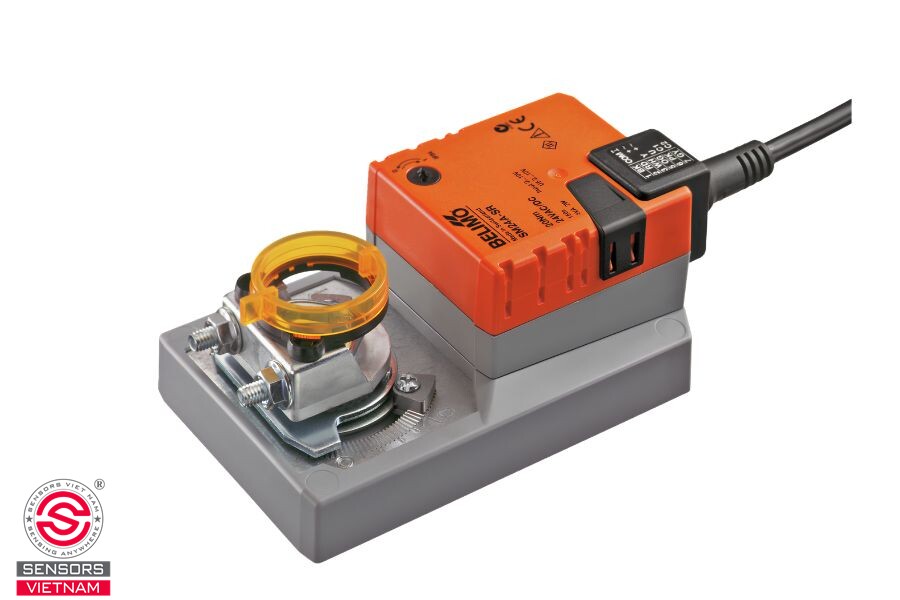
An air damper actuator is known by several technical terms depending on the application context, such as damper actuator, HVAC damper motor, air damper motor, or damper drive actuator. Regardless of the terminology, the device serves one primary function: to accurately, continuously, and reliably control the opening and closing position of an air damper based on commands from a Building Management System (BMS) or temperature controller.
The integration of air damper actuators into HVAC systems not only automates airflow regulation but also delivers significant energy efficiency compared to traditional manual adjustment methods. When properly installed and configured, damper actuators can reduce energy consumption by approximately 20% to 40% in large commercial buildings while substantially improving Indoor Air Quality (IAQ).
→ See more: Sensors Vietnam - Authorized distributor of Belimo air damper actuators in Vietnam
2. STRUCTURE OF AN AIR DAMPER ACTUATOR
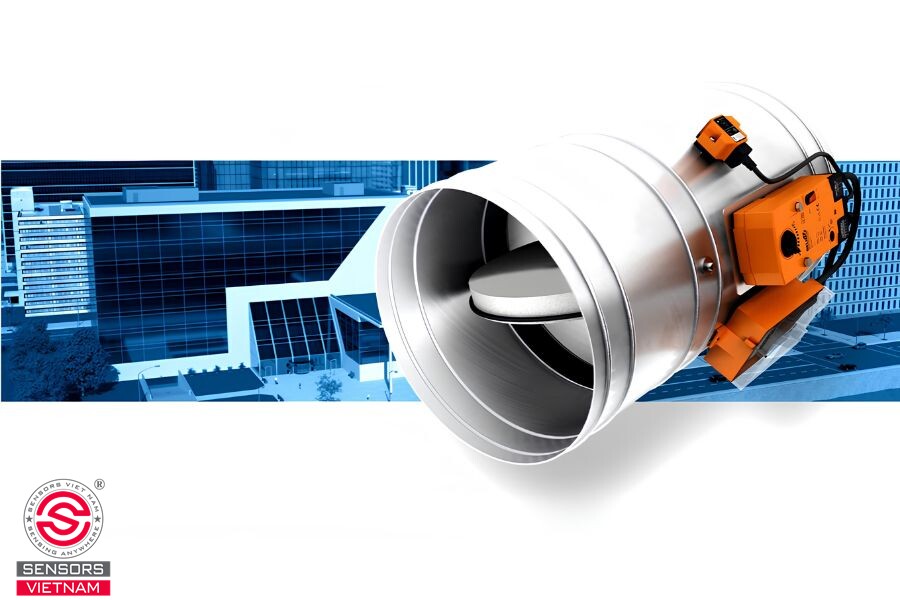
To fully understand how an air damper actuator operates, it is important to first examine its internal structure. Although designs vary among manufacturers, a standard air damper actuator generally consists of the following key components:
- Drive motor
This is the core component of the actuator. The internal motor may be an AC synchronous motor, brushless DC motor, or stepper motor depending on the application level. The motor converts electrical energy into torque.
- Gearbox assembly
The gearbox contains multiple gear sets, commonly manufactured from aluminum alloy or high-grade engineering plastic. Its purpose is to reduce rotational speed while amplifying torque output from the motor. Thanks to the gearbox, even a compact motor can generate sufficient torque to operate large-area dampers.
- Position feedback mechanism
This component determines control accuracy. The feedback system, typically a potentiometer or Hall-effect sensor, continuously reports the actual damper shaft position to the control circuit, enabling precise angle adjustment down to individual degrees.
- Electronic control board
The electronic circuit processes input signals from the BMS, compares them with the actual position feedback signal, and controls motor operation accordingly. Modern air damper actuators often integrate microcontrollers (MCUs) and support communication protocols such as Modbus, BACnet, and LONWorks.
- Fail-safe spring return mechanism
Many air damper actuators are equipped with a spring-return mechanism. In the event of a power failure, the spring automatically drives the damper back to its predefined safety position, typically fully open or fully closed depending on system design. This function is especially important for fire protection and smoke control systems.
- Protective housing
The outer enclosure is commonly made of ABS plastic or die-cast aluminum alloy and typically meets IP54 or higher protection standards against dust and moisture. In harsh environments such as coastal facilities or cleanrooms, IP67 or higher protection ratings may be required.
 → See more: Top trusted air damper actuator brands in the HVAC industry
3. OPERATING PRINCIPLE OF AIR DAMPER ACTUATORS
Air damper actuators operate based on a closed-loop control principle, where the device continuously receives command signals, executes movement, and provides feedback to minimize positional error.
The operation process begins when the central controller sends a setpoint signal to the actuator input. This signal may be:
- Analog signal (0-10 VDC, 2-10 VDC, 4-20 mA)
- On/Off signal (24 VAC/VDC)
- Digital communication signal via fieldbus networks
The internal electronic controller receives the signal, compares it with the current shaft position through the feedback sensor, and calculates the required movement. The motor is then energized, transmitting torque through the gearbox to rotate the damper shaft to the target angle.
This process occurs continuously and rapidly, typically requiring only a few seconds to several tens of seconds depending on the actuator’s rated torque.
Once the target position is reached, the motor stops and the holding mechanism maintains the damper position. The feedback sensor continues monitoring the shaft position, and if unexpected displacement occurs due to vibration or airflow pressure, the system automatically corrects the position.
4. COMMON TYPES OF AIR DAMPER ACTUATORS ON THE MARKET
Today’s HVAC market offers a wide range of air damper actuators. Proper classification helps engineers select the most suitable device for each application.
Classification by Power Supply
- Air damper actuators 24 VAC/VDC: The most common type in residential and commercial HVAC systems due to electrical safety, easy BMS integration, and compatibility with standard thermostats.
- Air damper actuators 230 VAC: Typically used in industrial applications or systems without a dedicated 24V transformer.
- Air damper actuators 120 VAC: Less common in Asian markets.
Classification by control signal type
- On/Off air damper actuators (2-Position): Operate only in fully open or fully closed states, suitable for isolation dampers and fire dampers.
- Floating control air damper actuators (3-Point): Use three control signals: open, close, and hold position. Commonly applied in simple VAV systems.
- Analog modulating air damper actuators: Support proportional control via 0-10V, 2-10V, or 4-20mA signals, allowing precise positioning anywhere between 0% and 100% opening.
- Bus communication air damper actuators: Support protocols such as Modbus, BACnet, and LONWorks for full integration into smart BMS networks, enabling remote monitoring, parameter configuration, and diagnostics.
Classification by fail-safe function
- Spring return air damper actuators: Automatically return the damper to a safe position during power loss. Mandatory for fire dampers and smoke exhaust dampers.
- Non-spring return air damper actuators: Maintain the last position during power interruption. Commonly used for standard airflow control applications due to lower cost.
Classification by torque rating
Torque is one of the most critical selection parameters.
- Small torque actuators (2-5 Nm): Suitable for small dampers under 0.5 m², commonly used in VRF and compact FCU systems.
- Medium torque actuators (5-15 Nm): The most widely used category for AHUs and commercial VAV systems.
- High torque actuators (15-40 Nm): Designed for large dampers in factories, high-rise buildings, tunnels, and infrastructure projects.
- Heavy-duty actuators (>40 Nm): Used in industrial furnaces, gas exhaust systems, and heavy industrial ventilation applications.
Classification by mounting method
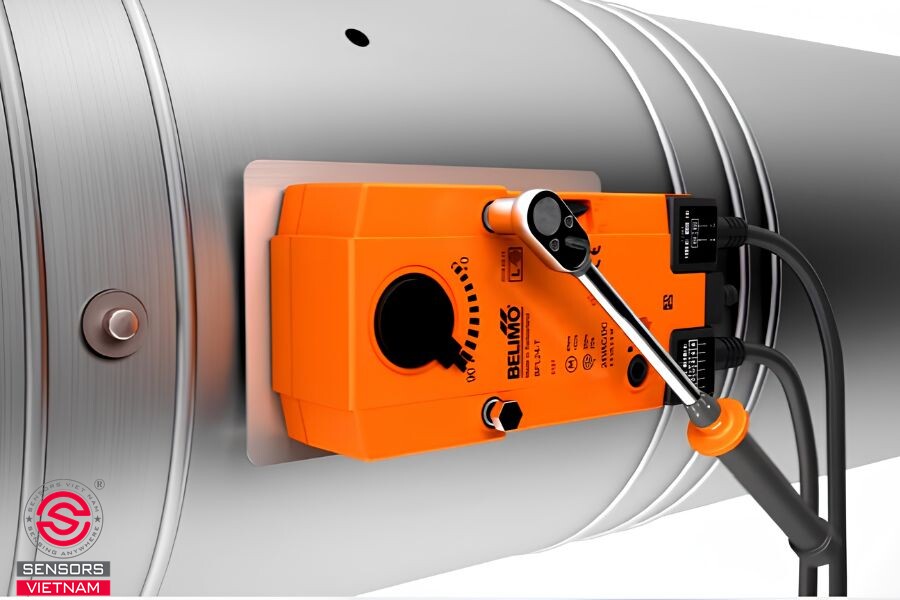
- Direct shaft-mounted actuators: Installed directly onto the damper shaft for compact installation without additional linkage mechanisms.
- Linkage-Type actuators: Used when the damper shaft is non-standard or requires adjustable stroke movement.
→ See more: Air damper actuators and their applications in HVAC systems
5. APPLICATIONS OF AIR DAMPER ACTUATORS IN DIFFERENT INDUSTRIES
Air damper actuators are found in nearly every system involving airflow control. Their versatility demonstrates their importance in the MEP and HVAC industries.
- Central HVAC systems
In office buildings, hotels, and shopping malls, air damper actuators are indispensable components of Variable Air Volume (VAV) boxes. Each zone uses an actuator-controlled damper to regulate supply airflow according to real-time cooling or heating demand, significantly improving energy efficiency compared to Constant Air Volume (CAV) systems.
- Smoke control and ventilation systems
This application demands the highest reliability. During a fire event, damper actuators control smoke exhaust dampers and isolation dampers to direct smoke outside the building and prevent smoke spread into safe areas. Actuators used in these systems must feature spring-return functionality and comply with UL, EN, or local fire safety standards.
- Cleanroom systems
In semiconductor, pharmaceutical, biotechnology, and food processing industries, cleanrooms require highly accurate control of differential pressure, airflow volume, and air change rates. Analog modulating actuators with high positioning accuracy are essential for maintaining pressure differentials within ±1 Pa.
- Laboratories and fume hoods
Chemical and biological laboratories require stable exhaust airflow for user protection. Damper actuators combined with face velocity sensors maintain airflow velocity at approximately 0.5 m/s or according to design specifications regardless of sash position.
- Road tunnels and underground parking garages
In tunnel ventilation and basement parking systems, air damper actuators regulate forced ventilation based on signals from CO and NO2 sensors. When gas concentration exceeds safe thresholds, dampers open wider to increase ventilation airflow.
* Other applications:
- Stairwell pressurization systems
- Heat recovery systems
- Hospital operating room pressure control
- Positive and negative pressure isolation rooms
- Industrial drying systems and exhaust gas treatment systems
6. SENSORS VIETNAM - THE LEADING DISTRIBUTOR OF AIR DAMPER ACTUATORS IN VIETNAM
Sensors Vietnam is a trusted supplier of genuine air damper actuators from leading global manufacturers, especially PHC. PHC specializes in high-quality and cost-effective HVAC damper actuators designed to control damper opening angles for accurate airflow regulation in ventilation and air conditioning systems.
In addition to guaranteed product quality, Sensors Vietnam also provides:
- Professional pre-sales and after-sales support
- Competitive pricing
- Reliable 2-year warranty policy
- Full CO/CQ certification for projects
- Fast nationwide delivery
For more information or to order air damper actuators, please contact Sensors Vietnam directly for fast and professional support.
→ See more: Sensors Vietnam - Authorized distributor of Nenutec air damper actuators in Vietnam
Hot news


SENSORS VIETNAM CO., LTD
VAT CODE: 0313 355 473
Head Office: 03rd Floor, Indochina Tower, 04 Nguyen Dinh Chieu, Tan Dinh Ward, Ho Chi Minh City, Vietnam.
HCM Branch: 92/14/9A Vuon Lai Str., An Phu Dong Ward, Ho Chi Minh City, Vietnam.
Hanoi Branch: S106 Tower, Vinhomes Smart City, Tay Mo Ward, Hanoi City, Vietnam.

® Registered trademark – National Office of Intellectual Property Vietnam
OUR SERVICES
Specializing in the import and distribution of industrial sensors.
Sensors for HVAC/R systems and building automation applications.
Supplying gauges, transmitters, switches, controllers, PLCs, HMIs, and gas detectors.
Providing integrated consulting services for sensor and controller systems.


CONTACT US
Email: sales(at)sensors.vn
Hotline: +84 0911 660 660
Asia Commercial Bank Account (ACB):
VND: 357 246 888 | USD: 1357 246 888
Support Online ZALO Official Account
(From 8:00 am to 5:00 pm)





SENSORS VIETNAM CO., LTD
- Specialized in the import and distribution of sensors and controllers.
- Integrated data acquisition systems and industrial communication solutions.
- Design and installation of smart home systems and industrial equipment.
- Stack lights, signal beacons, LED warning horns, and RGB warning lights.