




CUSTOMER SERVICE
www.sensors.vn
Admin@sensors.vn
www.cambien.com.vn
NH3 SENSOR IN LIVESTOCK FARMING
Date 09/Apr/2026 at 11:22 AM - View: 224

In modern livestock farming, ensuring a safe air environment is no longer optional but a mandatory requirement. As animal density increases and closed housing systems become more common, gases generated from waste such as NH3 tend to accumulate rapidly inside barns.
Although invisible, NH3 gas directly impacts animal health, reduces growth performance, increases respiratory diseases, and leads to significant economic losses. Therefore, monitoring and controlling NH3 concentration has become a key factor in ensuring biosecurity and maintaining sustainable farming efficiency. This is exactly why NH3 gas sensors are widely applied in livestock farming.
So, what is an NH3 gas sensor, how does it work, and what are its applications in livestock environments? Let’s explore with Sensors Vietnam in the article below.
Overview of NH3 gas in livestock farming
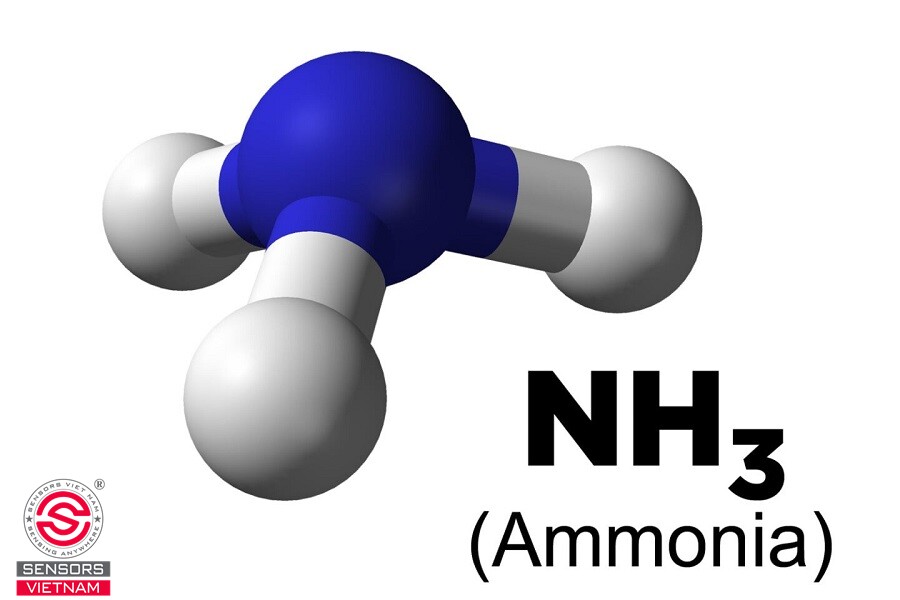
Ammonia (NH3) is a colorless gas with a pungent odor, lighter than air and highly soluble in water. In nature, NH3 is continuously generated from the decomposition of nitrogen-containing organic matter, especially from a mixture of animal manure and urine.
This explains why poorly ventilated barns often feel stuffy and have a strong unpleasant smell. Once you can smell ammonia, it means the concentration has already reached a concerning level.
The critical issue is that harmful levels occur well below the threshold detectable by the human nose.
- Above 25 ppm: irritation to eyes and respiratory systems in animals
- Above 50 ppm: increased risk of pneumonia, reduced growth, potential mortality
- 25-50 ppm (for humans): chronic irritation
- Above 300 ppm: life-threatening
In Vietnam, the recommended NH3 concentration in livestock environments should not exceed 10 ppm. This is even stricter than international standards due to high farming density and ventilation limitations.
READ MORE: COMMON TYPES OF NH3 SENSOR
How does an NH3 gas sensor work?
An NH3 gas sensor is a device that measures ammonia concentration in the air and converts it into electrical signals for control systems.
The most common sensing principle today is electrochemical. When NH3 molecules enter the sensing chamber, they react with electrodes and generate a small electrical current proportional to the gas concentration. This signal is then converted into ppm values.
Other sensing technologies include:
- NDIR (Non-Dispersive Infrared): high stability and long lifespan
- MOS (Metal Oxide Semiconductor): lower cost but less accurate
The operation process follows a continuous sequence:
Step 1: NH3 gas diffuses into the sensor through a protective membrane filter, which blocks dust and moisture while allowing gas molecules to pass through in a controlled manner.
Step 2: Inside the chamber, NH3 reacts with electrodes, producing a small electrical current proportional to the concentration.
Step 3: The internal circuit amplifies and converts this signal into a readable concentration value in ppm.
Step 4: The signal is transmitted via standard outputs such as 4-20 mA, 0-10 V, or Modbus RS485 to a central controller like PLC or BMS.
Step 5: The system compares the measured value with preset thresholds and triggers actions such as ventilation fans, cooling systems, or alarms.
Step 6: The entire process takes approximately 25 to 30 seconds, fast enough to prevent harmful concentration buildup, especially in rapidly changing livestock environments.
Applications of NH3 gas sensors
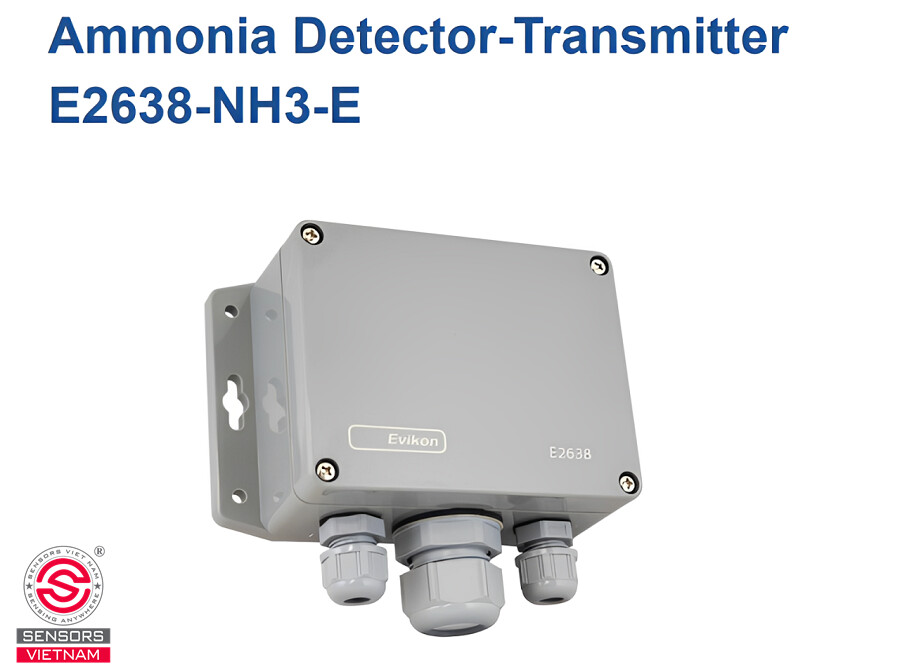
Livestock farms: This is the most common application. NH3 concentration fluctuates depending on animal density, temperature, humidity, and waste management. Without sensors, ventilation systems often run on fixed schedules or human perception, leading to energy waste or insufficient ventilation.
Industrial refrigeration systems: NH3 is widely used as a refrigerant due to its high efficiency. However, it is toxic and potentially explosive at high concentrations. Sensors detect leaks early in compressors, valves, and pipelines, triggering ventilation and alarms.
Wastewater and waste treatment: NH3 is continuously generated during biological decomposition. Sensors help protect workers, control odors, and optimize deodorization systems.
Chemical and fertilizer industry: NH3 is a key raw material. Leakage causes safety risks and economic losses. Sensors are installed at high-risk points such as valves, flanges, and pipelines.
Power plants and refineries: NH3 is used in NOx reduction systems. Excess ammonia (ammonia slip) can escape into the environment. Sensors measure this and optimize injection control.
READ MORE: H2 SENSOR IN LITHIUM FACTORY
How to choose the right NH3 gas sensor
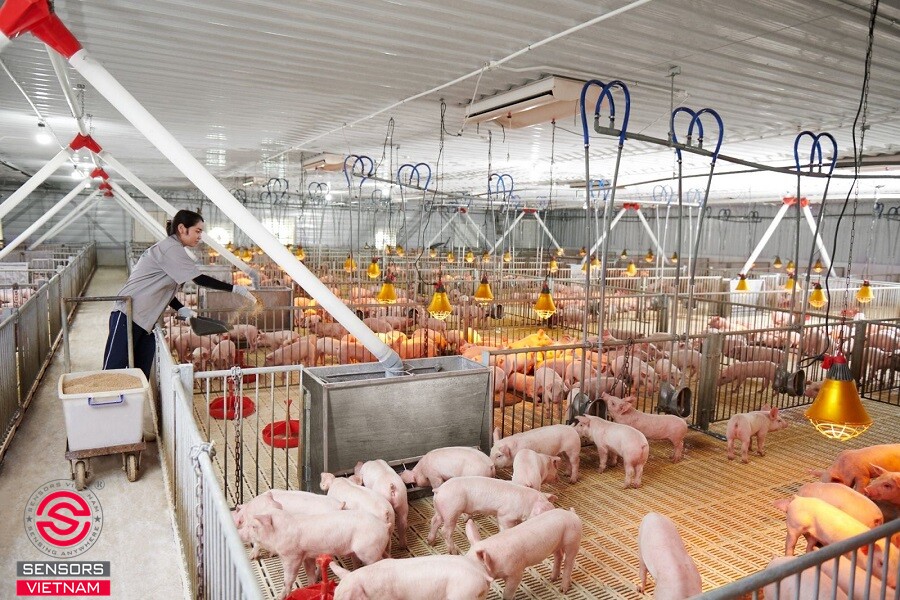
When selecting a sensor, focus on key technical parameters:
- Measurement range: suitable for application (0-100 ppm for livestock, higher for industrial use)
- Accuracy: minimum ±5% FS
- Response time: under 25 seconds
- Protection rating: IP65 or higher
- Housing material: high-quality ABS or stainless steel 304/316
- Output signals: 4-20 mA, 0-10 V, or RS485
Choosing the wrong range or low-quality devices reduces system reliability.
Proper installation of NH3 gas sensors
Installation Position
- NH3 is lighter than air and rises upward
- Install sensors 0.3 to 0.5 m above animal head level
- Keep at least 0.3 m distance from the ceiling
- Avoid installing too low as readings will be underestimated
- Avoid placing directly near the ceiling where concentrations are unusually high
- Use multiple sensors in large spaces for accurate representation
Maintenance of NH3 Gas Sensors
- Clean the sensor surface weekly with a soft cloth
- Inspect wiring and connections monthly
- Replace protective filters every 3 to 6 months
- Calibrate the sensor every 6 to 12 months using standard gas
Important Note
- Calibration is the most critical step to maintain long-term accuracy
- Skipping calibration leads to measurement drift over time, even if the device appears normal
READ MORE: CO SENSOR
NH3 gas sensor solutions from Sensors Vietnam
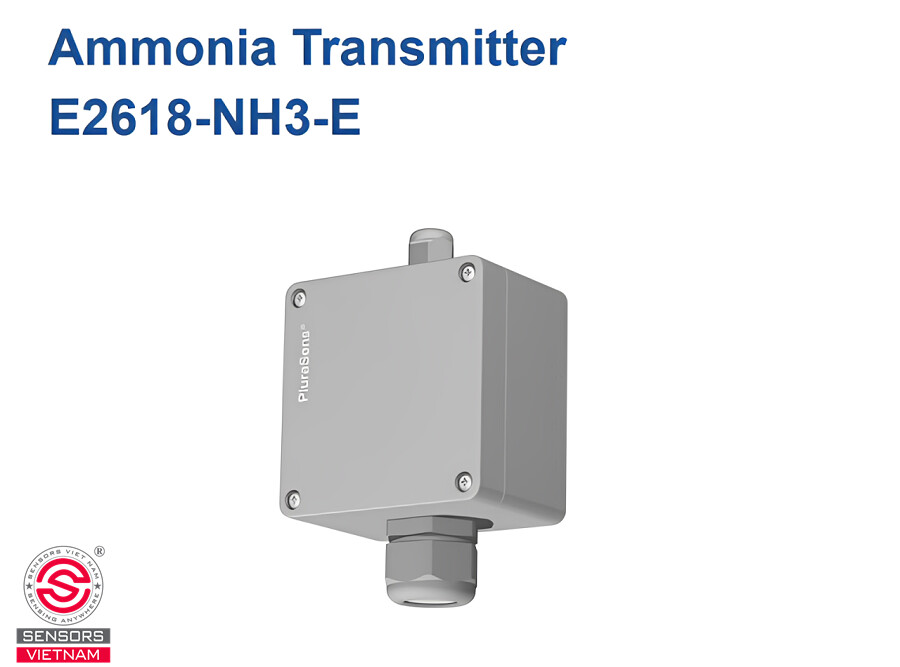
Sensors Vietnam provides a wide range of NH3 gas sensors for livestock farming, industrial refrigeration, wastewater treatment, and chemical industries. All products come with full certification, official warranty, and technical support. Our engineering team is ready to advise on the most suitable solution based on your application, installation conditions, and budget. Contact Sensors Vietnam today for consultation and a fast quotation.
Hot news




SENSORS VIETNAM CO., LTD
VAT CODE: 0313 355 473
Head Office: 03rd Floor, Indochina Tower, 04 Nguyen Dinh Chieu, Tan Dinh Ward, Ho Chi Minh City, Vietnam.
HCM Branch: 92/14/9A Vuon Lai Str., An Phu Dong Ward, Ho Chi Minh City, Vietnam.
Hanoi Branch: S106 Tower, Vinhomes Smart City, Tay Mo Ward, Hanoi City, Vietnam.

® Registered trademark – National Office of Intellectual Property Vietnam
OUR SERVICES
Specializing in the import and distribution of industrial sensors.
Sensors for HVAC/R systems and building automation applications.
Supplying gauges, transmitters, switches, controllers, PLCs, HMIs, and gas detectors.
Providing integrated consulting services for sensor and controller systems.


CONTACT US
Email: sales(at)sensors.vn
Hotline: +84 0911 660 660
Asia Commercial Bank Account (ACB):
VND: 357 246 888 | USD: 1357 246 888
Support Online ZALO Official Account
(From 8:00 am to 5:00 pm)





SENSORS VIETNAM CO., LTD
- Specialized in the import and distribution of sensors and controllers.
- Integrated data acquisition systems and industrial communication solutions.
- Design and installation of smart home systems and industrial equipment.
- Stack lights, signal beacons, LED warning horns, and RGB warning lights.