





CUSTOMER SERVICE
www.sensors.vn
Admin@sensors.vn
www.cambien.com.vn
PRESSURE SWITCH NC/NO
Date 18/Mar/2026 at 04:34 PM - View: 77
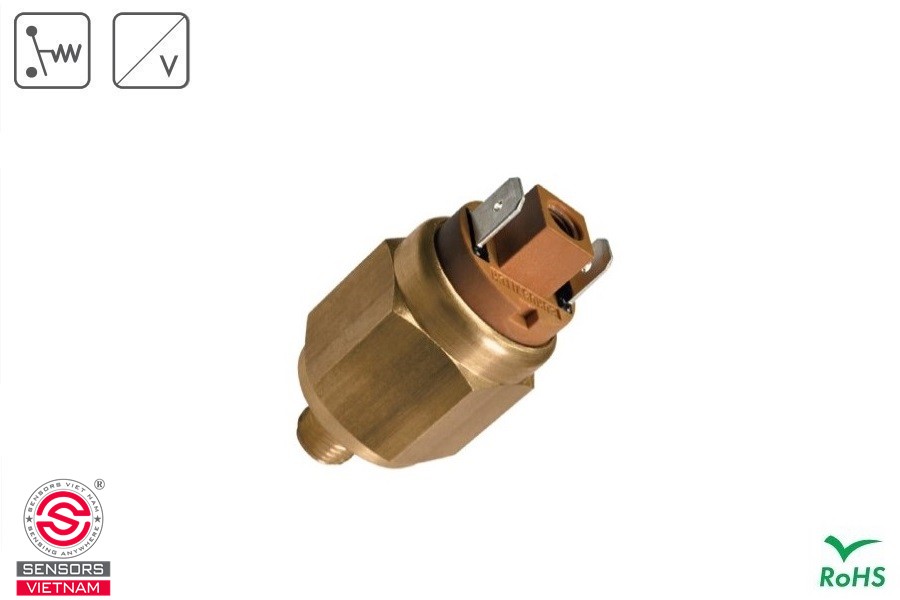
In modern industrial systems and HVAC applications, pressure control is not merely about measurement, it is directly tied to operational safety and system performance. This is exactly why pressure switches have become an indispensable component.
In simple terms, a pressure switch is a device designed to monitor the pressure of liquids or gases and automatically open or close an electrical circuit when a preset pressure threshold is reached. Thanks to its fully automatic operation, it helps systems run more stably, minimizes risks, and optimizes overall efficiency.
If you are looking for an effective pressure control solution tailored to your system, let Sensors Vietnam guide you through the structure, working principle, and real-world applications of this device.
Structure of a pressure switch
A standard NO/NC pressure switch is typically composed of five main components, each playing a critical role in ensuring accuracy and durability:
- Protective housing: Acts as an outer shield, protecting internal components from mechanical impact, dust, moisture, and harsh environmental conditions.
- Pressure connection port: The point where pressure from the medium (gas or liquid) enters the device, allowing the pressure signal to be transmitted internally.
- Diaphragm / Sensing element: Considered the “heart” of the pressure switch. It is usually made from stainless steel or high-elasticity alloys. When pressure is applied, the diaphragm deforms (bends or deflects) proportionally to the actual pressure value.
- Mechanical actuator: Includes springs, pressure plates, and switching mechanisms. The deformation of the diaphragm is transferred to this actuator, triggering the switching action.
- Electrical contacts (NO/NC): Responsible for controlling the electrical circuit. Depending on the configuration:
- NO (Normally Open): remains open and closes when the set pressure is reached
- NC (Normally Closed): remains closed and opens when the pressure threshold is reached
The coordinated operation of these components ensures stable, precise, and long-lasting performance.

Working principle of a pressure switch
A pressure switch operates based on the interaction between pressure force and a mechanical-electrical switching mechanism, following a continuous sequence:
- Pressure from the medium (gas or liquid) is transmitted through the connection port and applied directly to the diaphragm surface.
- Under pressure, the diaphragm (typically made of stainless steel or elastic alloy) begins to deform. The degree of deformation increases proportionally with the actual system pressure.
- This deformation generates a mechanical movement, which is accurately transferred to the actuator through linkage mechanisms.
- As pressure continues to rise and reaches a certain threshold, the applied force overcomes the spring resistance, compressing the spring and moving the pressure plate.
- Once the force balance is disrupted, the switching mechanism is activated decisively, ensuring fast and stable switching without fluctuation or delay.
- Immediately, the electrical contacts change state from open to closed or from closed to open depending on the initial configuration (NO or NC).
- Contact behavior:
- NO (Normally Open): circuit closes at set pressure → device is activated
- NC (Normally Closed): circuit opens at set pressure → device stops operating
Thanks to this clear threshold-based response, pressure switches can trigger system actions instantly and reliably, without manual intervention.

Applications of pressure switches
Beyond simple measurement, pressure switches act as a “system guardian,” protecting and optimizing operations across various industries:
- HVAC systems: In modern HVAC systems, pressure switches play a vital role:
- Detect clogged or dirty filters and trigger alarms or shutdowns
- Monitor fan and pump operation
- Control AHU, FCU, and PAU systems
- Optimize airflow and reduce energy consumption based on real-time pressure
- Heating and cooling systems: Pressure switches help control pumps and valves based on fluid pressure:
- Automatically start/stop pumps at preset thresholds
- Maintain stable system pressure
- Prevent overpressure conditions that could damage equipment
- Oil & gas industry: In high-safety environments, pressure switches provide continuous monitoring:
- Track pressure in pipelines
- Detect leaks or blockages early
- Control pressure during drilling and extraction processes
- Water and wastewater treatment: Pressure switches ensure smooth system operation:
- Determine liquid levels via bottom pressure measurement
- Monitor pressure across filtration systems
- Detect clogging and support timely maintenance
- Other applications: Pressure switches are also widely used in:
- Industrial compressed air systems
- Hydraulic systems
- Aerospace systems
- Staircase pressurization systems
- And many other technical fields
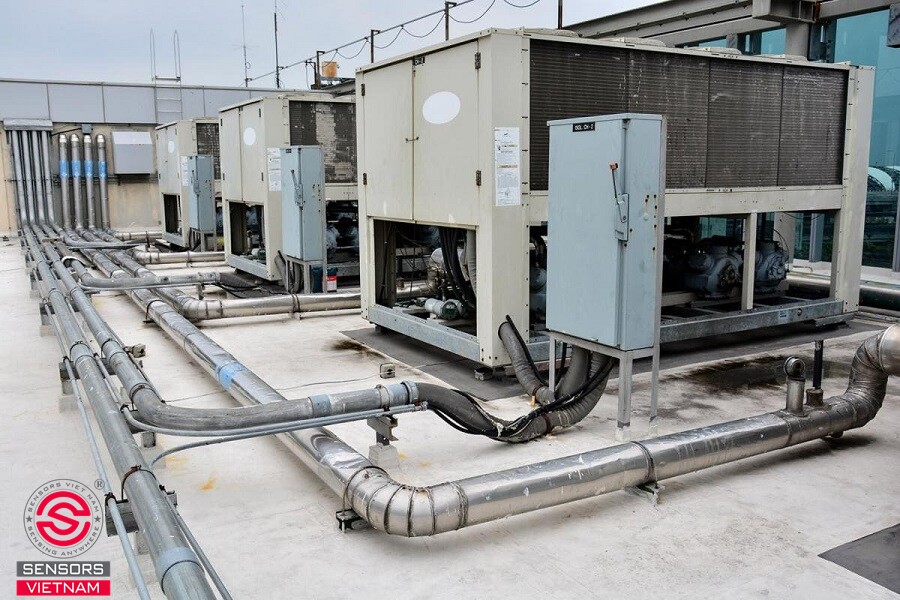
A pressure switch is not just a measuring device, it is a reliable control and protection solution for modern industrial systems.
Selecting the right pressure switch for your application will help you improve operational efficiency, minimize system risks, reduce long-term maintenance costs. If you need detailed consultation or are looking for the right product, feel free to contact Sensors Vietnam for fast and professional support.
Reference product: Pressure switch
Hot news


SENSORS VIETNAM CO., LTD
VAT CODE: 0313 355 473
Head Office: 03rd Floor, Indochina Tower, 04 Nguyen Dinh Chieu, Tan Dinh Ward, Ho Chi Minh City, Vietnam.
HCM Branch: 92/14/9A Vuon Lai Str., An Phu Dong Ward, Ho Chi Minh City, Vietnam.
Hanoi Branch: S106 Tower, Vinhomes Smart City, Tay Mo Ward, Hanoi City, Vietnam.

® Registered trademark – National Office of Intellectual Property Vietnam
OUR SERVICES
Specializing in the import and distribution of industrial sensors.
Sensors for HVAC/R systems and building automation applications.
Supplying gauges, transmitters, switches, controllers, PLCs, HMIs, and gas detectors.
Providing integrated consulting services for sensor and controller systems.


CONTACT US
Email: sales(at)sensors.vn
Hotline: +84 0911 660 660
Asia Commercial Bank Account (ACB):
VND: 357 246 888 | USD: 1357 246 888
Support Online ZALO Official Account
(From 8:00 am to 5:00 pm)





SENSORS VIETNAM CO., LTD
- Specialized in the import and distribution of sensors and controllers.
- Integrated data acquisition systems and industrial communication solutions.
- Design and installation of smart home systems and industrial equipment.
- Stack lights, signal beacons, LED warning horns, and RGB warning lights.