






CUSTOMER SERVICE
www.sensors.vn
Admin@sensors.vn
www.cambien.com.vn
WHAT IS A MODULATING DAMPER ACTUATOR?
Date 08/Sep/2026 at 03:27 PM - View: 144
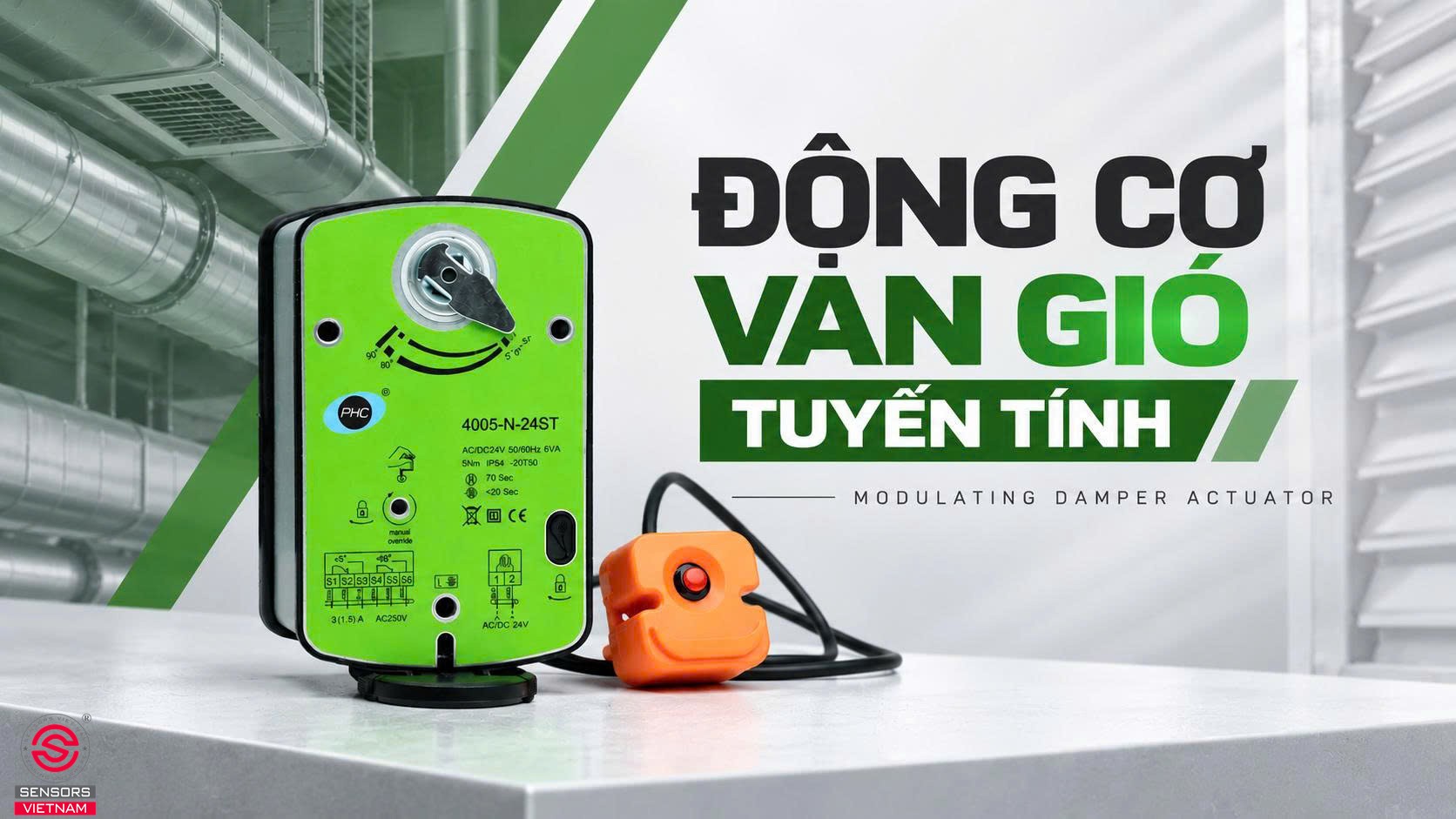
While an ON/OFF damper only has two states, fully closed or fully open, many modern HVAC and ventilation systems need a more flexible mode of operation, one that can open to any position from 0 to 100 percent rather than just two extremes. That is exactly where a modulating damper actuator excels. This article explains what this type of actuator is, how it works, and where it needs to be installed in a building.
WHAT IS A MODULATING DAMPER ACTUATOR?
A modulating damper actuator is a type of actuator that can stop at any opening angle throughout its full stroke, rather than only running to one of two end positions like an ON/OFF actuator. The damper opening angle is proportional to the input control signal, most commonly 0-10VDC or 4-20mA.
To put it simply, if the control signal is 5V on a 0-10V scale, the damper will open to roughly 50 percent of its travel. When the signal rises to 8V, the damper automatically opens further, to roughly 80 percent. This characteristic allows airflow through the ductwork to be adjusted smoothly and precisely to match actual demand at any given moment.
CONSTRUCTION AND WORKING PRINCIPLE OF A MODULATING DAMPER ACTUATOR
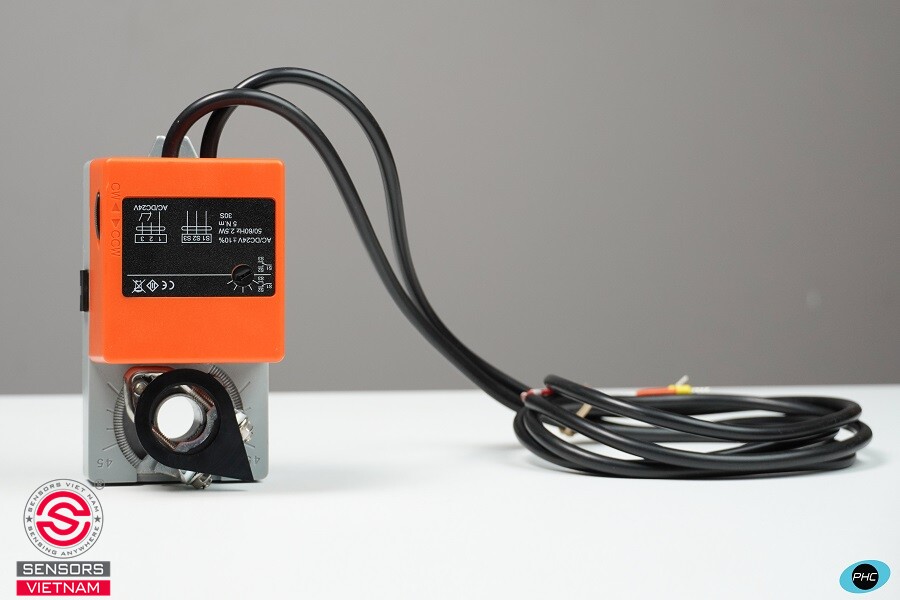
A modulating damper actuator consists of several core assemblies working closely together. The electric motor, typically a DC motor or a stepper motor, generates the rotational force. The gear train increases torque enough to overcome the running resistance of the damper blade and the airflow inside the duct. The most distinctive component is the integrated control circuit board, which contains an analog signal converter and a position feedback circuit, typically using a potentiometer or a non-contact position sensor to precisely track the shaft's current angle.
Operation follows a fairly intelligent closed loop. The central controller or DDC sends an analog signal to the actuator corresponding to the desired opening angle. The circuit board inside the actuator compares this signal with the actual position measured by the feedback sensor. If there is a discrepancy, the motor runs to adjust the output shaft to the required angle, then stops automatically once the two values match. This continuous comparison and adjustment mechanism keeps the damper accurately tracking the control signal, even when an external force shifts the blade position during operation.
Many modulating actuator models also provide an output feedback signal, sending the damper's actual position back to the controller. This allows the central system to always know the actual open or closed status of the damper.
 KEY FEATURES OF A MODULATING DAMPER ACTUATOR
When discussing a modulating damper actuator, there are a few features that almost always need to be mentioned, since they determine whether this type of actuator suits a particular system.
A modulating damper actuator provides continuous, highly precise modulation. The opening angle error on good-quality models is typically within a few percentage points, which is accurate enough for temperature or pressure control applications that demand high sensitivity.
A modulating damper actuator is well suited to automated control systems. Because it receives an analog signal directly from the controller, this type of actuator is essentially a required link in PID control loops, where the system must continuously calculate and adjust the damper opening angle in real time based on room temperature, duct pressure, or measured airflow.
A modulating damper actuator typically responds somewhat more slowly than an ON/OFF actuator, since it needs to travel to a specific intermediate position rather than simply running to the end of its stroke.
Finally, the investment cost of a modulating actuator is notably higher than that of an ON/OFF actuator, due to its more complex control circuitry and the higher mechanical precision required during manufacturing.
PRACTICAL APPLICATIONS OF A MODULATING DAMPER ACTUATOR
Modulating damper actuators are installed in a number of specific systems, including:
- Modulating damper actuators for central VAV air conditioning systems.
- Modulating damper actuators for cleanrooms in pharmaceutical plants, laboratories, or electronics manufacturing facilities.
- Modulating damper actuators for data centers.
- Modulating damper actuators for office buildings and large hotels with an energy management BMS.
- Modulating damper actuators for industrial ventilation systems.
A modulating damper actuator plays the role of precisely and continuously regulating airflow rate and air pressure within these systems. It also helps maintain operating parameters, such as temperature, pressure, and fresh air flow rate, consistently within the allowable range, while helping the system run smoothly, avoiding sudden fluctuations, and optimizing energy consumption compared to traditional open/closed solutions.
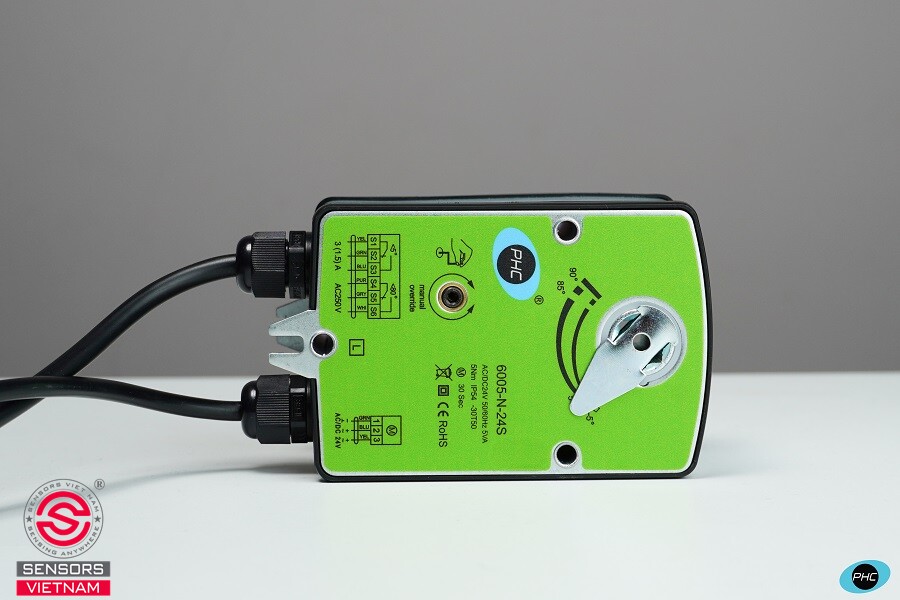 → See more: Genuine damper actuator product line distributed by Sensors Vietnam
BUY GENUINE DAMPER ACTUATORS AT SENSORS VIETNAM
Sensors Vietnam is a leading provider of measurement, sensing, and automation solutions. We offer a diverse, genuine product portfolio from leading global brands, fully able to meet the full range of customer application needs.
Why choose products and solutions from Sensors Vietnam?
- 100% genuine products from leading global brands.
- A comprehensive equipment ecosystem.
- Highly competitive market pricing.
- Fast nationwide delivery.
- Free personalized consulting from a professional engineering team.
- Committed product quality with full CO/CQ documentation and long-term warranty.
For detailed information or to order damper actuators, please contact Sensors Vietnam directly for prompt, dedicated support.
Hot news




SENSORS VIETNAM CO., LTD
VAT CODE: 0313 355 473
Head Office: 03rd Floor, Indochina Tower, 04 Nguyen Dinh Chieu, Tan Dinh Ward, Ho Chi Minh City, Vietnam.
HCM Branch: 92/14/9A Vuon Lai Str., An Phu Dong Ward, Ho Chi Minh City, Vietnam.
Hanoi Branch: S106 Tower, Vinhomes Smart City, Tay Mo Ward, Hanoi City, Vietnam.

® Registered trademark – National Office of Intellectual Property Vietnam
OUR SERVICES
Specializing in the import and distribution of industrial sensors.
Sensors for HVAC/R systems and building automation applications.
Supplying gauges, transmitters, switches, controllers, PLCs, HMIs, and gas detectors.
Providing integrated consulting services for sensor and controller systems.


CONTACT US
Email: sales(at)sensors.vn
Hotline: +84 0911 660 660
Asia Commercial Bank Account (ACB):
VND: 357 246 888 | USD: 1357 246 888
Support Online ZALO Official Account
(From 8:00 am to 5:00 pm)





SENSORS VIETNAM CO., LTD
- Specialized in the import and distribution of sensors and controllers.
- Integrated data acquisition systems and industrial communication solutions.
- Design and installation of smart home systems and industrial equipment.
- Stack lights, signal beacons, LED warning horns, and RGB warning lights.