






CUSTOMER SERVICE
www.sensors.vn
Admin@sensors.vn
www.cambien.com.vn
WHAT IS C2H4O (ACETALDEHYDE) SENSOR?
Date 11/Aug/2026 at 03:03 PM - View: 3
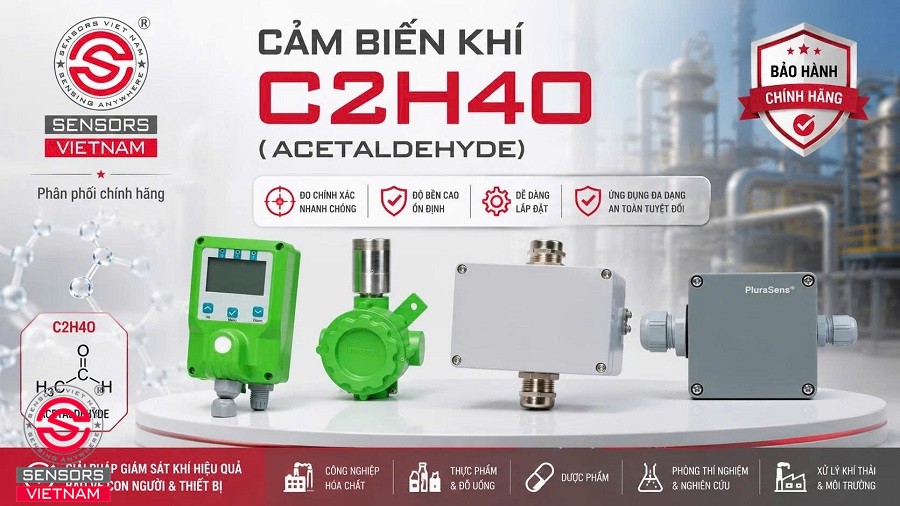
C2H4O, or acetaldehyde, is a volatile organic compound found across many chemical and food processing industries, yet it is also a flammable gas classified as a substance with carcinogenic potential in humans. The C2H4O gas detector helps detect leaks early, protecting worker safety at facilities that use or generate this gas.
OVERVIEW OF C2H4O (ACETALDEHYDE) GAS
C2H4O, chemically known as acetaldehyde, CAS number 75-07-0, is an organic compound belonging to the aldehyde group, existing as a colorless liquid that is volatile and has a characteristic pungent odor at room temperature.
Key characteristics to note:
- A flammable substance with strong chemical reactivity, capable of reacting violently with certain other chemicals
- Classified as a substance with carcinogenic potential in humans
- Prolonged exposure can cause irritation of the respiratory tract and eyes, headaches, and effects on the nervous system
Acetaldehyde is an important intermediate raw material in the production of acetic acid, perfumes, food flavorings, aniline dyes, plastics and synthetic rubber. It also forms naturally during the ripening of fruit and is an intermediate product of ethanol metabolism in the body, which is why it also appears at certain stages of alcoholic beverage production.
 WHAT IS A C2H4O (ACETALDEHYDE) GAS DETECTOR AND WHY IS IT NEEDED?
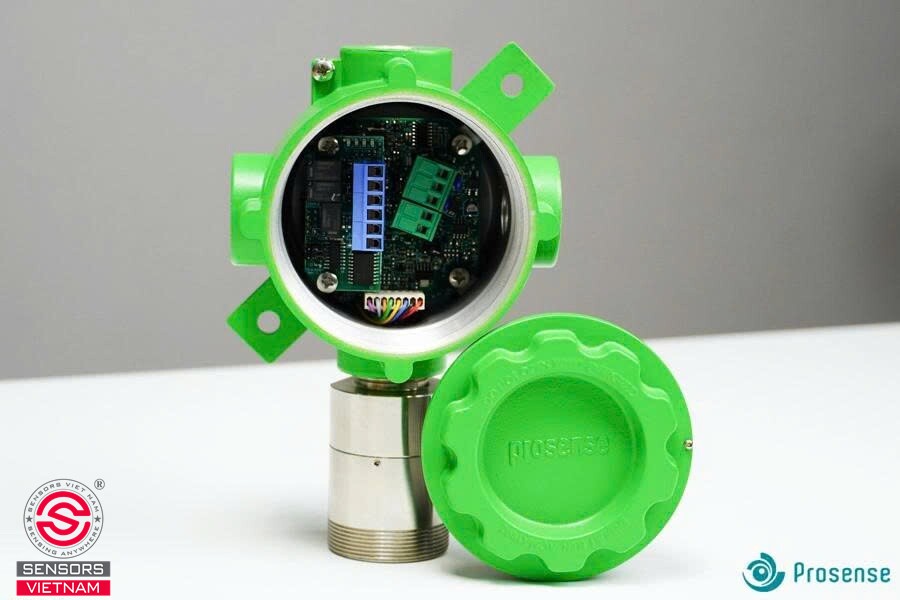
A C2H4O gas detector is a dedicated device used to detect the presence and measure the concentration of acetaldehyde gas in the air. Because acetaldehyde is flammable, the concentration measured in industrial safety applications is typically expressed as a percentage of the lower explosive limit (%LEL).
Installing a C2H4O gas detector delivers several practical benefits for a business:
- Reduces the risk of fire or explosion in production or storage areas
- Protects worker health against the risk of prolonged exposure to a substance with carcinogenic potential
- Supports compliance with current chemical safety and fire protection regulations
- Helps maintain continuous production operations, avoiding disruption caused by an undetected leak
WORKING PRINCIPLE OF C2H4O (ACETALDEHYDE) GAS DETECTORS
The most widely used technology for C2H4O gas detectors is the catalytic combustion principle, also known as a pellistor sensor. This principle is based on the oxidation reaction of acetaldehyde gas on the surface of a heated catalytic bead. When the gas diffuses into the sensor chamber and comes into contact with the catalytic bead, a combustion reaction occurs, generating heat and changing the electrical resistance of the bead. This change in resistance is measured by the processing unit and converted into a gas concentration value, triggering an alarm once the configured threshold is exceeded.
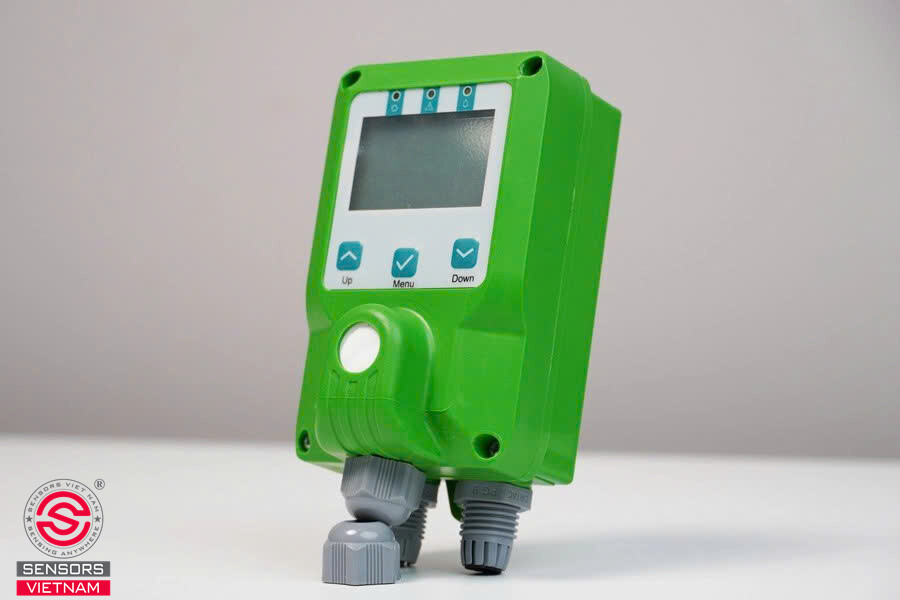 Pellistor sensors are favored for detecting combustible gases such as acetaldehyde due to their reasonable investment cost and good sensitivity within the %LEL measurement range. However, because the sensing mechanism is fundamentally a combustion reaction, the sensor requires sufficient oxygen in the environment to operate accurately, and its sensitivity can degrade over time when exposed to sensor poisoning substances.
APPLICATION AREAS FOR C2H4O (ACETALDEHYDE) GAS DETECTORS
C2H4O gas detectors are commonly installed at acetic acid manufacturing plants, where acetaldehyde serves as an intermediate raw material used in large volumes during the reaction process. In addition, facilities producing plastics, dyes and industrial chemicals that use acetaldehyde in their synthesis processes also require continuous monitoring to control fire risk and exposure.
In the food and beverage industry, C2H4O gas detectors are used in flavoring production areas or fruit storage warehouses, where acetaldehyde can be naturally generated during ripening and fermentation at notable concentrations if the storage space is enclosed. Beyond that, chemical research laboratories, product quality testing facilities and chemical waste treatment areas are also locations that require detectors to protect the safety of technical staff who regularly handle this compound.
 HOW TO CHOOSE A SUITABLE C2H4O (ACETALDEHYDE) GAS DETECTOR
Selecting the right C2H4O gas detector should be based on the actual characteristics of the area to be monitored and the operating requirements of the business, rather than on device price alone.
First, the appropriate measurement range and unit must be clearly defined based on the intended purpose. For fire and explosion safety, the device needs to measure in %LEL, avoiding confusion with the ppm unit typically used for low concentration toxicity measurement.
Next, the actual operating environment is also a factor that requires careful consideration, since areas with fluctuating oxygen levels or a need for long-term stability will directly affect the performance of the catalytic combustion sensing technology in use.
The device's response time is equally important. Because acetaldehyde is flammable and highly reactive, the detector must register and alarm quickly enough for the ventilation system or emergency shutoff to intervene before the gas concentration reaches a dangerous level.
Beyond the measurement-related factors, system integration capability should also be considered from the outset. The sensor's signal output, whether analog, relay or RS485 Modbus, needs to be compatible with the existing BMS or PLC system to ensure smooth installation and operation.
SENSORS VIETNAM - THE LEADING DISTRIBUTOR OF C2H4O SENSORS IN VIETNAM
Sensors Vietnam is a provider of advanced measurement, sensing, and automation solutions, including C4H10 gas detectors. We offer a diverse portfolio of genuine products from leading global manufacturers, fully capable of meeting the full range of customer application needs. For detailed information or to order a C4H10 gas detector, please contact Sensors Vietnam directly for prompt and dedicated support.
Hot news


SENSORS VIETNAM CO., LTD
VAT CODE: 0313 355 473
Head Office: 03rd Floor, Indochina Tower, 04 Nguyen Dinh Chieu, Tan Dinh Ward, Ho Chi Minh City, Vietnam.
HCM Branch: 92/14/9A Vuon Lai Str., An Phu Dong Ward, Ho Chi Minh City, Vietnam.
Hanoi Branch: S106 Tower, Vinhomes Smart City, Tay Mo Ward, Hanoi City, Vietnam.

® Registered trademark – National Office of Intellectual Property Vietnam
OUR SERVICES
Specializing in the import and distribution of industrial sensors.
Sensors for HVAC/R systems and building automation applications.
Supplying gauges, transmitters, switches, controllers, PLCs, HMIs, and gas detectors.
Providing integrated consulting services for sensor and controller systems.


CONTACT US
Email: sales(at)sensors.vn
Hotline: +84 0911 660 660
Asia Commercial Bank Account (ACB):
VND: 357 246 888 | USD: 1357 246 888
Support Online ZALO Official Account
(From 8:00 am to 5:00 pm)





SENSORS VIETNAM CO., LTD
- Specialized in the import and distribution of sensors and controllers.
- Integrated data acquisition systems and industrial communication solutions.
- Design and installation of smart home systems and industrial equipment.
- Stack lights, signal beacons, LED warning horns, and RGB warning lights.