





CUSTOMER SERVICE
www.sensors.vn
Admin@sensors.vn
www.cambien.com.vn
WHAT IS CL2 SENSOR?
Date 10/Aug/2026 at 04:48 PM - View: 8
.jpg)
Cl2, or chlorine gas, is a critical disinfecting agent in water treatment, yet it is also a toxic and highly corrosive gas. The Cl2 gas detector is the device that helps detect leaks early, protecting worker safety at water treatment plants and chemical facilities.
WHAT IS A CL2 (CHLORINE) GAS DETECTOR?
About Cl2 (Chlorine) gas
Cl2, chemically known as chlorine, CAS number 7782-50-5, is a pale yellowish green gas with a characteristic sharp, suffocating odor.
Key characteristics:
- Nonflammable, but highly toxic with strong oxidizing and corrosive properties
- Heavier than air, tending to accumulate in low lying areas when a leak occurs
- Occupational exposure limit of approximately 0.5 to 1 ppm as an 8 hour time weighted average
- Liquefies at approximately -35°C, and is typically stored and transported as a liquefied gas in pressurized containers
Cl2 is most commonly used for disinfecting drinking water and wastewater, and also serves as an important raw material in chemical manufacturing, pulp bleaching and several other industries. Because of its high toxicity even at low concentrations, continuous monitoring of Cl2 levels in the air is a mandatory safety requirement at facilities that handle this gas.
Overview of Cl2 (Chlorine) gas detectors
A Cl2 gas detector is a dedicated device used to detect the presence and measure the concentration of chlorine gas in the air, typically expressed in ppm.
In terms of working principle, most Cl2 gas detectors on the market use electrochemical sensing technology. Cl2 gas diffuses into the sensor chamber and undergoes an oxidation-reduction reaction at the electrode, generating an electrical current proportional to the gas concentration. This signal is then converted by the processing unit into a concentration value, triggering an alarm once the configured threshold is exceeded.
Electrochemical technology is favored for Cl2 gas detectors due to its high sensitivity at low ppm ranges, matching the very strict occupational exposure limits set for this gas.
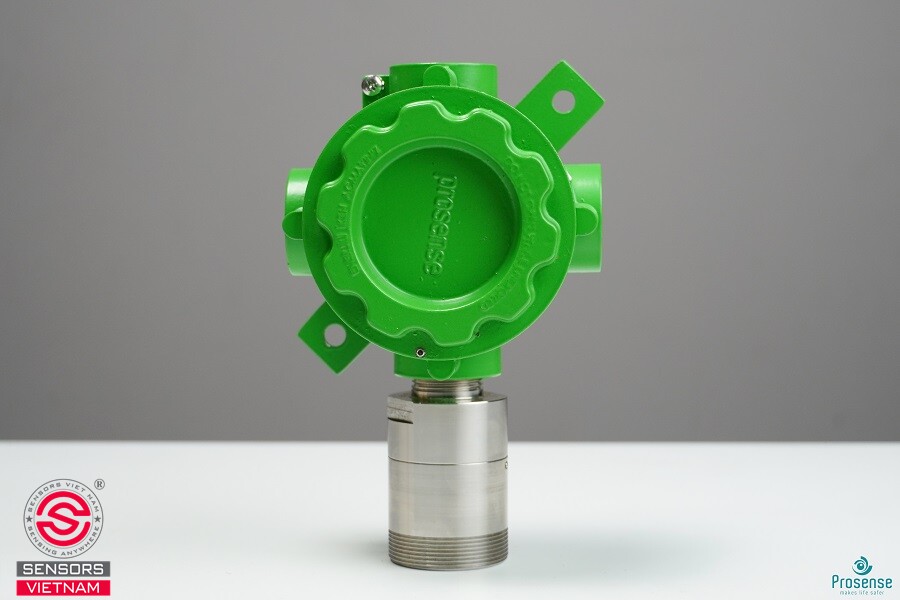 PRACTICAL APPLICATIONS OF CL2 (CHLORINE) GAS DETECTORS
Thanks to their high sensitivity and fast alarm response, Cl2 gas detectors are found at nearly every facility that uses or stores chlorine, particularly in locations where the gas can accumulate in enclosed or semi-enclosed spaces. Typical applications include:
- Drinking water and wastewater treatment plants
- Liquid chlorine storage and cylinder filling stations
- Chemical manufacturing plants producing chlorine-based compounds
- Large-scale swimming pools and aquatic sports centers
- Pulp and paper mills
SELECTION CRITERIA FOR A SUITABLE, HIGH QUALITY CL2 (CHLORINE) GAS DETECTOR
Because Cl2 is toxic, highly corrosive, and subject to a very low occupational exposure limit, choosing the right detector directly affects both alarm performance and equipment durability in a harsh environment. Before making a purchase decision, the following criteria should be compared:
1. Measurement range and resolution: prioritize devices with good resolution at low ppm ranges, matching the early warning thresholds required by occupational safety regulations
2. Electrochemical sensing technology: ensures high selectivity for Cl2 gas, minimizing cross sensitivity to other oxidizing gases that may be present in the same environment
3. Fast response time: since Cl2 is highly toxic even at low concentrations, the detector must register and alarm quickly to limit exposure time
4. Corrosion resistant materials: because Cl2 is highly corrosive, choose a device with a housing and components specifically designed to withstand a chlorine containing environment
5. Compatible signal output: including analog, relay or RS485 Modbus, for smooth integration with the facility's BMS or PLC
6. Calibration cycle and sensor service life: electrochemical sensors are consumable components, so understanding the replacement frequency is essential for forecasting operating costs
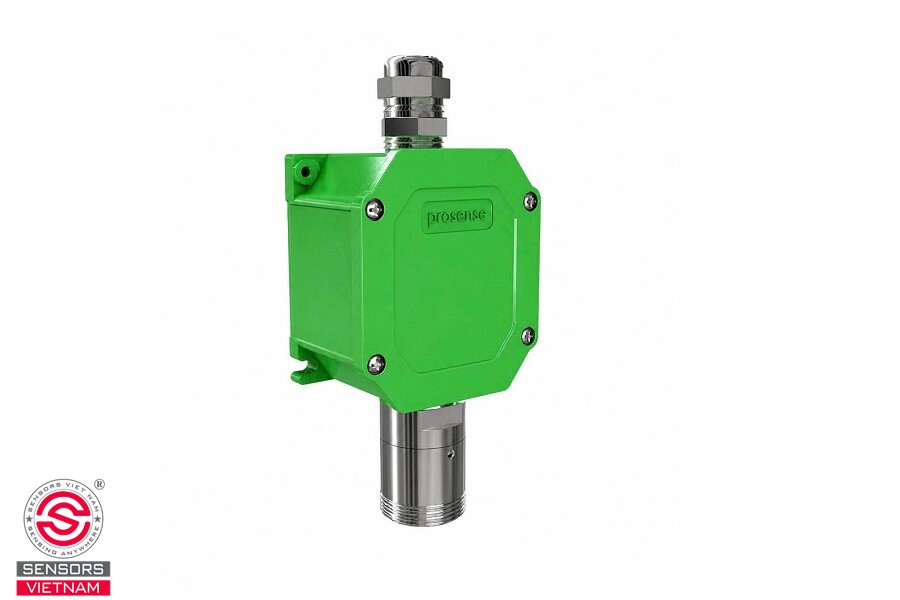 THE REAL VALUE OF A CL2 (CHLORINE) GAS DETECTOR
Investing in a Cl2 gas detection system is not simply about meeting occupational safety regulations. It is a direct investment in human safety and in the operational continuity of the business.
An undetected Cl2 leak can lead to serious consequences, ranging from harm to worker health and property damage, to production disruption, and even the risk of forced shutdown and legal liability under chemical safety regulations.
With continuous monitoring, accurate measurement at low ppm ranges, and instant alarming once the concentration exceeds the set threshold, modern Cl2 gas detectors serve as an active layer of protection for water treatment plants, chemical facilities and any industrial environment where chlorine gas is regularly present. This is a solution that helps businesses control safety risk while maintaining long term operational efficiency at a reasonable investment cost.
PURCHASE 100% GENUINE CL2 (CHLORINE) GAS DETECTORS AT SENSORS VIETNAM
Sensors Vietnam is a provider of advanced measurement, sensing and automation solutions, including Cl2 (chlorine) gas detectors. We offer a diverse portfolio of genuine products from leading global manufacturers, fully capable of meeting the full range of customer application needs.
For detailed information or to order a Cl2 (chlorine) gas detector, please contact Sensors Vietnam directly for prompt and dedicated support.
Hot news


SENSORS VIETNAM CO., LTD
VAT CODE: 0313 355 473
Head Office: 03rd Floor, Indochina Tower, 04 Nguyen Dinh Chieu, Tan Dinh Ward, Ho Chi Minh City, Vietnam.
HCM Branch: 92/14/9A Vuon Lai Str., An Phu Dong Ward, Ho Chi Minh City, Vietnam.
Hanoi Branch: S106 Tower, Vinhomes Smart City, Tay Mo Ward, Hanoi City, Vietnam.

® Registered trademark – National Office of Intellectual Property Vietnam
OUR SERVICES
Specializing in the import and distribution of industrial sensors.
Sensors for HVAC/R systems and building automation applications.
Supplying gauges, transmitters, switches, controllers, PLCs, HMIs, and gas detectors.
Providing integrated consulting services for sensor and controller systems.


CONTACT US
Email: sales(at)sensors.vn
Hotline: +84 0911 660 660
Asia Commercial Bank Account (ACB):
VND: 357 246 888 | USD: 1357 246 888
Support Online ZALO Official Account
(From 8:00 am to 5:00 pm)





SENSORS VIETNAM CO., LTD
- Specialized in the import and distribution of sensors and controllers.
- Integrated data acquisition systems and industrial communication solutions.
- Design and installation of smart home systems and industrial equipment.
- Stack lights, signal beacons, LED warning horns, and RGB warning lights.