






CUSTOMER SERVICE
www.sensors.vn
Admin@sensors.vn
www.cambien.com.vn
WHAT IS EMISSIVITY?
Date 29/Oct/2026 at 05:23 PM - View: 11
WHAT IS EMISSIVITY IN INFRARED TEMPERATURE SENSORS?
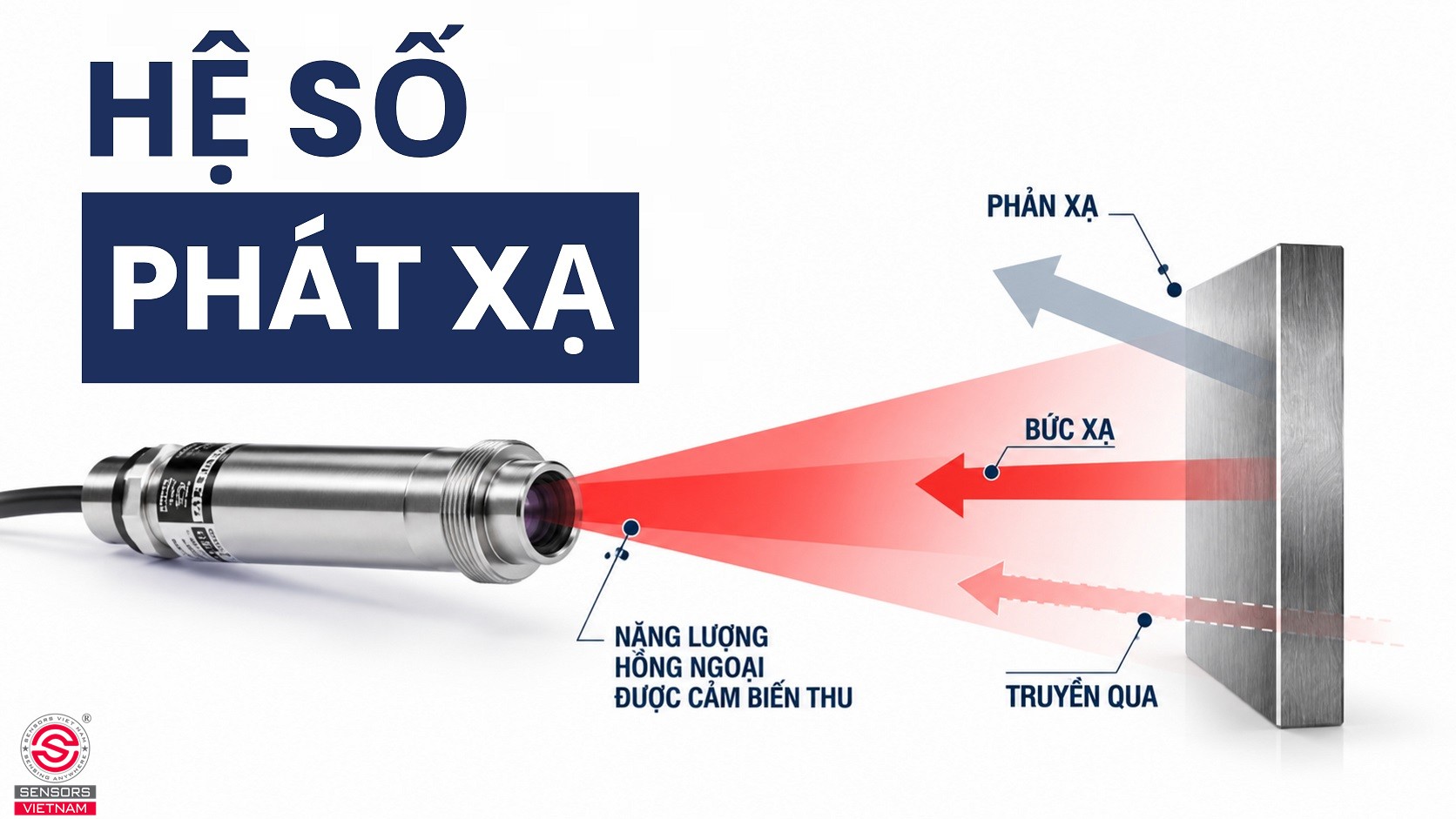
Thermal emissivity, commonly referred to as emissivity and denoted by ε, is the ratio of the thermal radiation emitted by a surface to the radiation emitted by an ideal blackbody at the same temperature, under the same wavelength and measurement geometry conditions. An ideal blackbody is a theoretical object that absorbs all incident radiation and emits the maximum possible thermal radiation at a given temperature.
Emissivity ranges from 0 to 1. The closer the value is to 1, the more strongly the surface emits radiation, approaching the behavior of an ideal blackbody. Infrared temperature measurements on these surfaces are generally more stable and less susceptible to interference from reflected ambient radiation.
Emissivity is a thermal radiation property of a surface, not an indication of whether an object is hot or cold. Two objects at the same temperature can emit different amounts of infrared radiation if their emissivity values differ.
For example, a polished aluminum sheet and an oxidized aluminum sheet may be at the same temperature but emit different amounts of infrared radiation. If the infrared temperature sensor is not configured with the appropriate emissivity value, the displayed temperature may not accurately reflect the actual surface temperature.
HOW EMISSIVITY WORKS IN INFRARED TEMPERATURE SENSORS
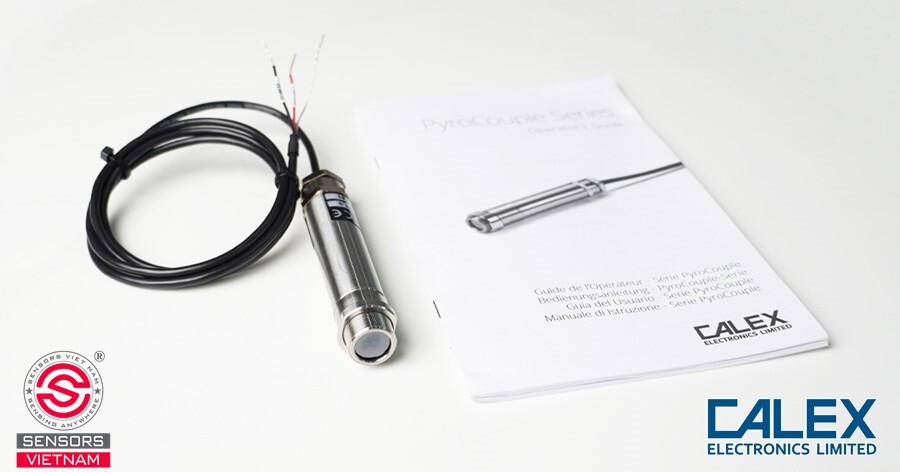
An infrared temperature sensor detects radiation from the target surface and processes the signal to determine its temperature. For opaque surfaces, the radiation received by the sensor generally consists of radiation emitted by the object itself and ambient radiation reflected from its surface.
The device uses the emissivity setting to calculate the relationship between the detected radiation signal and the object's temperature. If the configured value is incorrect, the measurement result may be inaccurate.
For example, when measuring a hot metal component, the sensor may detect radiation emitted by the component as well as radiation from the furnace or surrounding equipment. Because polished metals typically have low emissivity, reflected radiation can significantly affect the measurement.
WHAT ERRORS CAN INCORRECT EMISSIVITY SETTINGS CAUSE?
When the configured emissivity does not match the target surface, an infrared temperature sensor may display a temperature higher or lower than the actual temperature. Two common scenarios can occur:
Displayed temperature lower than the actual temperature
When the target is hotter than its surroundings, setting the emissivity higher than the actual value will generally cause the device to display a temperature lower than the actual temperature. For example, when measuring a hot steel component inside a furnace, an underestimated temperature reading may lead operators to conclude that the material has not reached the required temperature, resulting in unnecessarily prolonged heating.
Displayed temperature higher than the actual temperature
Under the same conditions, when the target is hotter than the reflected surroundings, setting the emissivity lower than the actual value may cause the device to display a temperature higher than the actual temperature. This can lead to an overestimation of the material temperature and inappropriate adjustments to the heating or cooling process.
Measurement errors also require particular attention when measuring polished metal surfaces with low emissivity. If the temperature of the furnace, surrounding equipment, or other reflected radiation sources changes, the displayed reading may fluctuate even when the actual target temperature remains nearly constant.
COMMON MISTAKES WHEN SETTING EMISSIVITY
One common mistake is leaving the emissivity setting at 0.95 because this is the default value on many devices. While this value may be suitable for certain surfaces, it is not accurate for every material, particularly polished metals.
Another mistake is looking up emissivity values based solely on the material name without considering the surface condition or the sensor's operating wavelength range. Two steel components can produce different measurement results if they differ in surface roughness, oxidation level, or coating.
Finally, it is important to distinguish between emissivity adjustment and instrument calibration. Adjusting emissivity helps the device calculate temperature more appropriately for the target surface, whereas calibration determines the deviation of the instrument from a recognized measurement standard. These procedures serve different purposes and cannot replace one another.
FREQUENTLY ASKED QUESTIONS ABOUT EMISSIVITY
1/ Does higher emissivity mean an infrared temperature sensor is more accurate?
No. Emissivity is a surface property, not a measure of sensor quality. Surfaces with higher emissivity are generally less sensitive to errors caused by reflected ambient radiation.
2/ Should emissivity always be set to 0.95?
No. This value should only be used when it is appropriate for the target surface and the device's operating wavelength range. For polished metals or specialized surfaces, refer to the manufacturer's guidelines and verify the measurement results.
3/ Why is it difficult to measure the temperature of polished metals accurately with infrared sensors?
Polished metals typically have low emissivity and high reflectivity. The sensor may detect ambient radiation reflected from the surface, meaning the measurement depends not only on the target object's temperature but also on its surrounding environment.
Emissivity is an important parameter when using infrared temperature sensors, infrared thermometers, and thermal imaging cameras. When selecting a non contact temperature sensor for production lines, furnaces, or industrial applications, users should prioritize devices with a suitable measurement range, operating wavelength range, and adjustable emissivity settings for the target material.
Sensors Vietnam is ready to help you select suitable infrared temperature sensors and other measurement instruments based on your specific requirements and project needs.
Hot news





SENSORS VIETNAM CO., LTD
VAT CODE: 0313 355 473
Head Office: 03rd Floor, Indochina Tower, 04 Nguyen Dinh Chieu, Tan Dinh Ward, Ho Chi Minh City, Vietnam.
HCM Branch: 92/14/9A Vuon Lai Str., An Phu Dong Ward, Ho Chi Minh City, Vietnam.
Hanoi Branch: S106 Tower, Vinhomes Smart City, Tay Mo Ward, Hanoi City, Vietnam.

® Registered trademark – National Office of Intellectual Property Vietnam
OUR SERVICES
Specializing in the import and distribution of industrial sensors.
Sensors for HVAC/R systems and building automation applications.
Supplying gauges, transmitters, switches, controllers, PLCs, HMIs, and gas detectors.
Providing integrated consulting services for sensor and controller systems.


CONTACT US
Email: sales(at)sensors.vn
Hotline: +84 0911 660 660
Asia Commercial Bank Account (ACB):
VND: 357 246 888 | USD: 1357 246 888
Support Online ZALO Official Account
(From 8:00 am to 5:00 pm)





SENSORS VIETNAM CO., LTD
- Specialized in the import and distribution of sensors and controllers.
- Integrated data acquisition systems and industrial communication solutions.
- Design and installation of smart home systems and industrial equipment.
- Stack lights, signal beacons, LED warning horns, and RGB warning lights.