





CUSTOMER SERVICE
www.sensors.vn
Admin@sensors.vn
www.cambien.com.vn
TOLUENE (C7H8) SENSOR
Date 25/Aug/2026 at 04:16 PM - View: 7
.jpg)
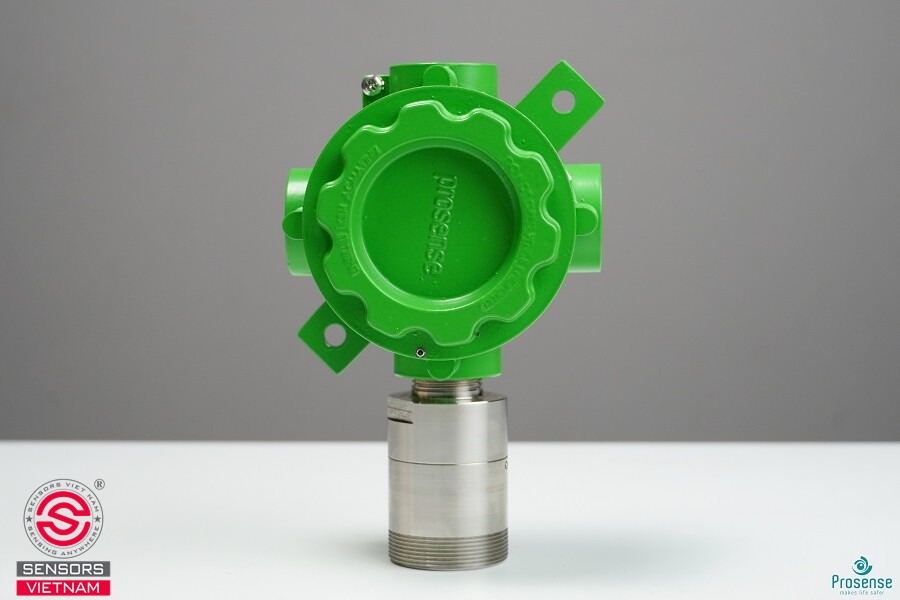
In paint, printing ink, adhesive, rubber, and chemical manufacturing plants, toluene is a widely used organic solvent valued for its strong dissolving power and affordable cost. However, it is also a flammable and notably toxic gas when allowed to accumulate in enclosed spaces. For this reason, the C7H8 (toluene) gas sensor has become an essential component of industrial safety monitoring systems, enabling early leak detection and protecting both personnel and assets from fire, explosion, and chemical exposure risks.
OVERVIEW OF TOLUENE (C7H8) SENSOR
Toluene has the following characteristics.
- A colorless, flammable liquid
- A distinctive solvent like aromatic odor, readily evaporating at room temperature
- Heavier than air, so it tends to accumulate in low lying areas, technical basements, or poorly ventilated corners, increasing the risk of fire and explosion if left unmonitored
Toluene directly affects worker health when inhaled at high concentrations over extended periods. Common symptoms include irritation of the eyes, nose, and throat, headache, dizziness, and reduced concentration, with prolonged exposure potentially affecting the central nervous system. Because it carries both a fire and explosion hazard and an occupational health hazard, facilities that produce or store toluene are generally required to install C7H8 gas sensors to continuously monitor its concentration in the air.
A toluene gas sensor works by converting the interaction between gas molecules and the sensor's detection element into an electrical signal, which is then processed and displayed as a real time gas concentration reading. When the concentration exceeds the configured threshold, the system triggers an alarm, activating a horn and strobe or interlocking with the ventilation system to address the situation before an incident occurs.
LIST OF MOST COMMON C7H8 (TOLUENE) GAS SENSOR TECHNOLOGIES
Three main sensor technologies are currently used to detect toluene gas, each suited to a different monitoring purpose.
1. Catalytic bead sensors are the most widely used technology in industrial combustible gas detectors. When toluene gas contacts the catalytic element, it oxidizes and generates heat, which changes the sensor's electrical resistance and allows the concentration to be determined as a percentage of the lower explosive limit, commonly abbreviated as LEL. This sensor type offers high durability and a simple construction, making it well suited to harsh industrial environments, and it is commonly integrated into ATEX certified explosion proof detector housings.
2. Semiconductor sensors use a metal oxide semiconductor material that undergoes a surface chemical reaction when exposed to toluene gas, changing the electrical resistance of the sensing layer. This type offers low cost, good sensitivity, and fast response time, though its gas selectivity is lower than that of catalytic sensors and it is more susceptible to interference from humidity and other volatile organic compounds in the air.
3. Photoionization detector (PID) sensors use an ultraviolet lamp to ionize gas molecules, generating a current proportional to the gas concentration. Because they can detect concentrations at the parts per million level and even parts per billion level, PID sensors are typically used for air quality monitoring and occupational exposure assessment rather than for direct fire and explosion protection.
In actual installations at factories and warehouses, catalytic sensors remain the leading choice for combustible gas alarm systems due to their high reliability and their ability to be certified to international safety standards.
PRACTICAL APPLICATIONS OF THE C7H8 (TOLUENE) GAS SENSOR
Toluene gas sensors are widely applied across industries that use or store flammable organic solvents, including the following.
- Paint, printing ink, adhesive, and rubber manufacturing plants
- Chemical and solvent storage warehouses that require continuous monitoring to detect leaks before they reach dangerous levels
- Underground parking areas, technical rooms, and backup generator rooms integrated into central gas alarm systems
- Chemical and pharmaceutical plants and research facilities that use organic solvents in their production processes
- Ventilation systems serving paint shops or printing areas attached to manufacturing plants or industrial cold storage facilities
Integrating toluene gas sensors into building automation systems or a central control system helps businesses not only comply with occupational safety regulations but also proactively prevent fire and explosion risks, reducing potential harm to people and property.
PROSENSE - A WELL-KNOWN INDUSTRIAL SENSOR MANUFACTURER
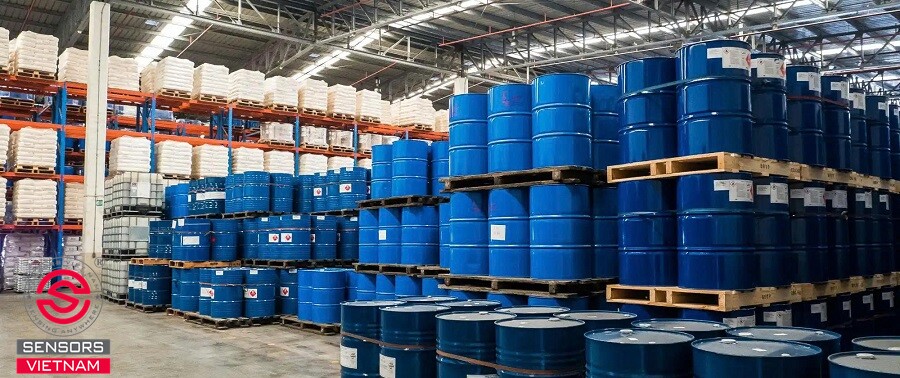
Prosense is an industrial gas detection equipment brand from Turkey, recognized for its ATEX certified explosion proof gas sensor lines suitable for installation in hazardous area classifications such as Zone 1 and Zone 2 under international standards.
Prosense toluene gas sensors can connect directly to the PPS-KP controller and the PPS Manager central control panel, allowing multiple detector heads to be managed within a single system. This supports monitoring across several zones and multiple gas types, such as CO, NO2, or LPG, on one unified control platform, simplifying installation and operation for M&E contractors and plant technical teams alike.
TECHNICAL SPECIFICATIONS OF THE PQD-3835 TOLUENE GAS SENSOR
- Gas type: TOLUENE
- Measuring range: 0 to 100% LEL
- Output: 4 to 20mA / RS 485
- Local display: OLED
- Power supply: 24VDC
- 2 relay contacts
- Explosion proof rating: ATEX II 2G Ex db IIC T5/T4 Gb
- Classification: Zone 1 or Zone 2
- Housing material: single-piece cast aluminum
- Origin: PROSENSE / Turkey
- Warranty: 12 months
TECHNICAL SPECIFICATIONS OF THE PQD-3835-R TOLUENE GAS SENSOR
- Gas type: TOLUENE
- Measuring range: 0 to 100% LEL
- Output: 4 to 20mA / RS 485 / Relay
- Local display: OLED
- Power supply: 24VDC
- 2 relay contacts
- Explosion proof rating: ATEX II 2G Ex db IIC T5/T4 Gb
- Classification: Zone 1 or Zone 2
- Housing material: single-piece cast aluminum
- Origin: PROSENSE / Turkey
Hot news


SENSORS VIETNAM CO., LTD
VAT CODE: 0313 355 473
Head Office: 03rd Floor, Indochina Tower, 04 Nguyen Dinh Chieu, Tan Dinh Ward, Ho Chi Minh City, Vietnam.
HCM Branch: 92/14/9A Vuon Lai Str., An Phu Dong Ward, Ho Chi Minh City, Vietnam.
Hanoi Branch: S106 Tower, Vinhomes Smart City, Tay Mo Ward, Hanoi City, Vietnam.

® Registered trademark – National Office of Intellectual Property Vietnam
OUR SERVICES
Specializing in the import and distribution of industrial sensors.
Sensors for HVAC/R systems and building automation applications.
Supplying gauges, transmitters, switches, controllers, PLCs, HMIs, and gas detectors.
Providing integrated consulting services for sensor and controller systems.


CONTACT US
Email: sales(at)sensors.vn
Hotline: +84 0911 660 660
Asia Commercial Bank Account (ACB):
VND: 357 246 888 | USD: 1357 246 888
Support Online ZALO Official Account
(From 8:00 am to 5:00 pm)





SENSORS VIETNAM CO., LTD
- Specialized in the import and distribution of sensors and controllers.
- Integrated data acquisition systems and industrial communication solutions.
- Design and installation of smart home systems and industrial equipment.
- Stack lights, signal beacons, LED warning horns, and RGB warning lights.