





CUSTOMER SERVICE
www.sensors.vn
Admin@sensors.vn
www.cambien.com.vn
TEMPERATURE INFRARED SENSOR
Date 26/Oct/2026 at 05:05 PM - View: 20

In industrial production lines, many applications require temperature monitoring without direct contact, such as products moving along conveyor belts, metal emerging from furnaces, and motors operating continuously. Infrared temperature sensors are designed for these situations, allowing surface temperatures to be measured remotely without contacting the target object.
This article explains how infrared temperature sensors work, the common types used in industrial applications, their practical uses, and the key criteria to consider when selecting the right device.
WHAT IS AN INFRARED TEMPERATURE SENSOR?
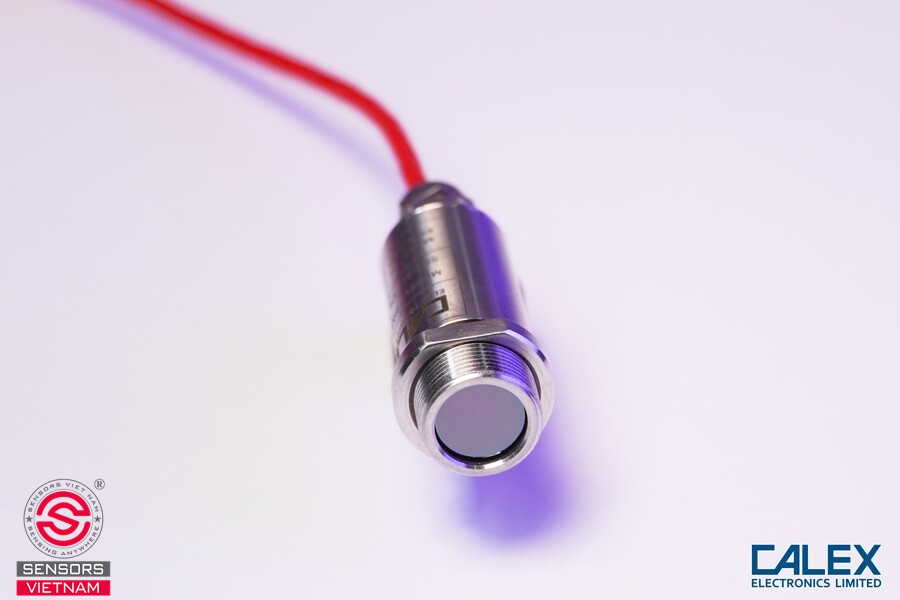
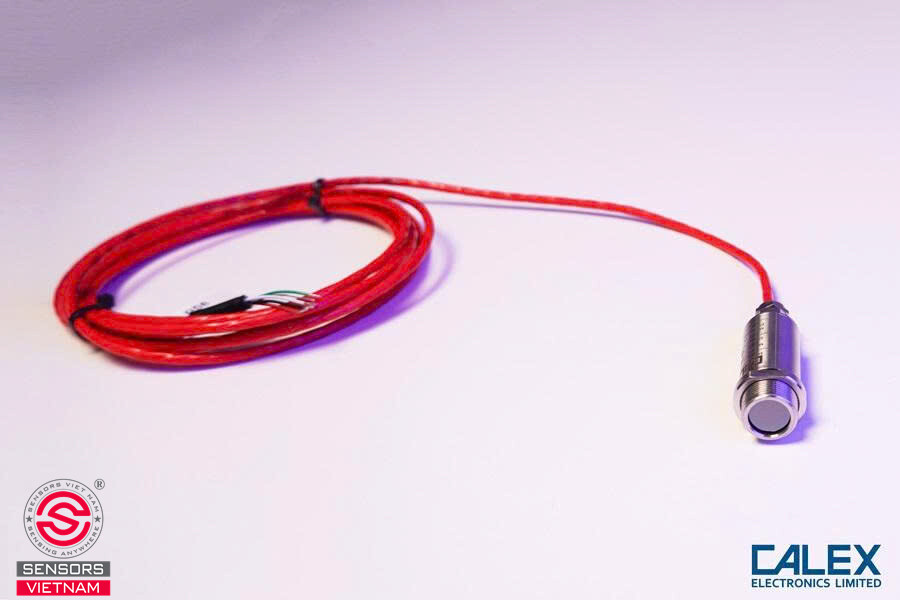
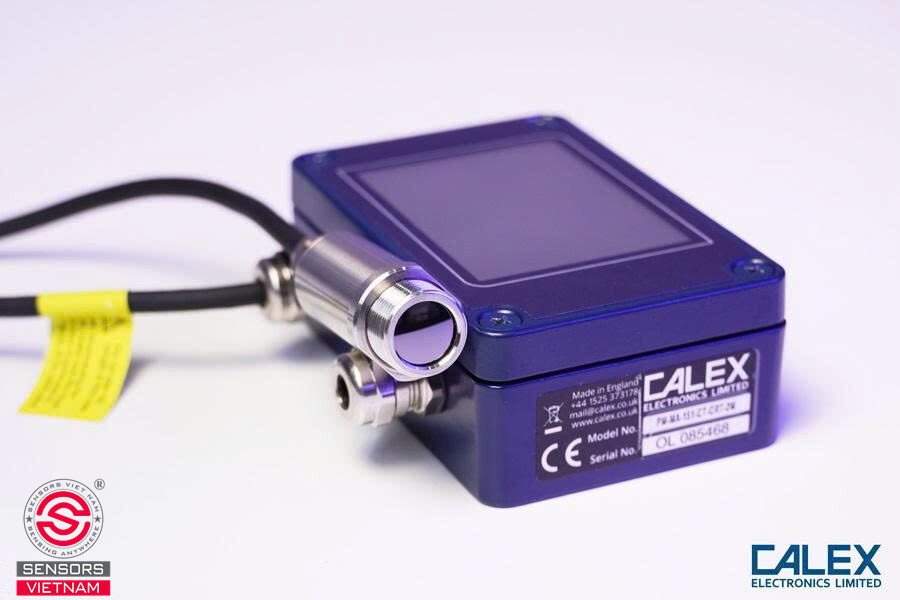
An infrared temperature sensor is a non-contact temperature measurement device that detects infrared radiation emitted by an object's surface and processes the signal to determine its temperature. It can measure temperature from a certain distance without requiring a probe to be attached directly to the target.
In industrial applications, infrared temperature sensors are often permanently installed to monitor temperatures continuously along production lines. Depending on the model, they may provide analog output signals such as 4 to 20 mA and 0 to 10 V, or digital communication interfaces for connection to control systems.
The main advantages of infrared temperature sensors are fast measurement, no physical interference with the target, and suitability for moving objects, high-temperature materials, or targets that are difficult to access.
HOW DOES AN INFRARED TEMPERATURE SENSOR WORK?
All objects with a temperature above absolute zero emit electromagnetic radiation. Infrared radiation can be used to determine surface temperature based on the relationship between emitted radiation energy and the object's temperature.
An infrared temperature sensor operates through the following steps:
- Step 1: The sensor collects infrared radiation through its optical system.
- Step 2: The detector converts the received energy into an electrical signal.
- Step 3: The processing circuit uses this signal and the relevant correction parameters to calculate and output the temperature value.
Emissivity is an important factor in temperature measurement. It describes a surface's ability to emit thermal radiation compared with a perfect blackbody at the same temperature. Painted surfaces, rubber, and organic materials generally have relatively high emissivity, while shiny metals often have low emissivity and reflect more radiation from their surroundings.
If the emissivity setting is incorrect, the sensor may produce inaccurate readings. In addition to emissivity, dust, smoke, water vapour, or obstructions in the optical path can affect the signal. Therefore, installation location and lens cleanliness must be considered.
COMMON TYPES OF INFRARED TEMPERATURE SENSORS
Infrared temperature sensors can be classified according to detection technology, temperature range, measurement distance, output signal, and operating environment. Each classification describes a different aspect of the device and helps users identify a suitable sensor for their application.
Classification by sensor technology
Infrared sensors using thermal detectors
These sensors convert radiation energy into a signal through a change in temperature. This technology is used in many non contact temperature measurement devices, with operating characteristics and response times depending on the design of each model.
Infrared sensors using quantum detectors
These infrared sensors generate signals through interactions between photons and semiconductor materials. They can achieve fast response times and are used in applications that require monitoring rapid temperature changes.
Two colour infrared sensors
Also known as ratio pyrometers, these sensors use radiation at two wavelength bands to determine temperature. This method can reduce the effects of certain changes in emissivity or signal attenuation along the optical path, provided that the measurement conditions satisfy the assumptions of the device. It is worth considering when measuring hot metals or objects with unstable surface conditions.
Classification by measurement temperature range
The measurement range must match the actual temperature of the target. Applications near ambient temperature may include food processing, packaging, and equipment monitoring. Medium temperature ranges are often considered for monitoring motors, bearings, plastics, and rubber. Processes such as metallurgy, furnace operation, and glass processing may require specialised sensors designed for high temperatures.
Classification by output signal
The output signal determines how an infrared temperature sensor connects to a control system.
4 to 20 mA
Infrared temperature sensors with an analog current output are commonly used in industrial environments because they can transmit signals reliably over appropriately designed wiring. The 4 mA live zero also helps distinguish a low measurement signal from a zero current condition, although fault detection still depends on the system design.
0 to 10 V
Infrared temperature sensors with an analog voltage output can be easily integrated with controllers that have compatible inputs. However, voltage drop, electrical noise, and cable length should be considered.
RS 485 and Modbus RTU
Some models support digital data transmission, allowing control systems to read temperature and other parameters according to the functions provided by the manufacturer.
INDUSTRIAL APPLICATIONS OF INFRARED TEMPERATURE SENSORS
Temperature monitoring on production lines
Infrared temperature sensors can monitor the surface temperature of products moving along conveyor belts, such as materials after drying or components after heating. The sensor is installed at a suitable fixed position to measure temperature continuously without contacting the product.
Temperature monitoring of motors and electrical equipment
Abnormally high temperatures on bearing housings, motors, or electrical connections may indicate a condition that requires inspection. Infrared sensors allow these locations to be monitored without direct contact with operating components.
Temperature measurement of metals and materials in furnaces
In metallurgy and heat treatment, the temperature of hot metal directly affects product quality and process performance. Infrared temperature sensors allow high temperature objects to be monitored remotely without physical contact.
Depending on the type of metal, surface condition, and temperature range, a specialised wavelength sensor or a two colour infrared sensor may be required.
Temperature control in the plastics and rubber industries
During moulding, extrusion, or calendering, material surface temperature is an important parameter for quality control. Infrared sensors can be installed near the mould outlet or downstream of the processing stage to monitor temperature continuously.
Temperature monitoring in food processing and packaging
Infrared temperature sensors support temperature monitoring during baking, drying, cooling, and heat sealing of packaging without touching the product. This is particularly useful for production lines where direct contact with products should be minimised.
Connecting sensors to PLC, SCADA, and IoT systems
When integrated into a control system, an infrared temperature sensor does more than provide temperature readings. It can also support process monitoring and alarm configuration.
With a 4 to 20 mA or 0 to 10 V output, the signal is connected to a PLC analog input module. With RS 485 communication using Modbus RTU, the controller can read data according to the device's register configuration. The data can then be displayed, stored as historical records, or used for remote monitoring if the infrastructure supports these functions.
HOW TO SELECT THE RIGHT INFRARED TEMPERATURE SENSOR
Selecting an industrial infrared temperature sensor should begin with an assessment of the actual measurement conditions.
Determine the required temperature range
The measurement range must cover the target's operating temperature, taking potential fluctuations into account. Avoid selecting an unnecessarily wide range, while ensuring that the actual temperature does not exceed the sensor's measurement limits.
Check accuracy and repeatability
Accuracy indicates how close a measurement is to a reference value, while repeatability describes the consistency of measurements taken under the same conditions.
For temperature trend monitoring, good repeatability helps identify abnormal changes. For processes requiring tight temperature control, accuracy, calibration conditions, and potential sources of measurement error must also be considered.
Consider the material and emissivity
Emissivity directly affects measurement results. Before selecting a sensor, identify the target material, colour, surface condition, and potential for thermal radiation reflection.
For shiny metals or surfaces that change continuously, a specialised wavelength sensor or ratio measurement method may be required. Any surface treatment intended to increase emissivity must be evaluated against process requirements and should not be applied to products without proper assessment.
Select the appropriate response time
The response time must match the rate of temperature change in the process. For materials moving rapidly along a conveyor belt, the sensor must respond quickly enough to capture the temperature at the measurement point. For targets with slow temperature changes, response time requirements may be less demanding.
Check the output signal and integration compatibility
Determine whether the existing system uses a 4 to 20 mA signal, a 0 to 10 V signal, or digital communication. Also verify the supply voltage, wiring diagram, and compatibility with the existing PLC, SCADA system, or controller.
Evaluate the installation environment
Ambient temperature, dust, water vapour, oil vapour, and vibration can affect sensor durability and measurement stability. Select an appropriate ingress protection rating and consider accessories such as mounting brackets, sighting tubes, or air purge systems when required by the operating conditions.
FREQUENTLY ASKED QUESTIONS ABOUT INFRARED TEMPERATURE SENSORS
1. Why does an infrared temperature sensor give inaccurate readings?
Measurement errors may result from an incorrect emissivity setting, a measurement spot larger than the target, a reflective surface, or an optical path affected by dust, smoke, or water vapour. To improve measurement reliability, check the measurement settings, installation position, lens condition, and surrounding environment.
2. Why does the sensor still measure the wrong temperature even when the laser points at the target?
On many sensors, the laser is used only for aiming and does not accurately represent the entire measurement area. If the actual measurement spot is larger than the target, the sensor may also detect radiation from surrounding surfaces. Therefore, check the distance to spot ratio and the measurement spot size at the installation distance instead of relying solely on the laser point.
3. Can infrared temperature sensors measure shiny metals?
Yes, but the sensor must be selected according to the material and measurement conditions. Shiny metals generally have low emissivity and reflect radiation from their surroundings, which can lead to inaccurate readings. For these applications, consider a specialised wavelength sensor, a two colour infrared sensor, or an appropriate reference measurement method.
4. How should an infrared temperature sensor be selected for a production line?
Identify the target material, temperature range, object size, installation distance, and rate of temperature change. Also consider emissivity, response time, output signal, and environmental conditions. If the sensor needs to connect to a PLC or monitoring system, verify the model's output signal and communication protocol before making a selection.
BUY GENUINE INFRARED TEMPERATURE SENSORS FROM SENSORS VIETNAM
Are you looking to buy an infrared temperature sensor to measure product temperatures without direct contact? Not sure which model is best suited to your production line? Sensors Vietnam is ready to help you find the right solution for your application.
Sensors Vietnam distributes industrial sensors, measurement instruments, and automation solutions, including infrared temperature sensors for factories, manufacturing facilities, and industrial monitoring systems. At Sensors Vietnam, you can receive expert guidance on selecting the right device based on your actual requirements, including the required temperature range, installation distance, and compatibility with your existing PLC and controllers.
Hot news




SENSORS VIETNAM CO., LTD
VAT CODE: 0313 355 473
Head Office: 03rd Floor, Indochina Tower, 04 Nguyen Dinh Chieu, Tan Dinh Ward, Ho Chi Minh City, Vietnam.
HCM Branch: 92/14/9A Vuon Lai Str., An Phu Dong Ward, Ho Chi Minh City, Vietnam.
Hanoi Branch: S106 Tower, Vinhomes Smart City, Tay Mo Ward, Hanoi City, Vietnam.

® Registered trademark – National Office of Intellectual Property Vietnam
OUR SERVICES
Specializing in the import and distribution of industrial sensors.
Sensors for HVAC/R systems and building automation applications.
Supplying gauges, transmitters, switches, controllers, PLCs, HMIs, and gas detectors.
Providing integrated consulting services for sensor and controller systems.


CONTACT US
Email: sales(at)sensors.vn
Hotline: +84 0911 660 660
Asia Commercial Bank Account (ACB):
VND: 357 246 888 | USD: 1357 246 888
Support Online ZALO Official Account
(From 8:00 am to 5:00 pm)





SENSORS VIETNAM CO., LTD
- Specialized in the import and distribution of sensors and controllers.
- Integrated data acquisition systems and industrial communication solutions.
- Design and installation of smart home systems and industrial equipment.
- Stack lights, signal beacons, LED warning horns, and RGB warning lights.