






CUSTOMER SERVICE
www.sensors.vn
Admin@sensors.vn
www.cambien.com.vn
VIBRATION MONITORING SYSTEM
Date 23/Oct/2026 at 04:11 PM - View: 16
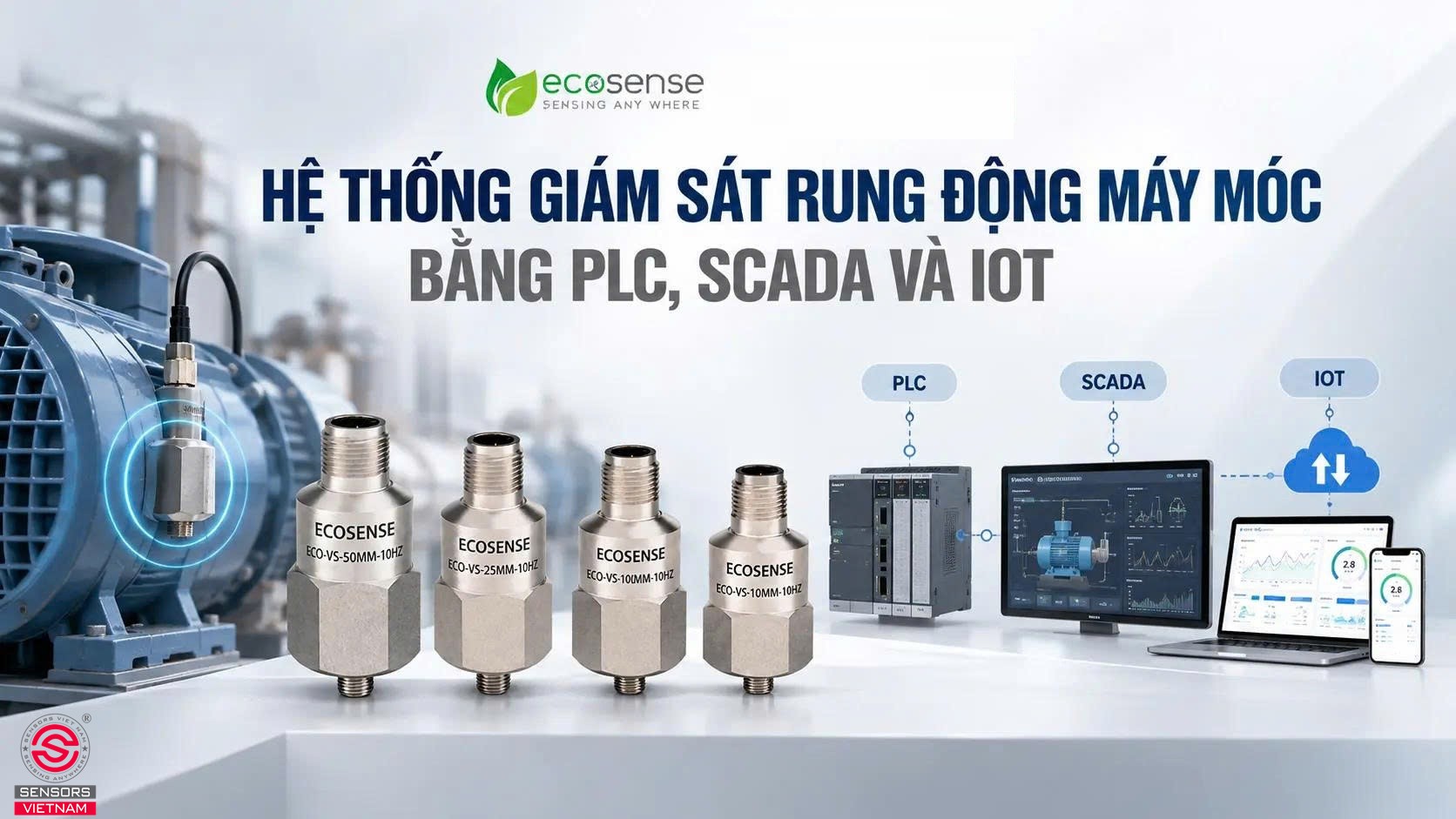
Vibration monitoring systems help track the mechanical condition of motors, pumps, fans, compressors, and other rotating equipment. By collecting vibration data over time, maintenance teams can identify abnormal patterns, plan inspections, and reduce the risk of unexpected equipment downtime. This provides an important basis for monitoring vibration trends, setting alarm thresholds, and implementing condition based maintenance.
WHAT IS A VIBRATION MONITORING SYSTEM?
A vibration monitoring system uses sensors to measure the mechanical oscillations of a machine, convert them into electrical signals, and transmit the data to a controller or monitoring software. Depending on the system configuration, the data can be displayed, stored, compared with preset thresholds, and used to trigger alarms when abnormal conditions are detected.
A basic system typically connects vibration sensors to a PLC or a dedicated monitoring device. In larger installations, vibration data can be integrated into SCADA systems, building management systems, or IoT platforms for centralized monitoring and remote access.
The main difference between continuous vibration monitoring and periodic vibration measurement is the ability to track changes between inspections. Time based data helps technicians determine whether vibration levels remain stable, increase gradually, or change suddenly, allowing them to identify when further inspection is required.
WHY IS MACHINE VIBRATION MONITORING IMPORTANT?
Vibration is a normal phenomenon in rotating equipment. However, when vibration levels or frequency characteristics change from their normal operating conditions, this may indicate a mechanical problem or an abnormal operating condition.
Common causes include rotor imbalance, shaft misalignment, loose mounting bases, bearing damage, gear wear, and structural resonance. In pumps, vibration may also be associated with cavitation or unsuitable operating conditions.
A vibration monitoring system helps maintenance teams answer three important questions:
- Do current vibration levels differ from the machine's normal operating condition?
- How do vibration levels change over time and under different operating loads?
- Is further inspection required to identify the cause of an abnormal condition?
The system provides data that helps prioritize inspections and develop more informed maintenance plans.
PRACTICAL BENEFITS OF A VIBRATION MONITORING SYSTEM
Early detection of abnormal conditions
When bearings, couplings, or rotating components begin to deteriorate, vibration signals may change before the equipment stops operating. Early detection allows technicians to investigate the cause and take appropriate corrective action, reducing the risk of damage spreading to other components.
Reduced unplanned equipment downtime
Vibration data collected over time helps maintenance teams prioritize equipment, prepare personnel, and arrange spare parts before taking machinery offline. This is particularly valuable in production lines, where shutting down one machine can affect the entire manufacturing process.
Remote monitoring and maintenance performance evaluation
Vibration data stored and monitored through SCADA or an IoT platform allows technicians to assess equipment condition remotely and compare vibration levels before and after maintenance activities such as rotor balancing, shaft alignment, or bearing replacement. This enables businesses to evaluate maintenance effectiveness and track machinery condition more conveniently.
COMPONENTS OF A VIBRATION MONITORING SYSTEM
Depending on the scale of the installation and the criticality of the machinery, a vibration monitoring system may include sensors, a data acquisition device or PLC, a monitoring interface, and a data storage and analysis platform.
1. Vibration sensors
Sensors are installed at suitable measurement points on the machine, usually near bearings or other locations that require monitoring. They convert mechanical vibrations into signals that the system can receive and process.
Three common types of vibration sensors include:
- Vibration velocity sensors: Measure vibration velocity, typically expressed in mm/s RMS. These sensors are commonly used to monitor the overall vibration levels of various types of rotating machinery.
- Vibration accelerometers: Measure vibration acceleration and may be more suitable when high frequency signals need to be collected or when analysing potential bearing and gear faults.
- Displacement sensors: Measure relative shaft motion and are commonly used on large machines with fluid film bearings and dedicated monitoring systems.
Selection depends on the monitoring objective, machine type, rotational speed, frequency range, and analysis method. Velocity sensors may be suitable for overall vibration level monitoring, while detailed fault diagnosis often requires sensors and data acquisition equipment capable of recording and analysing appropriate signals. Common output signals include 4 to 20 mA, 0 to 10 V, and digital communication protocols such as Modbus RTU.
2. PLC or data acquisition device
A PLC can receive signals from sensors, convert them into engineering units, compare measurements with preset thresholds, and activate alarms or control signals according to the system design. For detailed vibration analysis, a dedicated data acquisition device may be required to record waveforms and perform frequency spectrum analysis.
For critical equipment, alarm and warning levels should be clearly defined. An early warning indicates that inspection is required, while an alarm may require load reduction or machine shutdown according to an approved safety procedure. Alarm logic should account for operating conditions, the duration of abnormal readings, and startup periods to reduce false alarms.
3. SCADA and visualization interface
SCADA allows operators to monitor vibration readings, historical trends, equipment status, and alarm levels through a centralized interface. When an abnormal condition occurs, historical data helps determine when the issue began and whether it is associated with changes in load or operating mode.
Where the system supports it, rotational speed, load, and other relevant operating parameters should also be recorded when an alarm occurs. These additional data provide a stronger basis for fault analysis.
4. IoT and data analytics
IoT platforms can support data transmission to centralized systems, remote access to historical records, and trend comparisons across different machines. Some systems also incorporate anomaly detection algorithms or machine learning models.
Each alarm should be linked to a specific follow up action, such as an on site inspection, verification of operating conditions, or additional diagnostic measurements.
HOW TO SELECT A VIBRATION SENSOR FOR A MONITORING SYSTEM
Selecting the right sensor helps ensure that the system collects meaningful data for its monitoring objectives. The following factors should be considered together:
- Measurement parameter: Velocity, acceleration, or displacement.
- Measurement range: Must cover the expected vibration levels of the machine and avoid saturation under operating conditions.
- Frequency response range: Must suit the fault types or vibration components being monitored.
- Output signal: 4 to 20 mA, 0 to 10 V, or digital communication must be compatible with the receiving device.
- Environmental conditions: Temperature, humidity, dust, water, oil, and mechanical vibration at the installation location.
- Analysis method: Overall vibration monitoring has different requirements from waveform recording and frequency spectrum analysis for fault diagnosis.
Vibration sensors with a 4 to 20 mA output are widely used in industrial automation because they can be easily integrated with compatible PLC current inputs and offer good noise immunity when properly designed and wired.
VIBRATION SENSOR INSTALLATION GUIDE
Select the measurement location
For motors, pumps, and fans, installation near the bearings is generally recommended because this location can provide useful information about the condition of rotating assemblies. For fans, bearing supports and mounting bases should also be considered when evaluating structural vibration.
Where practical, measurements can be taken in the horizontal, vertical, and axial directions to obtain more comprehensive information. If only one measurement point is available, choose a location that matches the monitoring objective and can be consistently reproduced during subsequent inspections.
Ensure a secure mounting surface
The mounting surface should be clean and sufficiently flat to ensure secure sensor contact. Depending on the sensor design and measurement requirements, suitable mounting methods may include bolts, dedicated mounting pads, appropriate adhesives, or magnetic bases.
Route signal cables correctly
Signal cables should be protected using suitable cable trays or conduits and routed away from high temperatures, oil, and potential mechanical impact. To reduce electrical interference, signal cables should be routed separately from power cables, variable frequency drives, and contactors in accordance with the equipment's electromagnetic compatibility guidelines.
INDUSTRIAL APPLICATIONS OF VIBRATION MONITORING SYSTEMS
Electric motors
Vibration monitoring systems help detect changes that may be associated with rotor imbalance, coupling misalignment, loose mounting bases, or bearing damage. To identify the root cause, technicians may need to combine vibration data with current, temperature, rotational speed, and mechanical inspection results.
Pumps
In pumps, abnormal vibration may be associated with cavitation, shaft misalignment, loose structural components, bearing damage, or unsuitable operating conditions. Comparing vibration data with suction pressure, discharge pressure, flow rate, and motor current helps narrow down the possible causes.
Industrial fans and HVAC systems
For exhaust fans, supply air fans, and air handling units (AHUs), vibration monitoring systems can help identify fan imbalance, loose bearings, belt drive problems, or vibration in support structures. Timely detection of abnormal conditions helps technical teams plan inspections and reduce disruptions to ventilation and air conditioning systems.
Compressors, gearboxes, and heavy industrial machinery
For critical equipment, vibration data helps track the condition of bearings, rotors, gears, and machine structures over time. The team responsible for receiving alarms, the verification procedure, and the required follow up actions should be clearly defined to ensure that monitoring data effectively supports maintenance activities.
FREQUENTLY ASKED QUESTIONS ABOUT VIBRATION MONITORING SYSTEMS
1/ Can a vibration monitoring system completely replace physical inspections?
No. A monitoring system helps track trends and identify conditions that require attention, but determining the root cause often still requires an on site inspection or detailed diagnostic analysis.
2/ Should I choose a velocity sensor or an accelerometer?
Velocity sensors are commonly used to monitor overall vibration levels in many rotating machinery applications. Accelerometers are suitable for high frequency measurements and signal analysis for diagnostic purposes.
3/ Can vibration sensors be connected to a PLC?
Yes, provided that the sensor output is compatible with the PLC input or that a suitable signal converter is used.
4/ Does ISO 20816 specify one universal vibration limit for all machines?
No. The applicable part of ISO 20816 must be selected according to the machine type and specific installation conditions. A single vibration limit should not be applied to all motors, pumps, fans, and compressors.
BUY ECOSENSE INDUSTRIAL VIBRATION SENSORS FROM SENSORS VIETNAM
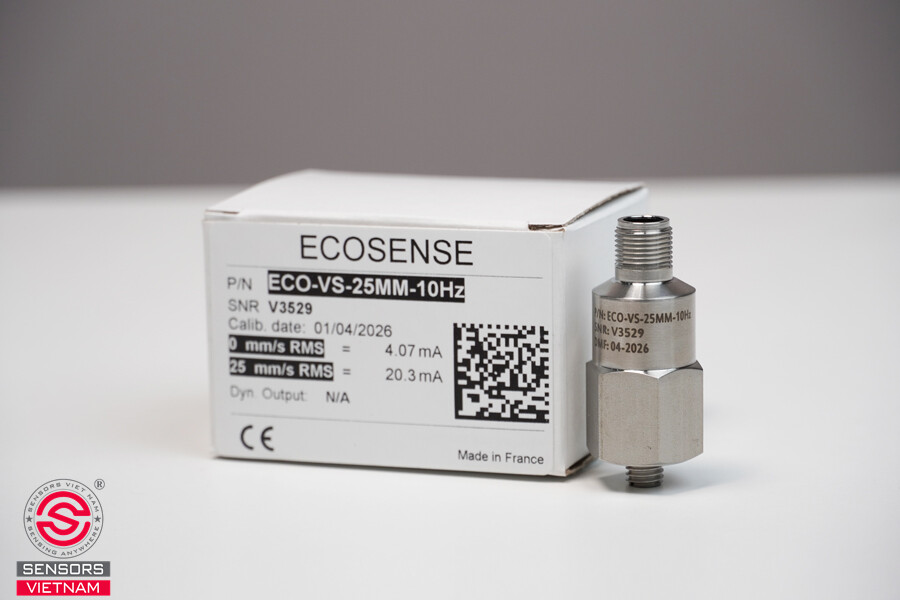
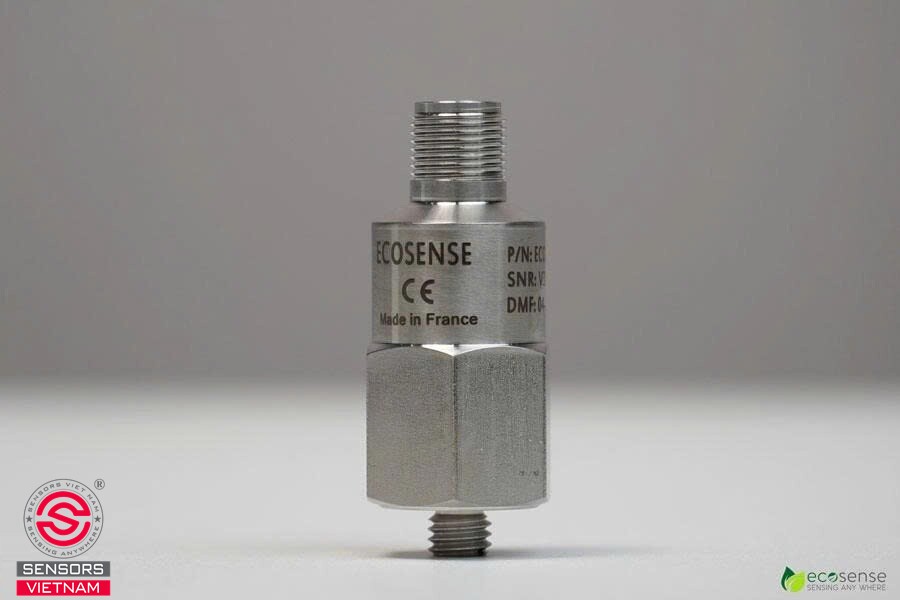
Sensors Vietnam supplies a wide range of vibration sensors with different measurement ranges and mounting configurations, suitable for applications ranging from HVAC systems to machinery used in industrial production lines. One notable product range is the ECOSENSE ECO VS bearing vibration sensor series from France, designed for industrial vibration monitoring applications. With a 4 to 20 mA output signal, these sensors can connect to PLC and SCADA systems to monitor vibration levels, generate alarms, and support automatic machine shutdown when dangerous thresholds are reached, depending on the system configuration.
The ECO VS industrial vibration sensor series is designed to monitor overall vibration levels in motors, pumps, fans, and compressors. Available measurement ranges include 0 to 10, 0 to 25, 0 to 50, and 0 to 100 mm/s RMS, with a frequency range from 10 Hz to 1,000 Hz. These options support vibration monitoring requirements across a variety of industrial applications.
The ECO VS series features a stainless steel housing, an IP67 protection rating, and an operating temperature range from minus 50°C to plus 90°C. These characteristics make the sensors suitable for a range of industrial operating conditions, including environments exposed to moisture or dust.
To learn more about vibration sensors or request technical advice and a quotation for the ECO-VS industrial vibration sensor series, please visit sensors.vn or cambien.com.vn.
Hot news




SENSORS VIETNAM CO., LTD
VAT CODE: 0313 355 473
Head Office: 03rd Floor, Indochina Tower, 04 Nguyen Dinh Chieu, Tan Dinh Ward, Ho Chi Minh City, Vietnam.
HCM Branch: 92/14/9A Vuon Lai Str., An Phu Dong Ward, Ho Chi Minh City, Vietnam.
Hanoi Branch: S106 Tower, Vinhomes Smart City, Tay Mo Ward, Hanoi City, Vietnam.

® Registered trademark – National Office of Intellectual Property Vietnam
OUR SERVICES
Specializing in the import and distribution of industrial sensors.
Sensors for HVAC/R systems and building automation applications.
Supplying gauges, transmitters, switches, controllers, PLCs, HMIs, and gas detectors.
Providing integrated consulting services for sensor and controller systems.


CONTACT US
Email: sales(at)sensors.vn
Hotline: +84 0911 660 660
Asia Commercial Bank Account (ACB):
VND: 357 246 888 | USD: 1357 246 888
Support Online ZALO Official Account
(From 8:00 am to 5:00 pm)





SENSORS VIETNAM CO., LTD
- Specialized in the import and distribution of sensors and controllers.
- Integrated data acquisition systems and industrial communication solutions.
- Design and installation of smart home systems and industrial equipment.
- Stack lights, signal beacons, LED warning horns, and RGB warning lights.