





CUSTOMER SERVICE
www.sensors.vn
Admin@sensors.vn
www.cambien.com.vn
CO SENSOR E2617-CO (EVIKON/EU)
Date 04/Dec/2025 at 04:15 PM - View: 169
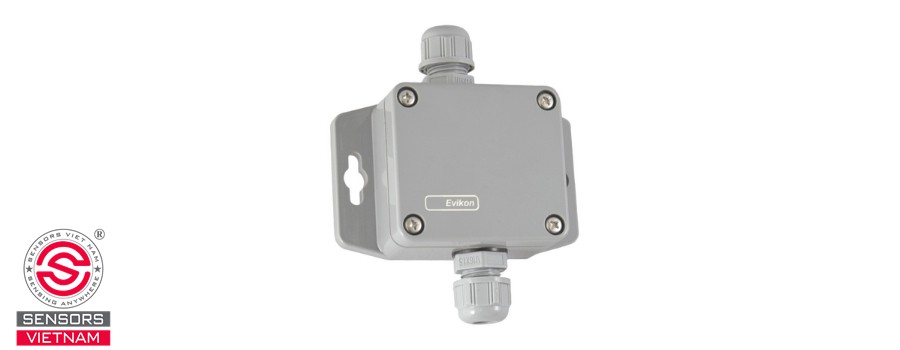
The carbon monoxide sensor E2617-CO is a high-end device developed and manufactured by EVIKON (Europe), a long-established and reputable brand in the industrial sensing field. The product is engineered specifically for monitoring CO concentration in enclosed or poorly ventilated spaces such as manufacturing plants, mining tunnels, basements, underground parking facilities, commercial kitchens, and automotive garages.
Carbon monoxide (CO) is a highly toxic gas that is difficult to detect without instrumentation due to its colorless and odorless nature. It is generated from the incomplete combustion of common fuels such as gasoline, diesel, coal, and gas. Exposure to CO can cause symptoms like headaches, dizziness, and nausea; in high-concentration environments, undetected CO inhalation can lead to severe poisoning and may result in fatality within minutes if not promptly identified and mitigated.
CO SENSOR E2617-CO - CONSTRUCTION
The E2617-CO features EVIKON’s signature industrial design - modern, robust, and optimized for long-term operation in harsh environments. The device is composed of the following key components:
Housing: The enclosure is made from high-quality ABS plastic in a neutral grey finish, offering a compact and streamlined form factor (82 × 94 × 35 mm). With an IP65 protection rating, the unit is resistant to dust, moisture, corrosion, and mechanical impact. Its wall-mount configuration allows for easy installation, even in confined or hard-to-reach areas.
Sensing module: At its core, the E2617-CO uses electrochemical sensing technology, providing high sensitivity and stable response when detecting carbon monoxide concentrations. The device can also be equipped with an optional LCD display for clear real-time readings and supports configurable relay outputs for alarm and ventilation control.

CO SENSOR E2617-CO - OPERATING PRICIPLE
Although several technologies are available for detecting CO, the most widely used and reliable approach today is electrochemical sensing technology.
Electrochemical principle: Inside an electrochemical CO sensor, electrodes are immersed in an electrolyte solution. When CO molecules enter the sensor, they react through an oxidation-reduction process at the electrodes, generating a small electrical current.
Signal processing: The magnitude of this electrical current is directly proportional to the CO concentration in the air. Internal circuitry then converts this current into standard output signals - typically 4-20 mA or Modbus - and sends it to a controller. Depending on the sensor type, it may activate built-in alarms (LED/buzzer) or trigger ventilation fans.
A key advantage of electrochemical CO sensors is their high sensitivity and accuracy across a wide range of concentrations, from 9 ppm and 25 ppm up to 1000 ppm or higher depending on the application.
CO SENSOR E2617-CO - TECHNICAL DATA
- Model: E2617-CO-W-24VDC
- Gas: Carbon Monoxide (CO)
- Sensor Type: Electrochemical cell
- Sampling Method: Natural diffusion
- Measuring Ranges (selectable): 0-100 ppm, 0-200 ppm, 0-300 ppm CO
- Sensor Lifetime: > 10 years
- Power Supply: 24 VDC ± 20%
- Analog Outputs: 4-20 mA or 0-10 V (configurable)
- Enclosure Material: ABS housing, wall-mounted installation
- Ingress Protection: IP65 - dust-tight and resistant to water jets
- Dimensions: 82 (H) × 94 (W) × 35 (D) mm
- Temperature: -20 to +50 °C
- Humidity: 15-90% RH (non-condensing)
- Pressure: 800-1200 mbar
- Origin: EVIKON - Estonia / European Union
- Warranty: 12 months
- Certificates: Full CO / CQ
CO SENSOR E2617-CO - PRACTICAL APPLICATIONS
CO sensors are widely used in areas prone to gas accumulation, especially enclosed or poorly ventilated environments. Typical applications include:
1. Basements and underground parking lots
This is the most common application for CO sensors. In parking basements of residential buildings, offices, or shopping centers, continuous vehicle movement generates significant CO emissions.
Sensors are installed on walls or ceilings to monitor real-time CO concentration.
When the measured value exceeds the preset threshold, the sensor triggers alarms or sends a signal to activate the ventilation system. This ensures airflow circulation and maintains safe air quality levels in compliance with regulatory standards.
 2. Mining tunnels and industrial facilities
In industries such as chemicals, metallurgy, energy production, or any process involving fuel combustion, CO levels can rise significantly. In these environments, CO sensors with 4-20 mA or Modbus RTU outputs are typically integrated into automation systems to enable continuous monitoring, minimize the risk of CO poisoning, and ensure safe operation.
3. Smart buildings and automation systems
In modern smart building models, CO sensors equipped with RS-485 or Modbus communication are directly connected to the Building Management System (BMS). This allows real-time CO concentration data to be transmitted to the central control unit. The system can then automatically adjust ventilation fan operations, optimize energy usage, and enhance operational efficiency.
4. Other Applications
Beyond the environments mentioned above, CO sensors are also utilized in various locations that present a potential risk of toxic gas accumulation, such as:
- Large-scale automotive repair workshops
- Commercial or industrial kitchen ventilation systems
- High-capacity heating systems
- Fire stations
- Boiler rooms
- Warehouses
- Residential buildings
- Restaurants, hotels, and data centers
With their flexibility and high sensitivity, CO sensors have become indispensable components of modern air quality monitoring systems.
 CO SENSOR E2617-CO - WIRING INSTRUCTIONS
To ensure stable and accurate operation, the E2617-CO CO gas detector must be wired according to industrial standards:
- Power supply: Provide 11-30 VDC to the +V and GND terminals on the device’s terminal block.
- Analog signal output: For 4-20 mA output (representing the measured CO concentration), connect OUT1 and GND to the analog input of the PLC, DCS, or central controller.
- Modbus RS485 Communication: For digital communication, connect the A and B lines to the RS485 bus. Ensure correct configuration of Modbus address, baud rate, and other communication parameters to guarantee proper integration with the control system.
- Technical documentation: Always refer to the wiring diagram in the official datasheet to ensure safe, compliant, and error-free installation.
The E2617-CO is widely used in underground parking garages, high-rise buildings, industrial facilities, and heavy-duty plants around the world. With advanced electrochemical sensing technology, a compact yet robust IP65-rated housing, high accuracy, and built-in alarm/ventilation control capability, the E2617-CO offers a reliable and efficient solution for protecting human health and meeting modern occupational safety standards.

Sensors Vietnam - Leading distributor of EVIKON sensors in Vietnam
Sensors Vietnam is the authorized distributor of EVIKON products in Vietnam, including the E2617-CO CO gas detector. We do not simply sell sensors - we accompany your production line and automation systems as a true technical partner.
Our commitments:
- 100% genuine products from globally recognized manufacturers
- Full CO/CQ certification
- Reliable 12-month warranty with 1-for-1 replacement
- Competitive pricing and special support policies for factories and enterprises
- Dedicated technical specialists offering free consultation and comprehensive installation & commissioning support
Contact Sensors Vietnam today for expert advice and the most reliable CO monitoring solutions for your facility.
Hot news


SENSORS VIETNAM CO., LTD
VAT CODE: 0313 355 473
Head Office: 03rd Floor, Indochina Tower, 04 Nguyen Dinh Chieu, Tan Dinh Ward, Ho Chi Minh City, Vietnam.
HCM Branch: 92/14/9A Vuon Lai Str., An Phu Dong Ward, Ho Chi Minh City, Vietnam.
Hanoi Branch: S106 Tower, Vinhomes Smart City, Tay Mo Ward, Hanoi City, Vietnam.

® Registered trademark – National Office of Intellectual Property Vietnam
OUR SERVICES
Specializing in the import and distribution of industrial sensors.
Sensors for HVAC/R systems and building automation applications.
Supplying gauges, transmitters, switches, controllers, PLCs, HMIs, and gas detectors.
Providing integrated consulting services for sensor and controller systems.


CONTACT US
Email: sales(at)sensors.vn
Hotline: +84 0911 660 660
Asia Commercial Bank Account (ACB):
VND: 357 246 888 | USD: 1357 246 888
Support Online ZALO Official Account
(From 8:00 am to 5:00 pm)





SENSORS VIETNAM CO., LTD
- Specialized in the import and distribution of sensors and controllers.
- Integrated data acquisition systems and industrial communication solutions.
- Design and installation of smart home systems and industrial equipment.
- Stack lights, signal beacons, LED warning horns, and RGB warning lights.