






CUSTOMER SERVICE
www.sensors.vn
Admin@sensors.vn
www.cambien.com.vn
CAPILLARY THERMOSTATS
Date 05/Mar/2026 at 02:50 PM - View: 95
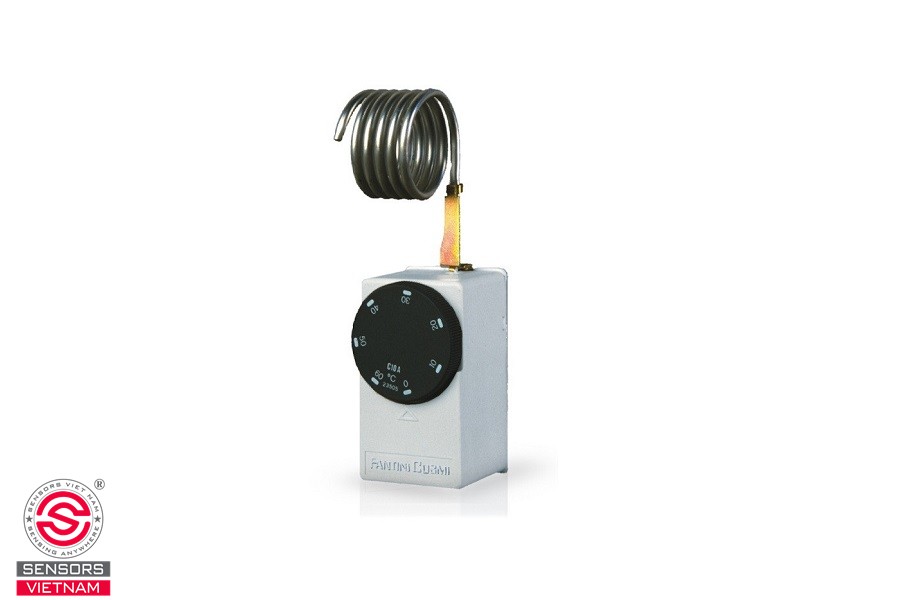
A capillary thermostat (also known as a remote probe temperature switch) is a device designed to monitor environmental temperature and automatically control electrical circuits when a preset temperature threshold is exceeded. Thanks to its fast response and high reliability, this device is widely used in various technical systems such as HVAC, hot water supply systems, cold storage facilities, and industrial production lines.
Beyond simple temperature monitoring, a capillary thermostat can also activate or deactivate related equipment such as ventilation fans, heaters, alarm systems, or central control units. This capability allows operators to manage system performance more proactively and efficiently.
In this article, Sensors Vietnam will provide a detailed overview of the design, working principle, and practical applications of this versatile temperature control device.
What is a capillary thermostat?
Unlike adhesive temperature switches or fixed probe sensors, a capillary thermostat features a flexible sensing cable that can be inserted into areas where temperature needs to be measured. This includes water pipes, machine compartments, or narrow spaces that are difficult to access with conventional sensors.
Thanks to this flexible design, the device is considered an ideal solution for applications requiring adaptable installation or situations where drilling holes for sensor mounting is not possible.
During operation, the capillary thermostat continuously monitors temperature and sends signals to the central controller. The collected data can be used for several purposes, including:
- Recording and storing temperature data
- Automatically controlling electrical circuit switching
- Activating or shutting down related equipment in the system
As a result, the entire system can maintain safe operation while optimizing energy efficiency.
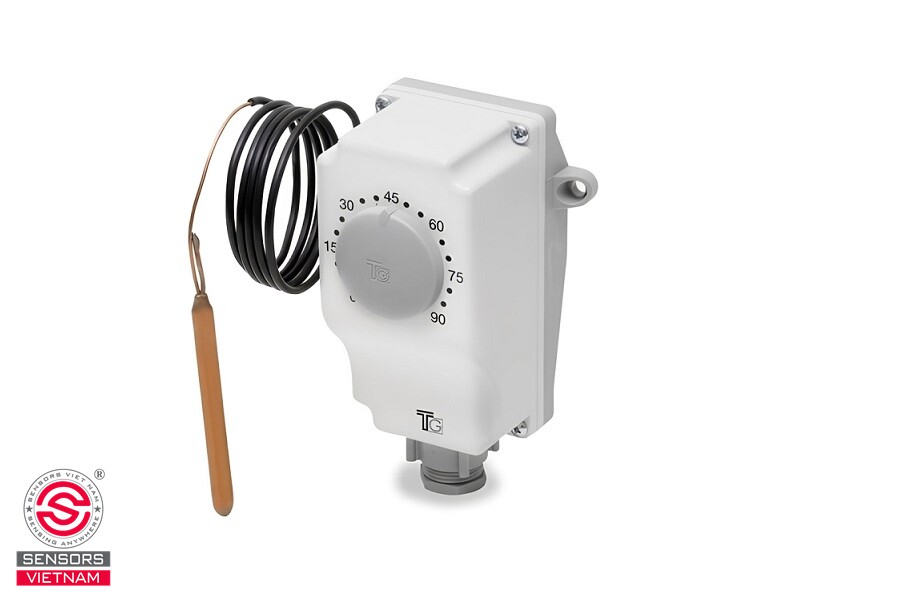
Structure of a capillary thermostat
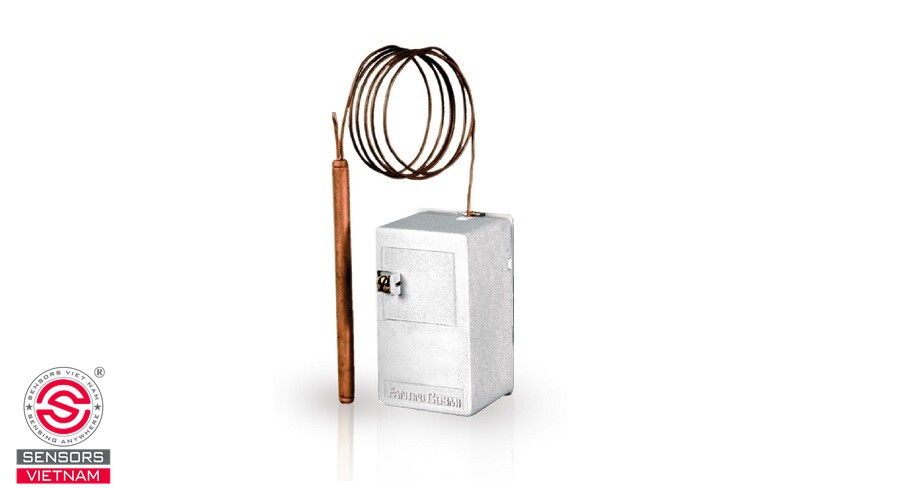
A typical capillary thermostat consists of three main components.
Sensor probe
The sensing probe is designed as a flexible temperature sensing cable, typically ranging from 1 meter to several meters in length, depending on installation requirements.
The outer sheath of the cable is made from heat-resistant materials that protect the sensor core from mechanical and chemical impacts in harsh environments. This protective structure ensures long-term durability and stable performance.
Inside the probe, the sensing element usually utilizes RTD or thermocouple technology, where the electrical resistance or voltage of the sensor element changes according to temperature variations.
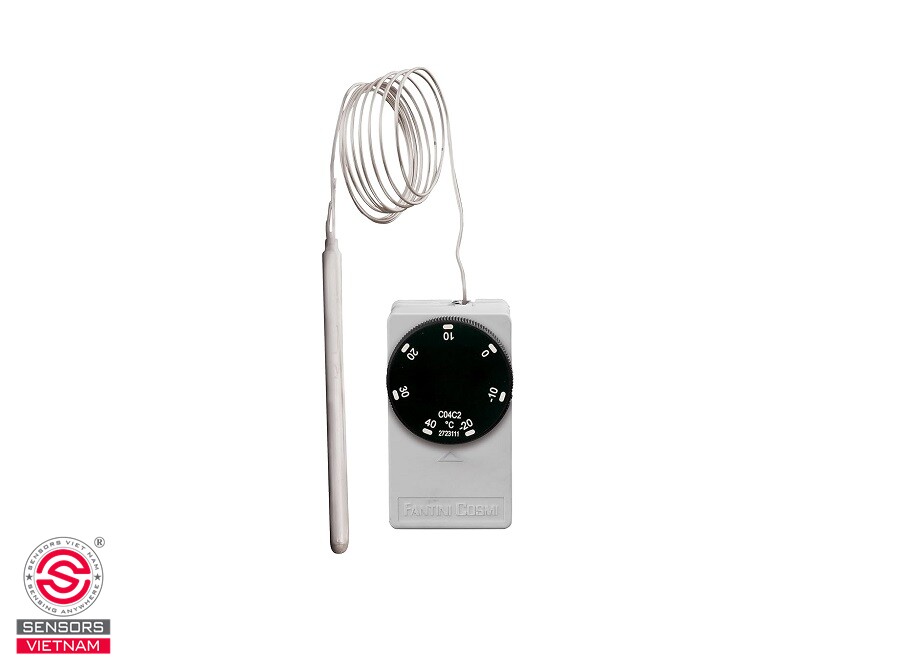
Connection cable
The connection cable links the sensor probe to the control unit. Standard cable lengths are usually between 1 and 2 meters, although longer options are available depending on the installation environment.
These cables are designed with excellent insulation and anti-interference capabilities, ensuring that temperature signals are transmitted accurately and reliably to the control system.
Control unit and switching contacts
The control unit functions as the core component of the capillary thermostat. Inside the housing, there is an integrated signal processing circuit along with a relay contact (commonly SPDT).
When the measured temperature exceeds the preset threshold, the control circuit activates the relay to change the state of the contacts, switching from open to closed or vice versa.
Additionally, the device typically provides two output contact types: NO (Normally Open) and NC (Normally Closed). These outputs allow the switch to be easily integrated into various control and automation systems.
Working principle of a capillary thermostat
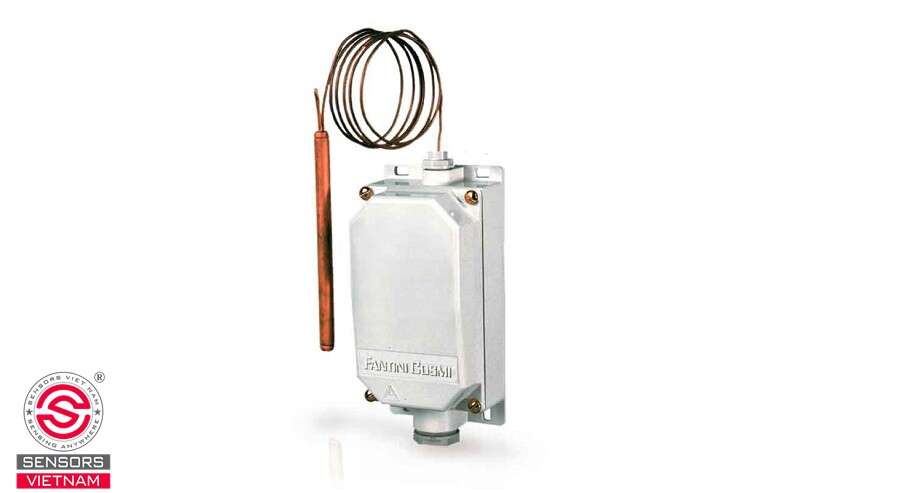
A capillary thermostat operates based on the change in electrical resistance or voltage of the sensing element as temperature varies.
The operation process generally includes the following steps:
Step 1: Detecting temperature changes
When the sensing probe is exposed to the target environment, temperature variations directly affect the RTD or thermocouple sensing element inside the probe.
Step 2: Signal conversion
Changes in temperature cause the sensor’s electrical resistance or voltage to vary accordingly. This signal is then transmitted through the connection cable to the control unit.
Step 3: Comparison with the setpoint
The internal control circuit compares the measured temperature value with the preset threshold configured by the user.
Step 4: Activating the switching contacts
If the temperature exceeds the preset limit, the NO contact will close and the NC contact will open (or vice versa). When the temperature returns to the normal range, the contacts revert to their original state. Through this mechanism, the switch can automatically control related equipment such as ventilation fans, heating systems, or alarm devices.
Practical applications of capillary thermostats
Thanks to their flexible installation and rapid response capability, capillary thermostats are widely applied across many industries.
Hot water supply systems
The device monitors actual water temperature and controls heating equipment when the temperature rises above or falls below the configured threshold. This ensures safe operation and improved energy efficiency.
HVAC systems
In HVAC systems, capillary thermostats are commonly used to monitor water temperature between chillers and heat exchange equipment. When temperature exceeds the allowed limit, the system can automatically activate or deactivate ventilation fans, protecting the chiller from thermal overload.
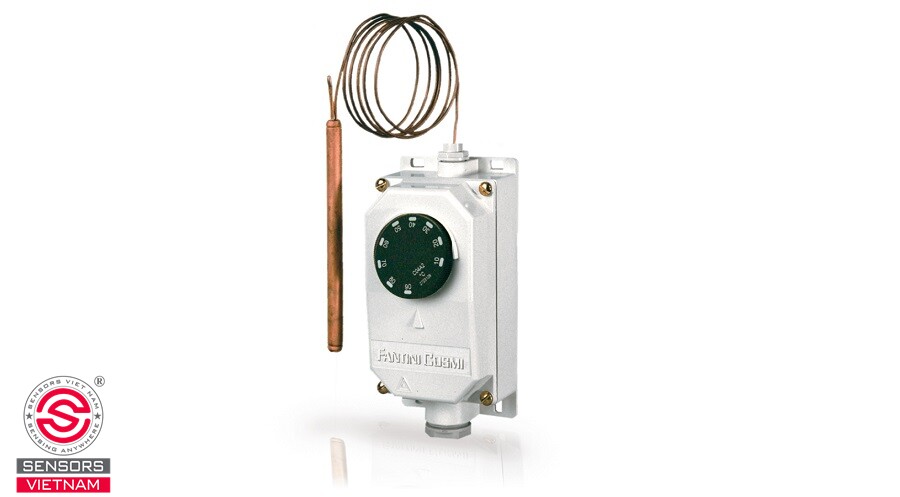
Water heaters and heating equipment
The device detects when water reaches the desired temperature level, allowing the heating unit to shut down automatically and prevent unnecessary energy consumption.
Cold storage and refrigeration rooms
In cold storage facilities and food preservation environments, capillary thermostats help monitor air temperature or cooling systems. If temperatures become too high or too low, the system can activate heaters, cooling fans, or alarm signals.
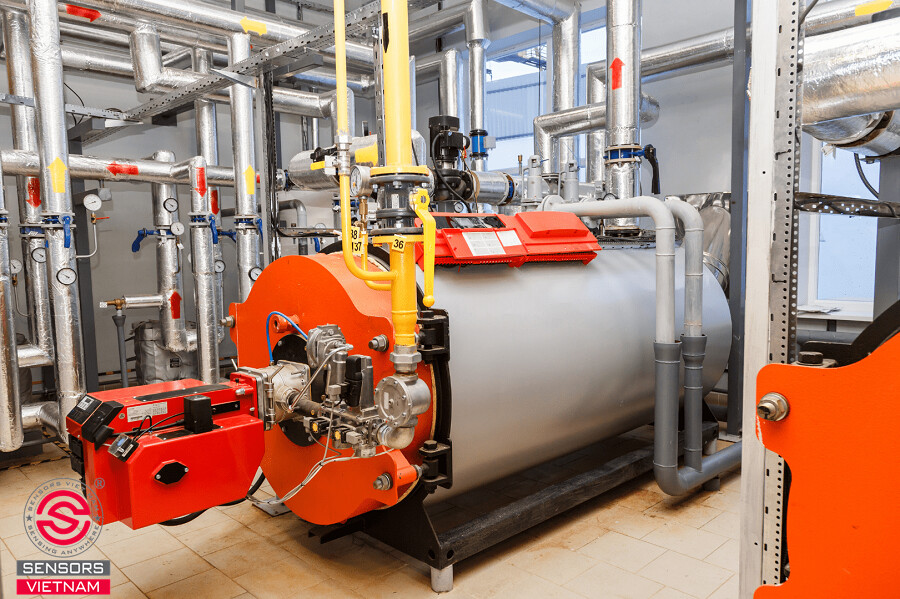
Boilers and industrial applications
In industrial boilers, ovens, or production lines, the device monitors steam or water temperature and can trigger pumps, valves, or other control mechanisms when necessary.
Agriculture
In agriculture, capillary thermostats are often installed in livestock barns to maintain optimal environmental temperatures for animals. They are also used in modern farming systems to control ventilation fans, heating systems, or automatic irrigation based on temperature conditions.
 A capillary thermostat is an effective solution for reliable temperature monitoring and automatic control in a wide range of technical systems. With its flexible design, convenient installation, and wide range of applications from residential to industrial environments, this device has become a trusted choice for many businesses.
If you need professional consultation or want to purchase genuine capillary thermostats at competitive prices, contact Sensors Vietnam today. Our experienced technical team is ready to help you select the most suitable temperature control solution for your system.
Hot news


SENSORS VIETNAM CO., LTD
VAT CODE: 0313 355 473
Head Office: 03rd Floor, Indochina Tower, 04 Nguyen Dinh Chieu, Tan Dinh Ward, Ho Chi Minh City, Vietnam.
HCM Branch: 92/14/9A Vuon Lai Str., An Phu Dong Ward, Ho Chi Minh City, Vietnam.
Hanoi Branch: S106 Tower, Vinhomes Smart City, Tay Mo Ward, Hanoi City, Vietnam.

® Registered trademark – National Office of Intellectual Property Vietnam
OUR SERVICES
Specializing in the import and distribution of industrial sensors.
Sensors for HVAC/R systems and building automation applications.
Supplying gauges, transmitters, switches, controllers, PLCs, HMIs, and gas detectors.
Providing integrated consulting services for sensor and controller systems.


CONTACT US
Email: sales(at)sensors.vn
Hotline: +84 0911 660 660
Asia Commercial Bank Account (ACB):
VND: 357 246 888 | USD: 1357 246 888
Support Online ZALO Official Account
(From 8:00 am to 5:00 pm)





SENSORS VIETNAM CO., LTD
- Specialized in the import and distribution of sensors and controllers.
- Integrated data acquisition systems and industrial communication solutions.
- Design and installation of smart home systems and industrial equipment.
- Stack lights, signal beacons, LED warning horns, and RGB warning lights.