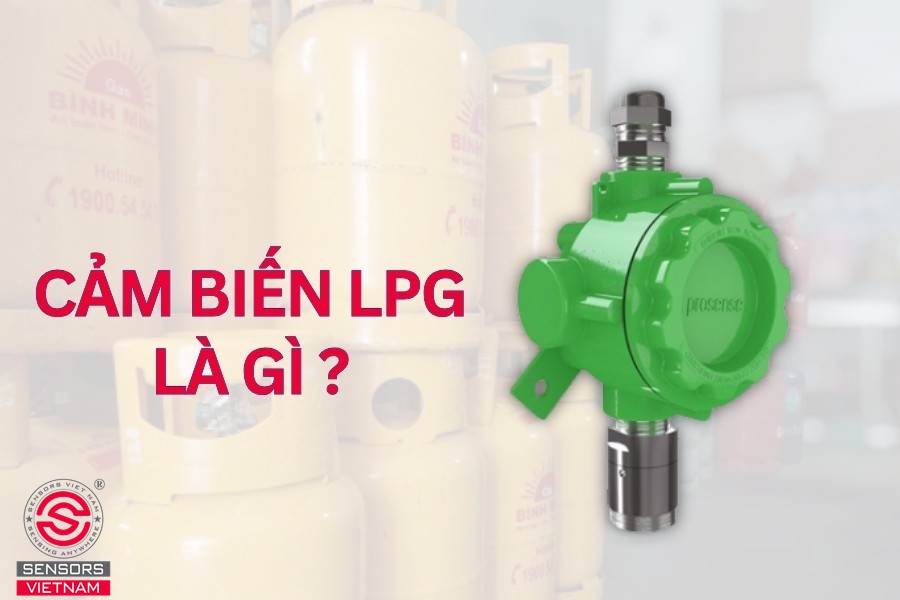
Liquefied petroleum gas (LPG) is an essential energy source across modern industrial infrastructure, commercial buildings, and residential areas. However, its convenience comes with inherent risks of fire and explosion. Therefore, deploying LPG gas sensors is critically important, which is not only to comply with fire protection regulations but also to safeguard human life and assets.
OVERVIEW OF LPG GAS SENSORS
An LPG gas sensor (Liquefied petroleum gas sensor) is a specialized device designed to detect, measure, and monitor the concentration of LPG in the environment.
LPG is a mixture of hydrocarbons (primarily propane and butane) that exists in gaseous form under normal conditions. It can also be liquefied under high pressure for storage and transportation.
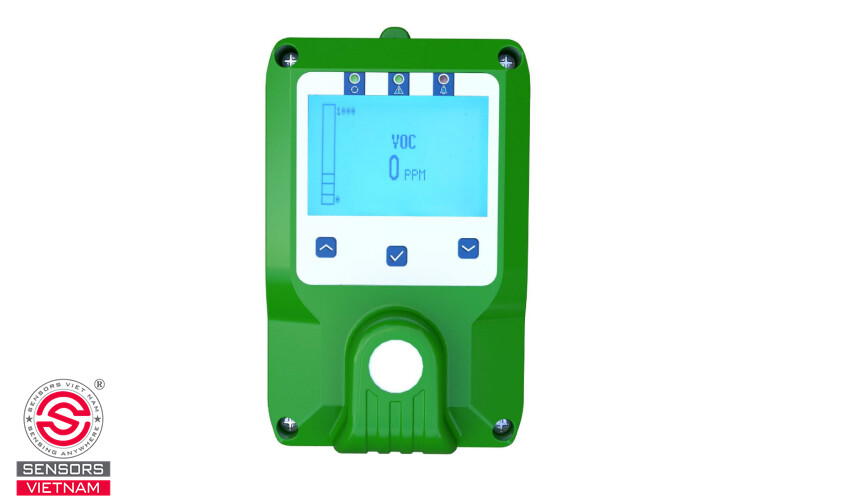
LPG gas detectors typically utilize advanced sensing technologies such as catalytic, infrared, electrochemical, or semiconductor (MOS) to detect, measure, and convert gas concentration into measurable output signals compatible with modern control systems.
Today, LPG gas sensors play a vital role in both residential and large-scale industrial applications. These devices not only meet international safety standards but are also an integral part of automation and smart building management systems.
IMPORTANCE OF LPG GAS SENSORS
LPG is colorless, odorless (odorants are usually added for detection), heavier than air, and highly flammable even at low concentrations.
This makes LPG gas detection essential for early leak identification in storage and usage areas. Key functions of LPG gas sensors include:
- Detecting gas leaks at joints, valves, and corroded pipelines
- Triggering alarms (audible and visual) when gas concentration exceeds thresholds
- Automatically shutting off solenoid valves to isolate gas supply
- Activating ventilation systems to dilute gas concentration in enclosed spaces
LPG GAS SENSORS AND APPLICATIONS
The installation of LPG gas detection systems is essential in a wide range of applications involving energy usage and industrial processes:
- Commercial kitchens and large-scale food service facilities
In restaurants, hotels, and commercial kitchens using centralized gas systems, LPG gas sensors should be installed in cooking areas and gas storage rooms. These sensors are typically integrated with central control panels to enable centralized monitoring and automatic emergency gas shut-off.
- LPG Filling stations and storage facilities
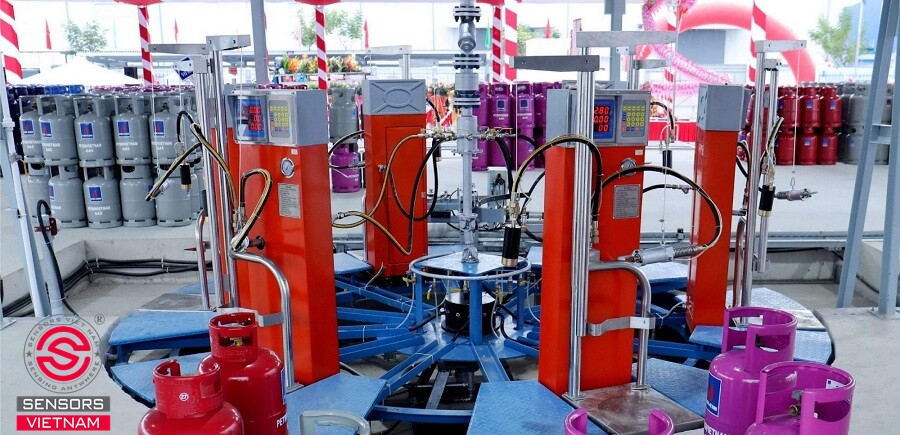
These are highly hazardous environments that require explosion-proof gas detectors (ATEX-certified). Sensors are usually deployed to cover the entire facility for comprehensive monitoring.
- HVAC Systems and building management systems (BMS)
In smart buildings, commercial centers, and modern residential complexes, LPG gas sensors are integrated into BMS platforms. This enables facility managers and engineers to remotely monitor gas safety conditions and automatically trigger safety response scenarios.
LPG GAS SENSORS AND FOUR MAIN TECHNOLOGIES
Widely used for detecting combustible gases such as LPG, methane, and hydrocarbons. It offers high sensitivity, fast response time (typically 30-60 seconds), and cost-effectiveness. Suitable for detecting gases at low concentrations.
Infrared LPG sensors operate based on the principle of gas absorption of infrared radiation at specific wavelengths.
These sensors use two IR beams (reference and measurement). As gas passes through, it absorbs IR radiation at characteristic wavelengths. The remaining signal is used to calculate gas concentration.
IR sensors offer high accuracy, long lifespan, low maintenance requirements, and can operate in inert or oxygen-deficient environments.
- Electrochemical technology
Electrochemical sensors detect LPG at low concentrations using a cell containing electrodes immersed in an electrolyte. When LPG interacts with the sensor, a redox reaction occurs, generating a current proportional to gas concentration.
They are compact, energy-efficient, highly accurate (ppm-level), and provide fast response times.
These sensors use a heated metal oxide element (typically 300-500°C). When LPG contacts the heated surface, oxidation occurs, causing a change in electrical resistance. The electronic circuit interprets this change to determine gas concentration.
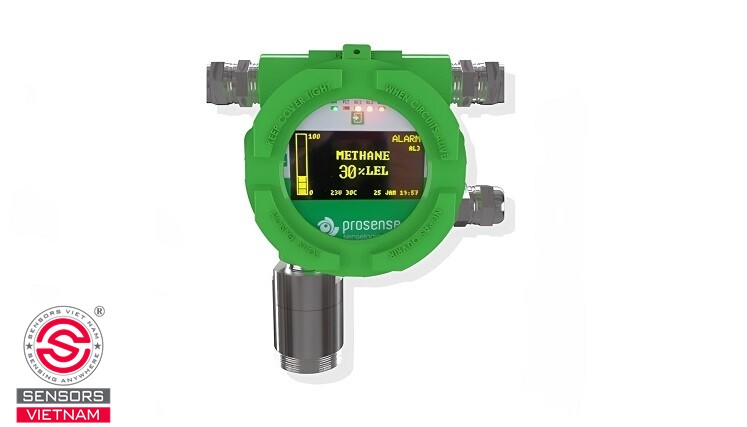
Investing in LPG gas sensors means investing in safety, reliability, and long-term sustainability. With a wide range of sensing technologies from electrochemical and catalytic to non-dispersive infrared (NDIR), these devices form a robust and reliable gas leak detection system.
For technical consultation and competitive pricing, please contact Sensors Vietnam for detailed support.
Our commitment:
✔️ Genuine, high-quality products
✔️ Full CO/CQ documentation
✔️ Reliable warranty (minimum 12 months)
✔️ Competitive pricing
✔️ Professional and dedicated technical support