






CUSTOMER SERVICE
www.sensors.vn
Admin@sensors.vn
www.cambien.com.vn
BEARING VIBRATION SENSOR
Date 19/Oct/2026 at 03:04 PM - View: 11
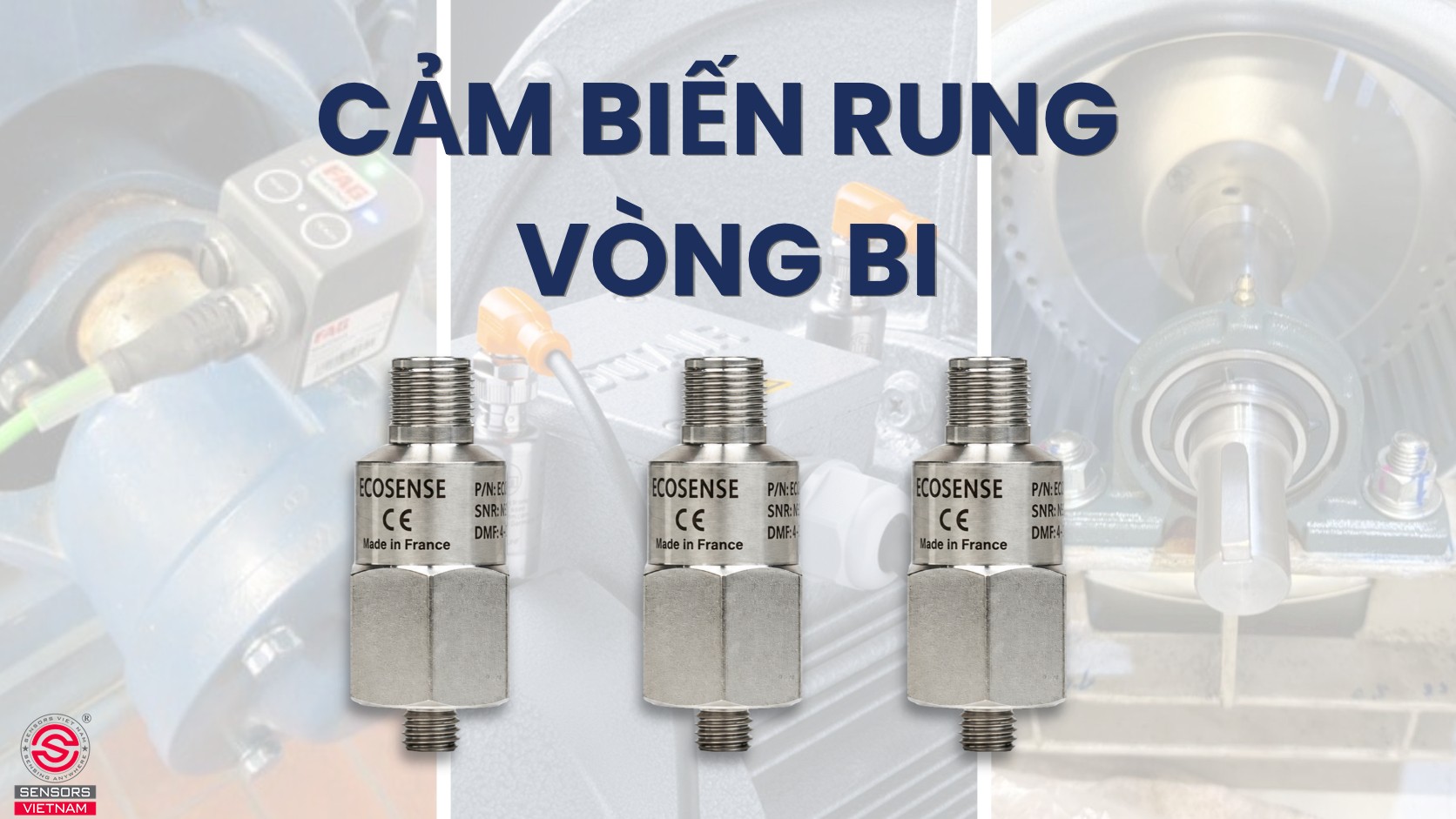
Bearings are essential components in electric motors, water pumps, industrial fans, and many other types of rotating equipment. During operation, bearings can experience wear, surface pitting, or damage due to loading conditions, improper lubrication, and harsh operating environments. These changes can generate abnormal vibration signals before serious equipment failure occurs.
Bearing vibration sensors are used to detect these changes, provide data for machine condition monitoring, and help identify potential failures at an early stage. When combined with appropriate signal analysis techniques, vibration data can also help technicians identify components that may be developing faults and plan maintenance more effectively.
KEY FEATURES OF BEARING VIBRATION SENSORS
A bearing vibration sensor refers to a vibration sensor used to monitor the operating condition of bearings in industrial machinery. The device is typically mounted on the bearing housing or bearing support to measure vibration transmitted from the bearing and rotating components to the machine structure.
When a bearing operates normally, vibration levels generally remain within a certain range determined by the machine's operating conditions. When defects or mechanical changes occur, the vibration signal may change in amplitude, frequency, or waveform. The sensor detects these changes, allowing the monitoring system to track and assess bearing condition.
WHY ARE BEARING VIBRATION SENSORS IMPORTANT?
Early detection of bearing damage
Bearings can develop small defects before operators notice unusual noise or vibration through direct observation. Vibration sensors detect changes in the signal, helping identify early signs of deterioration sooner than visual inspections or listening to the machine alone.
Reducing the risk of damage to other components
As bearings deteriorate, vibration and dynamic loads may increase, affecting shafts, couplings, bearing supports, and related components. If the problem is not addressed, the damage may spread throughout the machine assembly.
Vibration monitoring helps technicians identify abnormal changes and inspect equipment promptly, reducing the risk of secondary damage.
Supporting predictive maintenance
Bearing vibration sensors provide vibration data over time, allowing technicians to assess equipment deterioration trends. When the data indicates an abnormal increase in vibration, maintenance teams can schedule inspections and prepare the appropriate replacement parts and repair procedures.
Minimizing production downtime
Bearing failure can force motors, pumps, or fans to shut down for repairs. In industrial facilities, the failure of a critical piece of equipment can also disrupt an entire production line.
Bearing vibration sensors cannot directly prevent every equipment failure, but they provide information that helps businesses inspect and maintain machinery before damage becomes severe.
 See also: Motor vibration sensors and their operating principles
SPECIFIC APPLICATIONS OF BEARING VIBRATION SENSORS
Bearing vibration sensors are commonly used at locations where bearing condition directly affects machinery performance, including the following applications:
Bearing vibration sensors for industrial electric motors
In industrial electric motors, bearings support the rotating shaft and maintain the relative position of the rotor and stationary components. Vibration sensors are commonly mounted on the bearing housing at the drive end or non drive end of the motor to monitor vibration at each location.
Vibration data helps identify changes that may be associated with bearing deterioration, rotor imbalance, or shaft misalignment. For critical motors, sensors can be connected to a monitoring system to track vibration trends over time and support maintenance planning.
Bearing vibration sensors for industrial fans and HVAC systems
In HVAC systems, bearing vibration sensors can be installed on the fan motor bearing housing or fan shaft bearing supports, depending on the equipment design. Common applications include supply air fans, return air fans, industrial exhaust fans, and ventilation systems that operate continuously.
Bearing vibration sensors for water pumps
In water pumping systems, vibration sensors can be installed on the motor bearing housing or pump shaft bearing supports to monitor the mechanical condition of the equipment assembly. Typical applications include chilled water circulation pumps, cooling water pumps, water supply pumps, and wastewater treatment pumps.
Bearing vibration sensors for air compressors and chillers
For air compressors and chillers, vibration sensors can be used to monitor bearings at suitable locations on the motor or compressor assembly. These machines rely on reliable bearing performance, as bearing damage can affect operating efficiency and interrupt compressed air supply or cooling operations.
Bearing vibration sensors for gearboxes and conveyor systems
In production lines, bearings are used in motors, gearboxes, rollers, and drive assemblies. Vibration sensors can be installed on bearing housings or supports at critical locations to monitor signs of deterioration during operation.
 See also: Vibration sensors and four common types
HOW TO SELECT A BEARING VIBRATION SENSOR
To select a suitable bearing vibration sensor, determine the monitoring objectives and equipment requirements, including the frequency range, sensitivity, installation location, environmental conditions, and output signal.
Determine the measurement frequency range
If the objective is to monitor overall vibration levels, select a sensor with a frequency range suitable for the machine's rotational speed and applicable vibration assessment standards. For early bearing defect detection, prioritize accelerometers capable of responding to high frequencies and combine them with appropriate spectrum analysis or envelope analysis techniques. A frequency range of 10 to 30 kHz may be useful in certain applications.
Select the appropriate sensitivity and measurement range
Sensitivity determines the output signal produced in response to the input vibration acceleration. IEPE accelerometers with a sensitivity of 100 mV/g are commonly used in many rotating machinery monitoring applications. When measuring strong vibration or high acceleration amplitudes, sensors with a sensitivity of 10 or 30 mV/g may be considered to provide a wider measurement range.
Choose the mounting method
Direct stud mounting is generally preferred for permanent monitoring and high frequency vibration analysis, provided that the mounting surface and accessories are suitable. Magnetic mounting is convenient for periodic inspections using portable equipment, but it may reduce high frequency response. Adhesive mounting should only be used when permitted by the manufacturer and suitable for the required measurement frequency range. The mounting surface must be solid, clean, and flat. Thread specifications and tightening torque must follow the sensor manufacturer's technical documentation.
Determine the installation location
The sensor should be mounted on a rigid surface near the bearing housing or bearing support being monitored to obtain a clear vibration signal. For electric motors, the drive end or non drive end may be selected according to the monitoring objective.
Evaluate environmental conditions
In environments with dust, high humidity, or frequent exposure to water, select a sensor with an appropriate IP rating, such as IP67 when required by the operating conditions. If corrosive chemicals are present, check the housing and connector materials. In potentially explosive atmospheres, the equipment must have suitable ATEX or IECEx certification for the installation zone and applicable safety requirements.
Select the appropriate output signal
For waveform analysis, FFT spectrum analysis, or envelope analysis to identify bearing defects, select an accelerometer with an output compatible with the data acquisition system, such as an IEPE output, together with a suitable analysis system. If the objective is to monitor overall vibration levels and generate alarms through a PLC, a sensor with a 4 to 20 mA output may be suitable, provided that the signal has been scaled appropriately and the control system input is compatible.
BUY ECOSENSE ECO-VS BEARING VIBRATION SENSORS FROM SENSORS VIETNAM
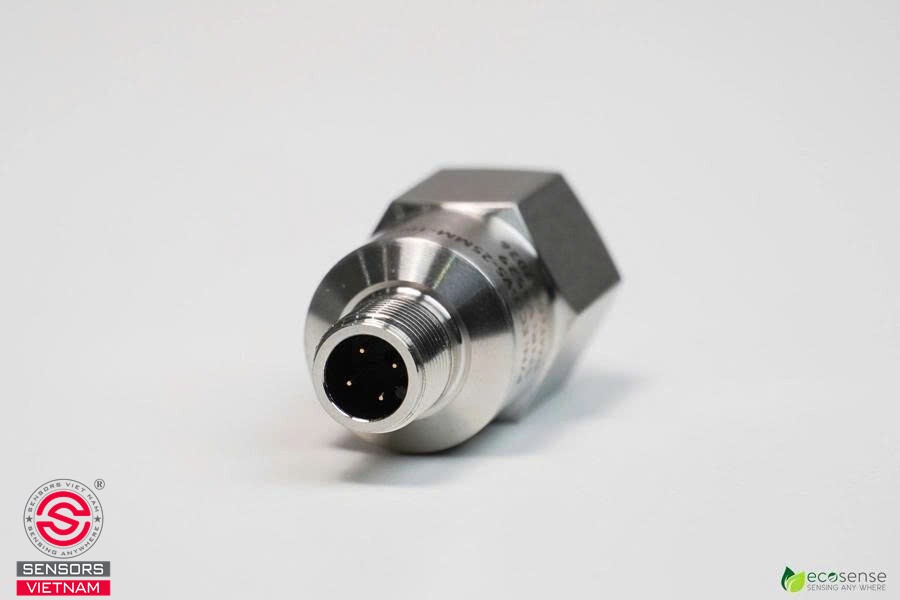
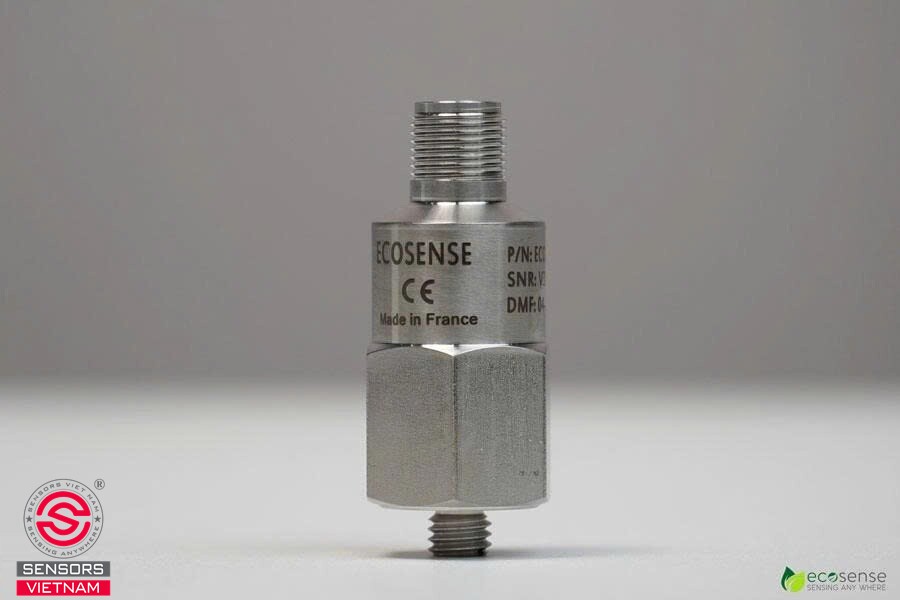
Sensors Vietnam supplies a wide range of vibration sensors with different measurement ranges and mounting configurations, suitable for applications ranging from HVAC systems to machinery used in industrial production lines. One notable product range is the ECOSENSE ECO-VS bearing vibration sensor series from France, designed for industrial vibration monitoring applications. With a 4 to 20 mA output signal, these sensors can connect to PLC and SCADA systems to monitor vibration levels, generate alarms, and support automatic machine shutdown when dangerous thresholds are reached, depending on the system configuration.
The ECO-VS industrial vibration sensor series is designed to monitor overall vibration levels in motors, water pumps, fans, and compressors. Available measurement ranges include 0 to 10, 0 to 25, 0 to 50, and 0 to 100 mm/s RMS, with a frequency range from 10 Hz to 1,000 Hz. These options support vibration monitoring requirements across a variety of industrial applications.
The ECO-VS series features a stainless steel housing, an IP67 protection rating, and an operating temperature range from minus 50°C to plus 90°C. These characteristics make the sensors suitable for a range of industrial operating conditions, including environments exposed to moisture or dust.
To learn more about bearing vibration sensors or request technical advice and a quotation for the ECO-VS industrial vibration sensor series, please visit https://sensors.vn/ or https://cambien.com.vn/.
Hot news





SENSORS VIETNAM CO., LTD
VAT CODE: 0313 355 473
Head Office: 03rd Floor, Indochina Tower, 04 Nguyen Dinh Chieu, Tan Dinh Ward, Ho Chi Minh City, Vietnam.
HCM Branch: 92/14/9A Vuon Lai Str., An Phu Dong Ward, Ho Chi Minh City, Vietnam.
Hanoi Branch: S106 Tower, Vinhomes Smart City, Tay Mo Ward, Hanoi City, Vietnam.

® Registered trademark – National Office of Intellectual Property Vietnam
OUR SERVICES
Specializing in the import and distribution of industrial sensors.
Sensors for HVAC/R systems and building automation applications.
Supplying gauges, transmitters, switches, controllers, PLCs, HMIs, and gas detectors.
Providing integrated consulting services for sensor and controller systems.


CONTACT US
Email: sales(at)sensors.vn
Hotline: +84 0911 660 660
Asia Commercial Bank Account (ACB):
VND: 357 246 888 | USD: 1357 246 888
Support Online ZALO Official Account
(From 8:00 am to 5:00 pm)





SENSORS VIETNAM CO., LTD
- Specialized in the import and distribution of sensors and controllers.
- Integrated data acquisition systems and industrial communication solutions.
- Design and installation of smart home systems and industrial equipment.
- Stack lights, signal beacons, LED warning horns, and RGB warning lights.