





CUSTOMER SERVICE
www.sensors.vn
Admin@sensors.vn
www.cambien.com.vn
DAMPER ACTUATOR FOR SMOKE DAMPER
Date 02/Jul/2026 at 05:10 PM - View: 143
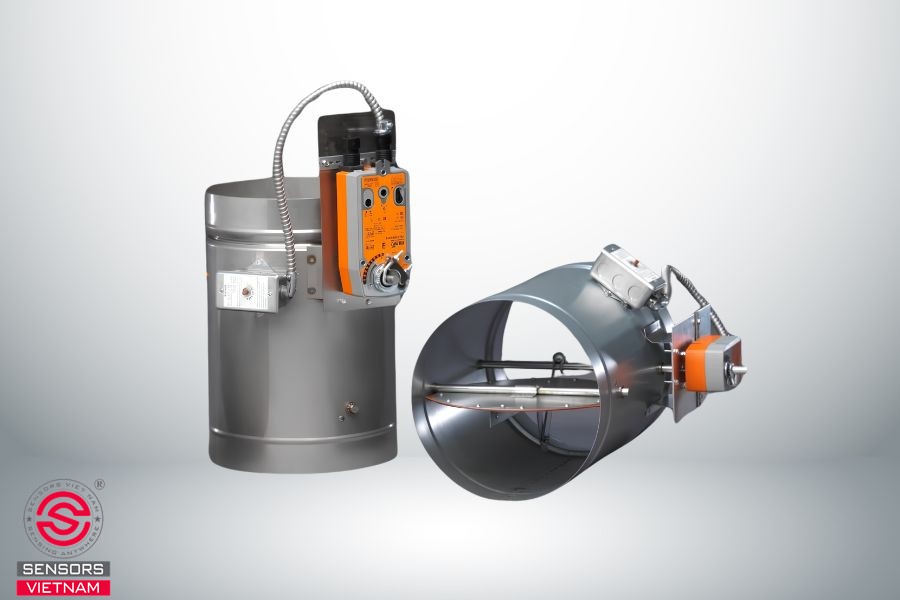
In the fire protection systems of high-rise buildings and large-scale facilities, smoke dampers serve a critical function: preventing smoke from a fire zone from spreading into safe areas through the ventilation ductwork. But a smoke damper only does its job when it closes at the right moment, in the right position, and with a fully airtight seal. All of that depends entirely on one device: the damper actuator.
Overview of damper actuators for smoke dampers
A damper actuator for smoke dampers is a dedicated electric drive device that controls the open and closed position of the damper blade in response to commands from the fire alarm system or building management system. Unlike standard HVAC actuators designed for routine airflow regulation under normal operating conditions, this device is built to perform under emergency conditions, where a delay of even a few seconds can have serious consequences for life safety.
What sets a smoke damper actuator apart from a standard actuator comes down to four core characteristics. The device must close the damper immediately upon receiving a command from the fire alarm system, with no acceptable delay. Its internal materials and construction must withstand the elevated temperatures generated during a fire event without degrading or losing function. It must return the damper to its safe position automatically the moment power is lost, relying on an internal spring return mechanism rather than an electrical signal. And it must carry the technical certifications required by the fire protection standards applicable to the project.
The importance of damper actuators in smoke damper systems
Smoke, not fire, is the leading cause of fatalities in building fires. Smoke travels faster than flames and can penetrate floors and safe zones within minutes through ventilation ductwork if no containment device is in place. Smoke dampers are designed to cut off that path, but they can only do so if the damper actuator behind them is working correctly.
Field evidence shows that failures in smoke damper systems frequently originate from the actuator itself:
- The damper fails to seal completely because the actuator lacks sufficient torque output
- The damper closes too slowly because the actuator cannot meet the required response speed
- The damper cannot close at all on power loss because a non-spring-return actuator was incorrectly specified
This is why the damper actuator is a life safety device and must meet the strict technical standards defined in each project's fire protection documentation.
Types of damper actuators for smoke dampers
Correct classification is the first step toward selecting the right device for each position in the system. Damper actuators for smoke dampers fall into three main categories.
 How the spring return mechanism works in a smoke damper actuator
A common misconception is that the spring return is simply a basic spring. In practice, it is a precisely engineered energy storage mechanism and the most critical component in the entire device.
Under normal powered operation, the internal motor holds the damper blade open or at the controlled position commanded by the building management system. During this time, the spring is held under tension, continuously storing mechanical energy.
When the system receives a fire alarm signal or power is suddenly cut, the motor can no longer maintain its holding force. The spring immediately releases its stored energy, driving the damper blade to the fully closed position without requiring any electrical signal or external power source. This process takes only a few seconds, fast enough to block smoke from traveling through the ductwork before the damper reaches full closure.
The reason this feature is so critical is that in a fire event, power failure and ignition tend to occur nearly simultaneously. If a smoke damper relies on electrical power to close, it will be stuck in the open position at the exact moment closure is most needed. The spring return mechanism eliminates this vulnerability by making the safe state, fully closed, the default condition in the absence of power rather than the exception.
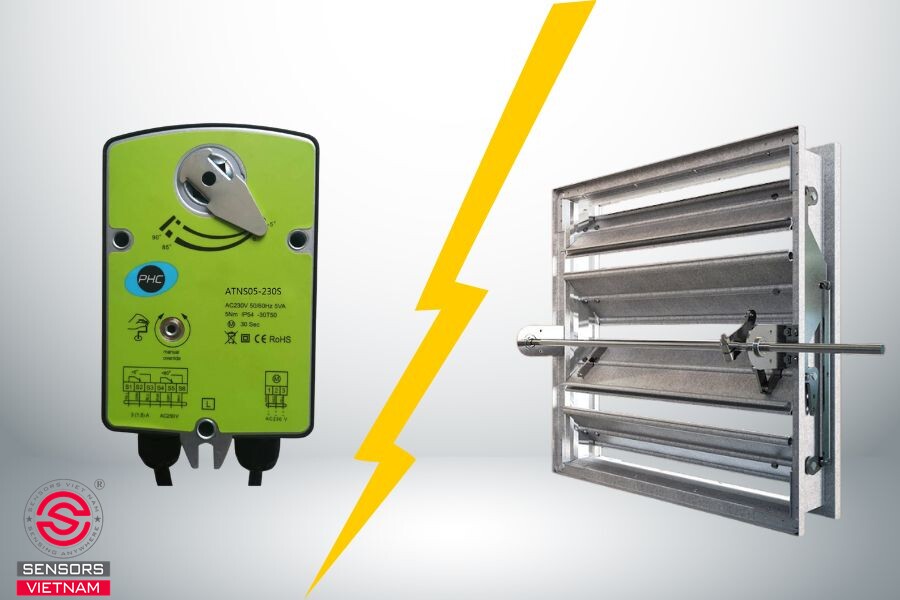 Application of smoke damper actuators
Most buildings with mechanical ventilation ductwork require smoke dampers, and by extension, the actuators that control them.
In office buildings and shopping centers, smoke dampers are positioned at the intersections of ventilation ducts and fire-rated partitions, dividing the building into isolated compartments when an incident occurs. Actuators in these locations are typically integrated directly with the central fire alarm panel and return a position feedback signal to the control board.
In high-rise residential buildings and hotels, the high density of ductwork and the large number of smoke dampers across multiple floors require actuators with consistent technical specifications so the central control system can manage the entire network without signal conflicts.
In hospitals and schools, reliability requirements are elevated because many occupants cannot evacuate independently. Damper actuators in these facilities are often required to support periodic functional testing and scheduled self-check routines to confirm readiness.
In manufacturing facilities and warehouses, large open floor areas and high thermal loads place specific demands on actuator torque output and IP protection rating, particularly in zones with industrial dust or elevated humidity.
In data centers, smoke dampers protect server rooms from smoke originating in adjacent areas while the environmental control system must continue operating to maintain equipment cooling. The damper actuator plays a central role in balancing these competing requirements.
In technical corridors and dedicated smoke extraction systems, damper actuators control smoke dampers by defined fire zone, working in coordination with pressurization fans and smoke exhaust systems to establish a controlled airflow path directed away from occupied evacuation routes.
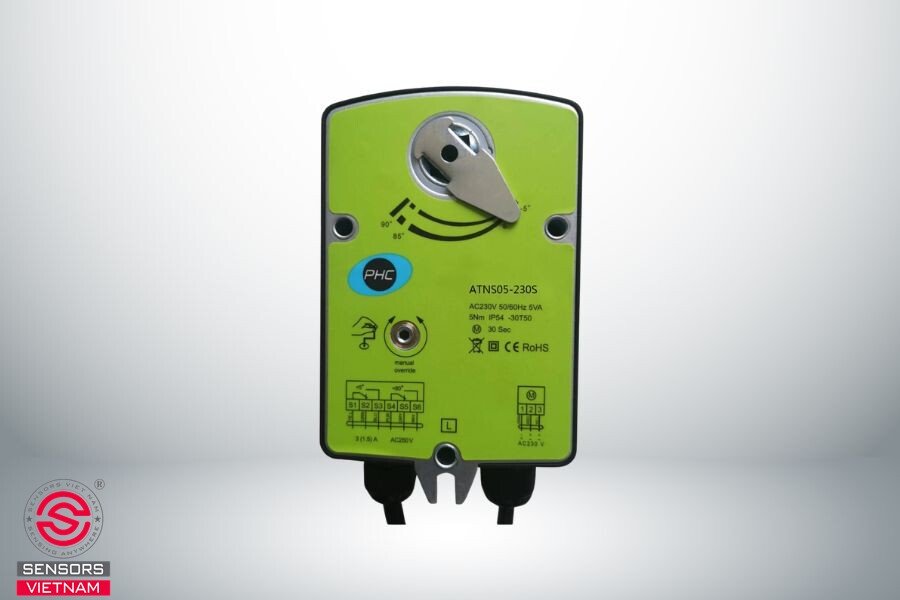 Select genuine smoke damper actuators at Sensors Vietnam
Sensors Vietnam is an authorized distributor of damper actuators for smoke dampers from leading global HVAC manufacturers, including spring return models with high-temperature ratings and full UL and CE certifications meeting fire protection requirements in Vietnam.
All products are directly imported with complete CO/CQ documentation for fire safety commissioning and project acceptance records, and carry a 2-year warranty with clearly defined after-sales technical support.
Contact the Sensors Vietnam technical team directly for product recommendations and pricing on damper actuators suited to your specific smoke damper system and project requirements.
Hot news




SENSORS VIETNAM CO., LTD
VAT CODE: 0313 355 473
Head Office: 03rd Floor, Indochina Tower, 04 Nguyen Dinh Chieu, Tan Dinh Ward, Ho Chi Minh City, Vietnam.
HCM Branch: 92/14/9A Vuon Lai Str., An Phu Dong Ward, Ho Chi Minh City, Vietnam.
Hanoi Branch: S106 Tower, Vinhomes Smart City, Tay Mo Ward, Hanoi City, Vietnam.

® Registered trademark – National Office of Intellectual Property Vietnam
OUR SERVICES
Specializing in the import and distribution of industrial sensors.
Sensors for HVAC/R systems and building automation applications.
Supplying gauges, transmitters, switches, controllers, PLCs, HMIs, and gas detectors.
Providing integrated consulting services for sensor and controller systems.


CONTACT US
Email: sales(at)sensors.vn
Hotline: +84 0911 660 660
Asia Commercial Bank Account (ACB):
VND: 357 246 888 | USD: 1357 246 888
Support Online ZALO Official Account
(From 8:00 am to 5:00 pm)





SENSORS VIETNAM CO., LTD
- Specialized in the import and distribution of sensors and controllers.
- Integrated data acquisition systems and industrial communication solutions.
- Design and installation of smart home systems and industrial equipment.
- Stack lights, signal beacons, LED warning horns, and RGB warning lights.