






CUSTOMER SERVICE
www.sensors.vn
Admin@sensors.vn
www.cambien.com.vn
DIFFERENTIAL PRESSURE SENSOR FOR WATER
Date 05/Mar/2026 at 09:37 AM - View: 95
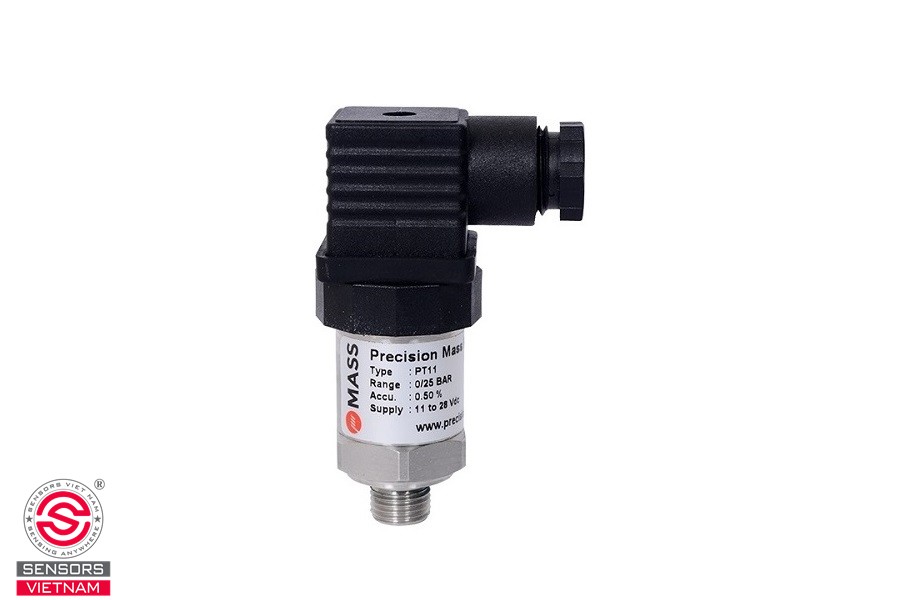
In modern technical systems, especially HVAC, water treatment, fire protection (FP), and industrial process lines pressure control goes far beyond reading a single pressure value on a gauge. What truly determines system performance is the differential pressure between two points within the same water circuit. For this reason, water differential pressure sensors have become indispensable devices, ensuring accurate operation, system safety, and long-term stability according to design specifications.
What is a water differential pressure sensor?
A water differential pressure sensor is a device designed to measure the pressure difference of water between two locations in a pipeline, tank, or water supply and drainage system. The measured differential pressure is converted into standardized electrical output signals such as 4-20 mA, 0-10 V, or Modbus RTU RS-485, allowing seamless integration with PLC, BMS, or SCADA systems for monitoring and automatic control.
Based on this differential pressure value, the system can:
- Calculate operating water flow rate
- Monitor filter condition
- Detect early signs of pipeline blockage
- Evaluate pump performance and efficiency
As a result, the sensor is not merely a measuring instrument but a critical component within the overall building automation and industrial control architecture.
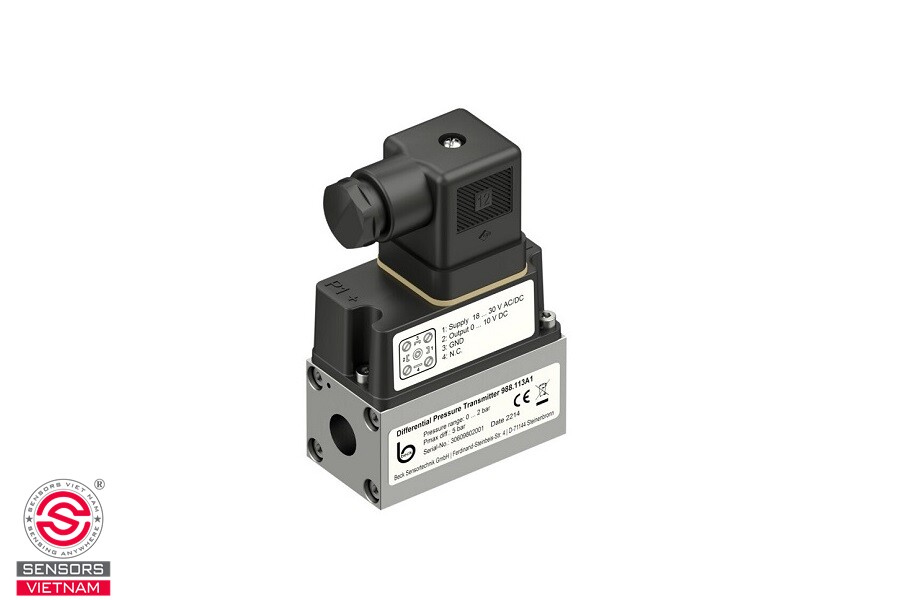
Construction and working principle of a water differential pressure sensor
1. Basic construction
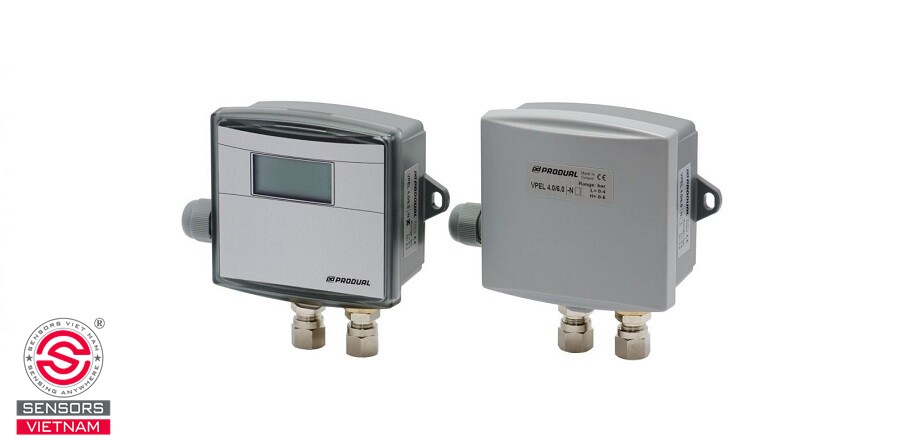
A standard water differential pressure sensor typically consists of the following key components:
- Sensor housing and measuring chamber: Designed to withstand high pressure, resist corrosion, and ensure durability in continuous water applications.
- Two pressure ports:
High (+) port connected to the higher pressure point
Low (-) port connected to the lower pressure point
- Sensing diaphragm or sensing element: The core component with high sensitivity to pressure variation.
- Electronic signal processing circuit: Responsible for signal amplification, linearization, temperature compensation, and output conversion compatible with control systems.
- This robust structure ensures stable accuracy even in systems where pressure fluctuates continuously.
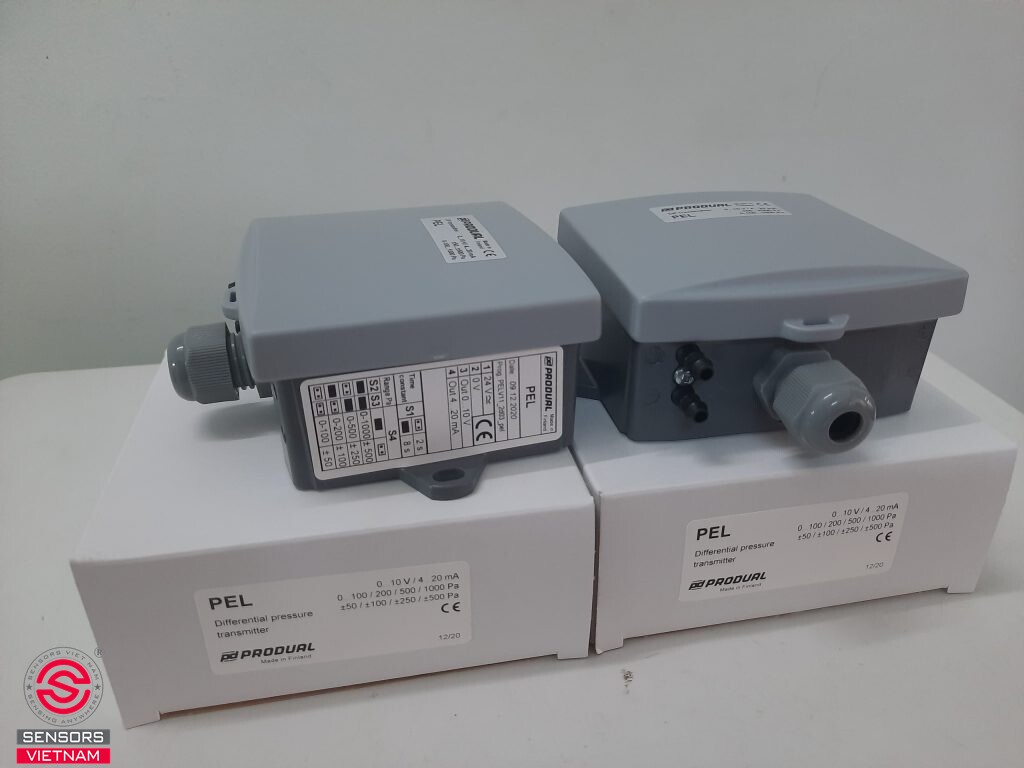
2. Working principle
When water creates different pressures at the High (+) and Low (-) ports, the internal diaphragm deflects proportionally to the differential pressure.
The operating process can be summarized as follows:
Step 1: Differential pressure acts on the sensing diaphragm.
Step 2: The diaphragm deformation is converted into an electrical signal through resistance or capacitance variation.
Step 3: The internal electronics amplify and linearize the signal according to the calibrated measuring range.
Step 4: The device outputs a standardized analog signal (4-20 mA / 0-10 V) or Modbus RTU RS-485 corresponding to the measured differential pressure (Pa).
Step 5: The signal is transmitted to PLC or BMS systems to control pumps, valves, variable frequency drives (VFDs), or trigger alarms when operating conditions exceed safety thresholds.
Practical applications of water differential pressure sensors
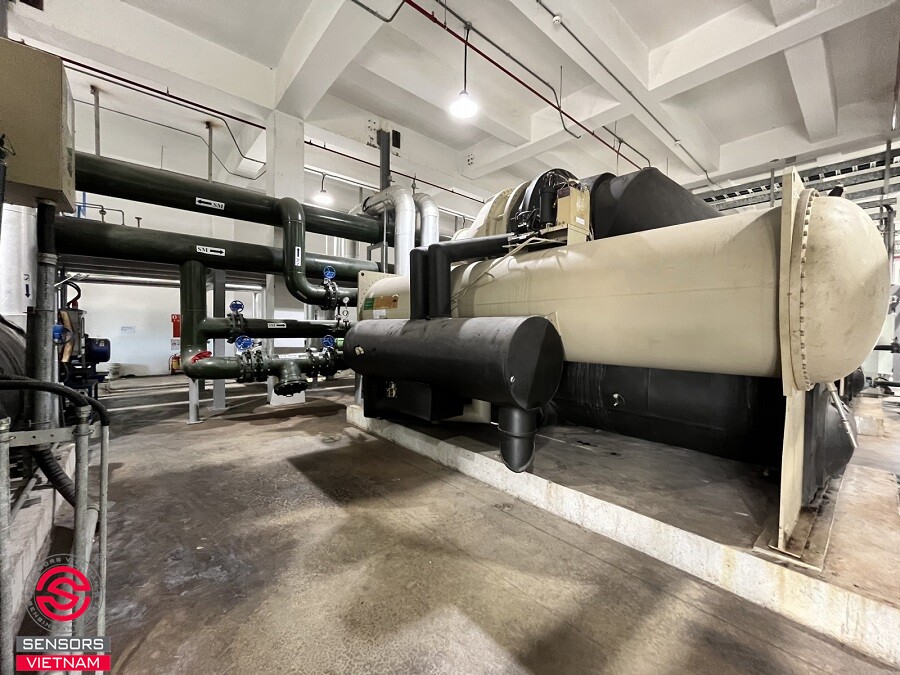
1. Chiller and HVAC systems
- Measuring differential pressure between supply and return water lines to regulate pump speed via VFD control.
- Monitoring differential pressure across bypass valves, control valves, and heat exchangers to optimize system efficiency.
- Maintaining design flow rate while minimizing energy consumption.
- Accurate differential pressure control plays a vital role in achieving energy-efficient HVAC operation.
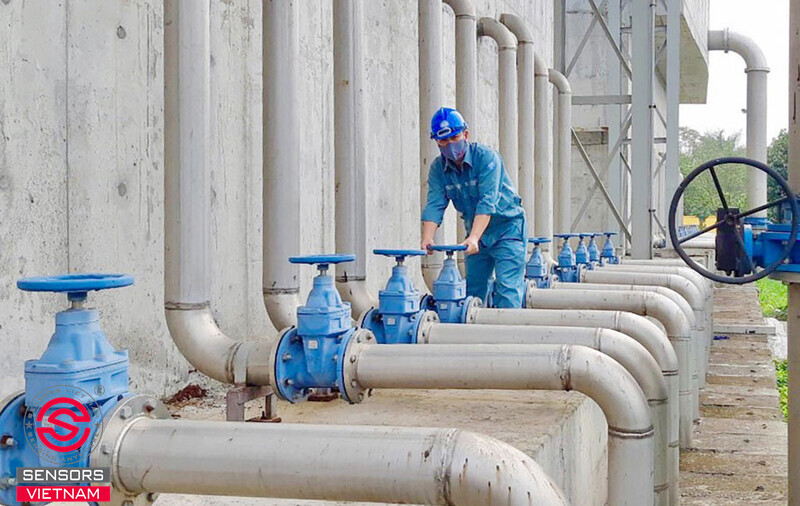
2. Building water supply systems
- Monitoring pressure drop across pipeline sections to detect abnormal pressure losses or blockages.
- When differential pressure drops below the setpoint → VFD increases pump speed.
- When differential pressure rises above the setpoint → pump speed decreases or bypass valve opens.
- This dynamic adjustment mechanism ensures stable and balanced water distribution throughout the building.
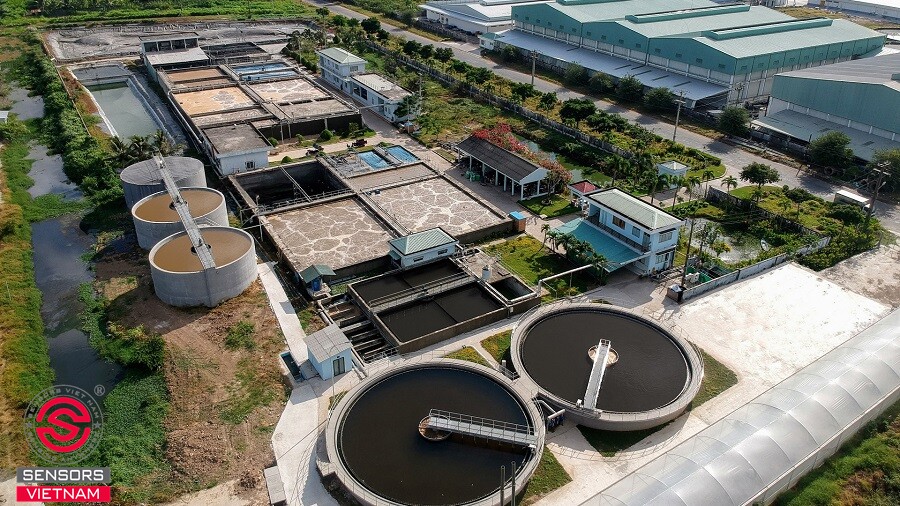
3. Water and wastewater treatment plants
- Monitoring differential pressure across filters, filter columns, and RO membranes to detect fouling and schedule timely replacement.
- Supervising pressure differences in tanks and pipelines to prevent pipe rupture or pump cavitation.
- Ensuring safe and continuous 24/7 plant operation.
- In these facilities, differential pressure monitoring is essential for both operational reliability and equipment protection.
4. Flow rate and level measurement
- Combined with primary elements such as orifice plates, venturi tubes, or flow nozzles to calculate water flow based on differential pressure principles.
- Measuring water column differential pressure between two points in a tank to determine relative liquid level.
- This versatility makes the water differential pressure sensor a multifunctional instrument in industrial measurement systems.
Important considerations when selecting a water differential pressure sensor
To ensure durability, accuracy, and long-term reliability, the following criteria should be carefully evaluated:
- Measuring range: Select a range at least 20% higher than the actual operating differential pressure to prevent overload.
- Output signal: Common options include 4-20 mA, 0-10 V, or Modbus RTU RS-485 depending on control system requirements.
- Diaphragm material: Stainless steel or ceramic is recommended based on water quality and corrosion level.
- Maximum allowable pressure: Must exceed real operating conditions to withstand sudden pressure spikes.
- Protection rating: Minimum IP65 for effective dust and moisture resistance in HVAC and industrial environments.
Choosing the right specification from the outset significantly reduces maintenance costs and operational risks.
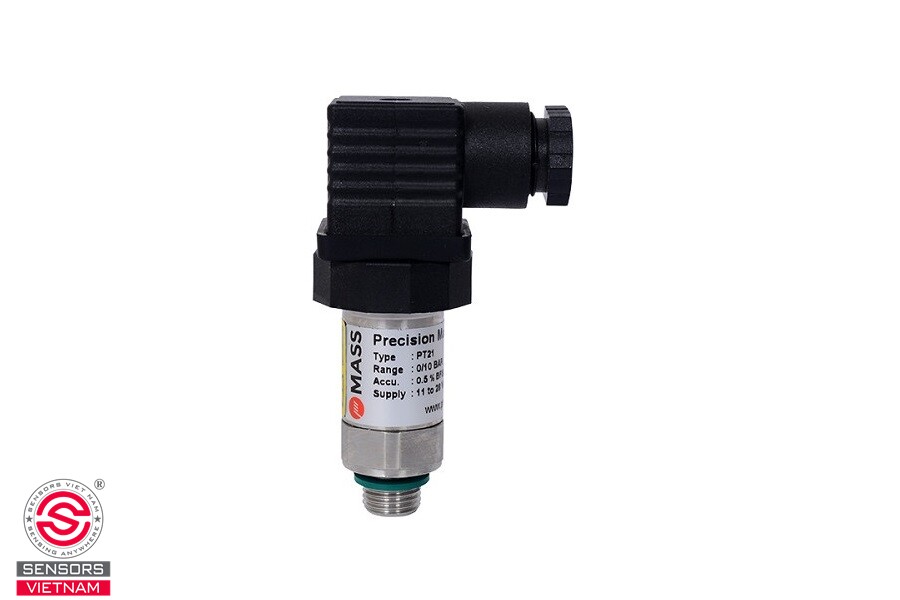
A water differential pressure sensor is more than just a measurement device. It is a fundamental solution for system automation, performance optimization, and water system protection. Investing in a high-quality, sensitive, and durable sensor ensures stable operation, improved energy efficiency, and extended equipment lifespan.
If you are looking for a reliable water differential pressure measurement solution for your project, contact Sensors Vietnam today for professional technical consultation and prompt support.
Hot news


SENSORS VIETNAM CO., LTD
VAT CODE: 0313 355 473
Head Office: 03rd Floor, Indochina Tower, 04 Nguyen Dinh Chieu, Tan Dinh Ward, Ho Chi Minh City, Vietnam.
HCM Branch: 92/14/9A Vuon Lai Str., An Phu Dong Ward, Ho Chi Minh City, Vietnam.
Hanoi Branch: S106 Tower, Vinhomes Smart City, Tay Mo Ward, Hanoi City, Vietnam.

® Registered trademark – National Office of Intellectual Property Vietnam
OUR SERVICES
Specializing in the import and distribution of industrial sensors.
Sensors for HVAC/R systems and building automation applications.
Supplying gauges, transmitters, switches, controllers, PLCs, HMIs, and gas detectors.
Providing integrated consulting services for sensor and controller systems.


CONTACT US
Email: sales(at)sensors.vn
Hotline: +84 0911 660 660
Asia Commercial Bank Account (ACB):
VND: 357 246 888 | USD: 1357 246 888
Support Online ZALO Official Account
(From 8:00 am to 5:00 pm)





SENSORS VIETNAM CO., LTD
- Specialized in the import and distribution of sensors and controllers.
- Integrated data acquisition systems and industrial communication solutions.
- Design and installation of smart home systems and industrial equipment.
- Stack lights, signal beacons, LED warning horns, and RGB warning lights.