






CUSTOMER SERVICE
www.sensors.vn
Admin@sensors.vn
www.cambien.com.vn
DUCT SMOKE DETECTOR AND APPLICATION
Date 06/Nov/2022 at 11:54 AM - View: 1715
DUCT SMOKE DETECTOR, ROOM SMOKE DETECTOR, DUCT SMOKE DETECTOR ACI, DUCT SMOKE DETECTOR APOLLO, DUCT SMOKE DETECTOR DWYER, DUCT SMOKE DETECTOR VCP, SMOKE DETECTOR HOCHIKI, SMOKE DETECTOR KOREA, SMOKE DETECTOR GERMANY.
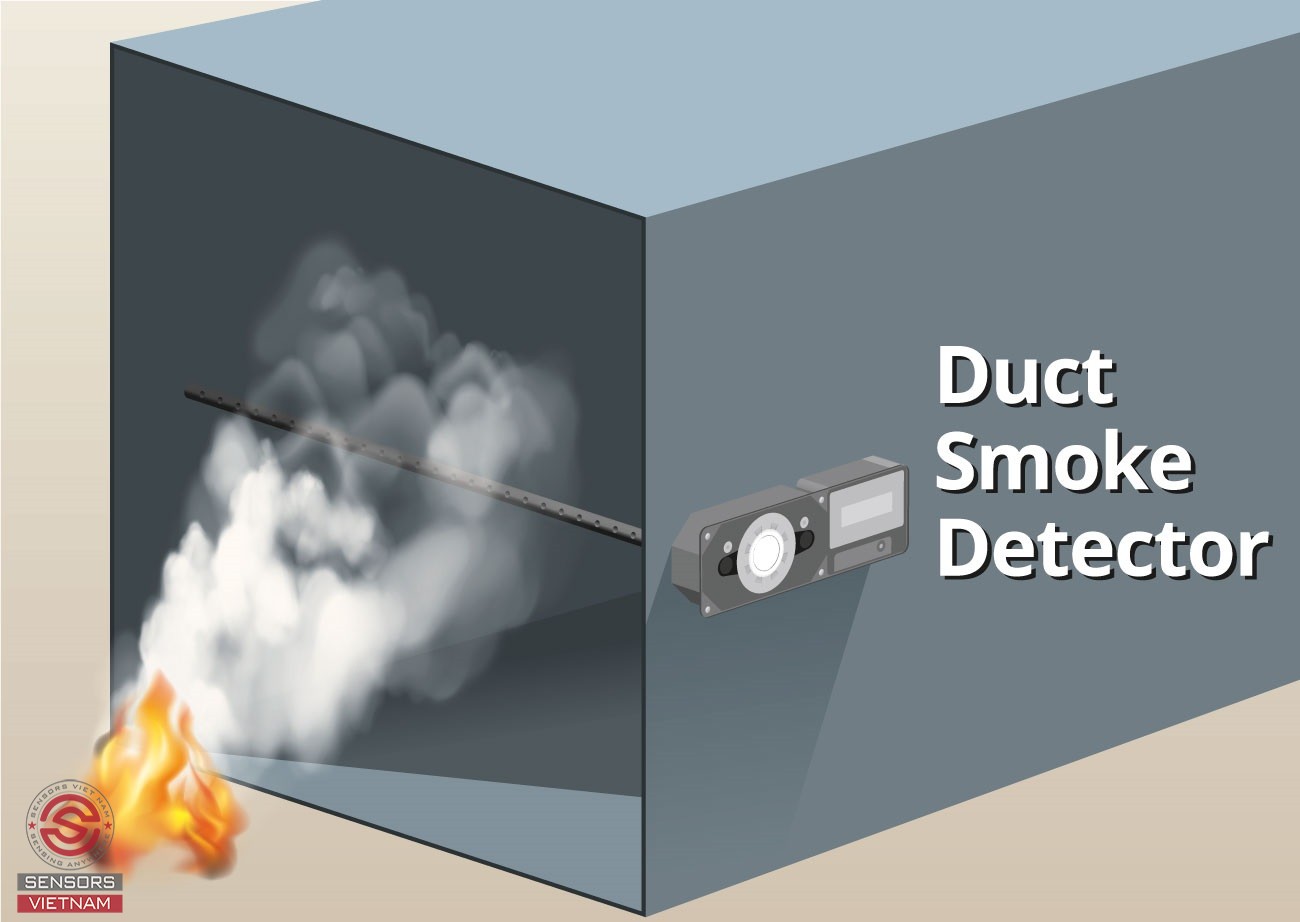
Duct Smoke Detectors are a key component of Fire Detection and Fire Alarm systems. The duct smoke detector samples air for early detection of smoke and products of combustion present in air moving through HVAC ducts. The Duct Smoke Detector should be compatible with Building Automation and Fire Alarm systems. Duct Smoke Detectors use Ionization or Photoelectric sensing technology.
IONIZATION Duct Smoke Detectors react to changes in ionized particles. Ionization technology is generally more sensitive than Photoelectric at detecting small particles which tend to be produced by FLAMING FIRES. These fires spread and consume combustible materials rapidly.
PHOTOELECTRIC Duct Smoke Detectors react to how smoke affects light and are generally more sensitive than Ionization at detecting large particles. These particles are produced in greater amounts by SMOLDERING FIRES, which may smolder for hours before bursting into flames.
Purpose of Duct Smoke Detection National and local safety standards and codes recognize the ability of air duct systems to transfer smoke, toxic gases, and flame from area to area. Sometimes smoke can be of such quantity as to be a serious hazard to life safety unless blowers are shut down and dampers are actuated. The primary purpose of duct smoke detection, then, is to prevent injury, panic, and property damage by reducing the spread (recirculation) of smoke. Duct smoke detection can also serve to protect the air conditioning system itself from fire and smoke damage, and can be used to assist in equipment protection applications, for example, in the ventilation/ exhaust duct work of mainframe computers and tape drives.
Hot news




SENSORS VIETNAM CO., LTD
VAT CODE: 0313 355 473
Head Office: 03rd Floor, Indochina Tower, 04 Nguyen Dinh Chieu, Tan Dinh Ward, Ho Chi Minh City, Vietnam.
HCM Branch: 92/14/9A Vuon Lai Str., An Phu Dong Ward, Ho Chi Minh City, Vietnam.
Hanoi Branch: S106 Tower, Vinhomes Smart City, Tay Mo Ward, Hanoi City, Vietnam.

® Registered trademark – National Office of Intellectual Property Vietnam
OUR SERVICES
Specializing in the import and distribution of industrial sensors.
Sensors for HVAC/R systems and building automation applications.
Supplying gauges, transmitters, switches, controllers, PLCs, HMIs, and gas detectors.
Providing integrated consulting services for sensor and controller systems.


CONTACT US
Email: sales(at)sensors.vn
Hotline: +84 0911 660 660
Asia Commercial Bank Account (ACB):
VND: 357 246 888 | USD: 1357 246 888
Support Online ZALO Official Account
(From 8:00 am to 5:00 pm)





SENSORS VIETNAM CO., LTD
- Specialized in the import and distribution of sensors and controllers.
- Integrated data acquisition systems and industrial communication solutions.
- Design and installation of smart home systems and industrial equipment.
- Stack lights, signal beacons, LED warning horns, and RGB warning lights.