






CUSTOMER SERVICE
www.sensors.vn
Admin@sensors.vn
www.cambien.com.vn
DUCT SMOKE DETECTOR SM-501-P
Date 17/Jan/2025 at 09:43 AM - View: 593
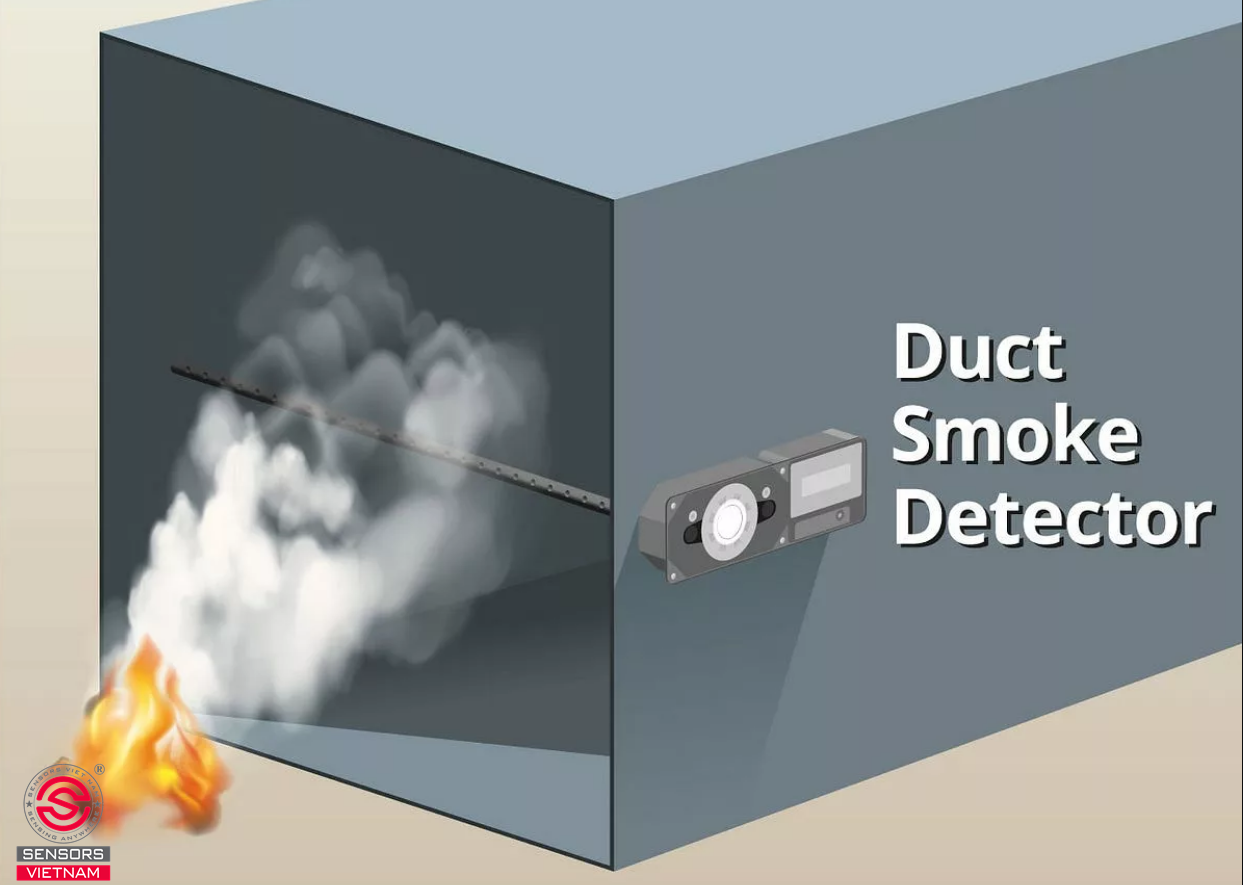
Duct Smoke Detectors SM-501-P that are factory installed in most Roof Top Units (RTU), the Duct Detector usually receives its power by the RTU, by using this method of power for the detector; the Fire Alarm Control Panel cannot reset the Duct Detector.
Duct Smoke Detector APC can also be powered by 120 Voltage (VAC), 24VDC, 23-VAC the primary power for the Duct Detector is provided by an electrical circuit; by using this method of power for the detector, the Fire Alarm Control Panel cannot reset the Duct Detector.
Duct Smoke Detector installed on the ducting of the ventilation system are being installed at an elevated height or above a hard lid or T-Bar ceiling; this installation practice creates issues with servicing and testing the device.
Due to the various ways of providing power to the detector, resetting the device after activation can be difficult for the end user and the building representative.
Inaccessible Duct Detectors is the most common issue that service and repair technicians have when performing testing or service of the device. NFPA 72 has requirements for remote LED and test station locations when the device is located above ceilings or the detector LED cannot be seen from the floor. NFPA 72 mentions the definition of accessible, as applied to the equipment. The Duct Smoke Detector is to be accessible to meet the definition, but is not always the case.
Why are Duct Smoke Detectors required :
NFPA 90A is specific to Air Conditioning and Heating Systems installation. The purpose of the NFPA 90A is to prevent the spread of smoke and fire through ductwork and ventilation systems for air conditioning and heating systems with high capacities.
The primary uses of the Duct Smoke Detector is to sample the air being moved through the ductwork for smoke and to stop the fan unit from running so smoke is not moved through the ducting. In some applications, Duct Smoke Detectors can be used for the control of ventilation dampers.
Where are Duct Smoke Detectors required to be installed:
The International Mechanical Code requires a duct smoke detector in the return for units over 2,000 cfm and requires a detector in the supply duct for systems over 15,000 cfm.
There are other Codes and Standards that require the installation of Duct Detectors to be installed in the supply ducting of HVAC units that are over 2,000 CFM and in the return ducting or shaft if over 15,000 CFM.
When installing Duct Detectors it is advised to reach out to the local Authority Having Jurisdiction (AHJ) to obtain their requirement.
In air supply systems with a capacity greater than 2,000 CFM the Duct Detector shall be installed downstream of the air filters and upstream of any branch ducts.
In multi-story buildings, it states each story with a commonly shared return and having a capacity greater than 15,000 CFM’s. The smoke detection device should be installed before the connection to the common return and before any connection to any recirculation or fresh air inlet in the return air systems. The Code includes plenums where the plenum is used as the common return.
Duct Smoke Detection – NFPA 90A Code Requirements – There are exceptions to the two basic requirements:
Ventilation fan systems used to remove air from the inside of the building to the outside of the building. These fans are excluded from the above requirements and
Return air smoke detectors are not required when there is a protection of the space served by a system of area smoke detectors.
Best Practices implemented:
NFPA 72 National Fire Alarm and Signaling code has installation methods of Duct Smoke Detectors when connected to a building Fire Alarm Control Panel (FACP).
International Mechanical Code has installation requirements for Duct Smoke Detectors.
NFPA 90A has installation requirements for Duct Smoke Detectors.
In today’s world, most buildings have some sort of fire alarm system or dedicated supervisory system installed with-in the premise.
When Duct Detection is required, NFPA 72 (adopted edition) locally is widely accepted and followed.
Chapter 17, Initiating Devices and Annex materials is where one would find the required and recommended installation practices for Duct Detectors.
Conventional and Addressable Duct Detectors that are compatible with the control unit can be the easiest method of having the Duct Detector powered, supervised and reset from the contr
Hot news


SENSORS VIETNAM CO., LTD
VAT CODE: 0313 355 473
Head Office: 03rd Floor, Indochina Tower, 04 Nguyen Dinh Chieu, Tan Dinh Ward, Ho Chi Minh City, Vietnam.
HCM Branch: 92/14/9A Vuon Lai Str., An Phu Dong Ward, Ho Chi Minh City, Vietnam.
Hanoi Branch: S106 Tower, Vinhomes Smart City, Tay Mo Ward, Hanoi City, Vietnam.

® Registered trademark – National Office of Intellectual Property Vietnam
OUR SERVICES
Specializing in the import and distribution of industrial sensors.
Sensors for HVAC/R systems and building automation applications.
Supplying gauges, transmitters, switches, controllers, PLCs, HMIs, and gas detectors.
Providing integrated consulting services for sensor and controller systems.


CONTACT US
Email: sales(at)sensors.vn
Hotline: +84 0911 660 660
Asia Commercial Bank Account (ACB):
VND: 357 246 888 | USD: 1357 246 888
Support Online ZALO Official Account
(From 8:00 am to 5:00 pm)





SENSORS VIETNAM CO., LTD
- Specialized in the import and distribution of sensors and controllers.
- Integrated data acquisition systems and industrial communication solutions.
- Design and installation of smart home systems and industrial equipment.
- Stack lights, signal beacons, LED warning horns, and RGB warning lights.