





CUSTOMER SERVICE
www.sensors.vn
Admin@sensors.vn
www.cambien.com.vn
FLUSH DIAPHRAGM PRESSURE SENSOR
Date 18/Mar/2026 at 02:00 PM - View: 42
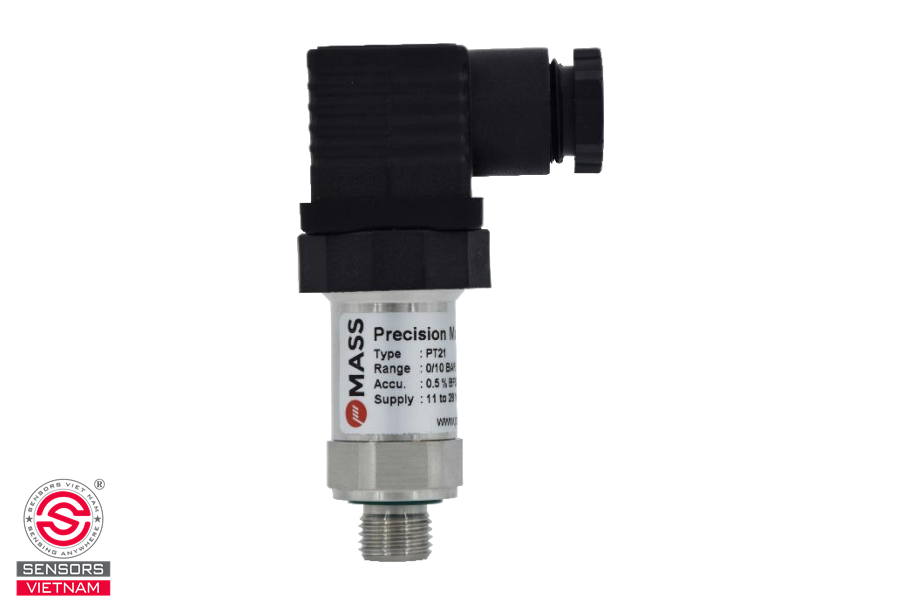
In HVAC systems, factory automation, and water treatment plants, pressure transmitters act as critical “sensory devices,” converting physical pressure into signals that control systems can interpret. Selecting the wrong pressure range or output signal can lead to inaccurate readings and even system failure.
In this article, Sensors Vietnam provides a comprehensive guide from construction and working principles to essential technical specifications helping you choose the right pressure sensor for your application.
1. What is a pressure transmitter?
A pressure transmitter is an electro-mechanical measuring device designed to monitor and measure the pressure of media such as liquids, gases, and steam inside pipelines or tanks.
Unlike traditional mechanical pressure gauges that only display local values, pressure transmitters offer a major advantage:
they convert physical pressure into standard industrial electrical signals.
These signals are transmitted to central control systems such as PLC, DCS, or SCADA, where they are processed, recorded, and used to control actuators like pumps, valves, and fans according to predefined automation logic.
2. Structure of a pressure transmitter
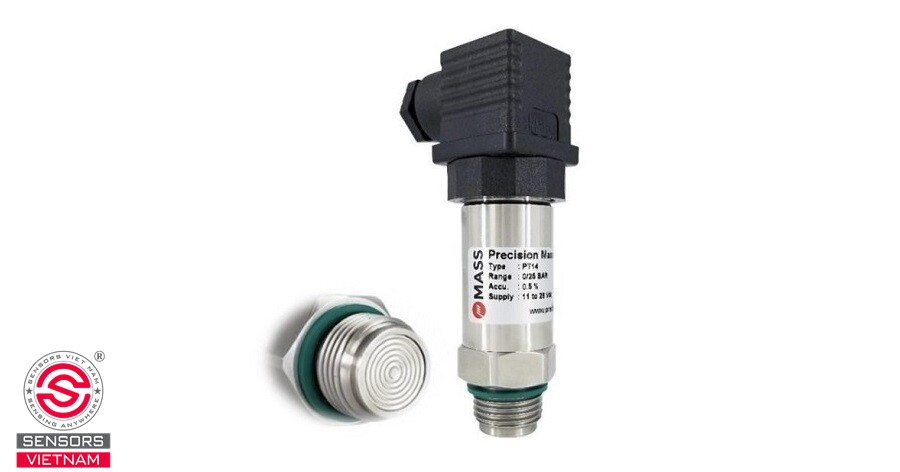
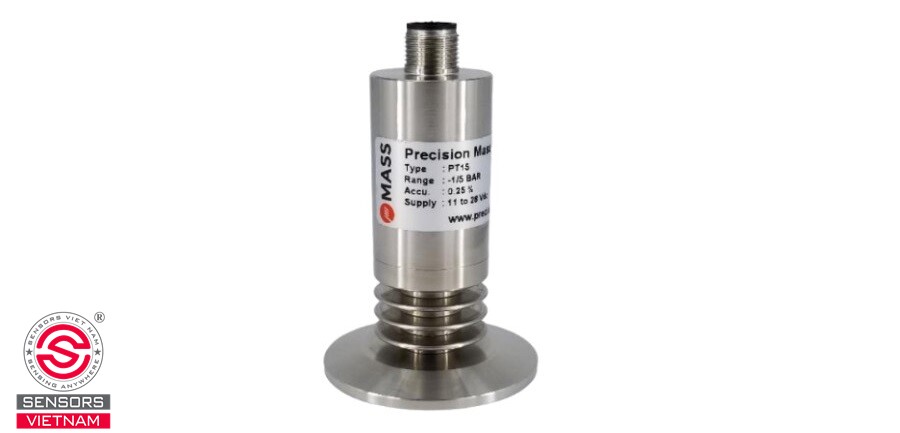
A standard pressure sensor, regardless of brand, typically consists of five main components:
- Process connection
The interface connecting the sensor to the pipeline. Commonly made of stainless steel (SS304/SS316L) for corrosion resistance.
- Sensing diaphragm
The core element of the device. This thin, highly elastic membrane deforms instantly under applied pressure.
- Transducer element
Converts the diaphragm’s mechanical deformation into an electrical signal (capacitive or resistive).
- Signal processing unit (Transmitter/amplifier)
Amplifies, filters noise, and converts raw signals into standardized analog or digital outputs.
- Display module (Optional)
High-end models may include an integrated LCD/LED display for real-time local monitoring.
3. Working principle of diaphragm pressure sensors
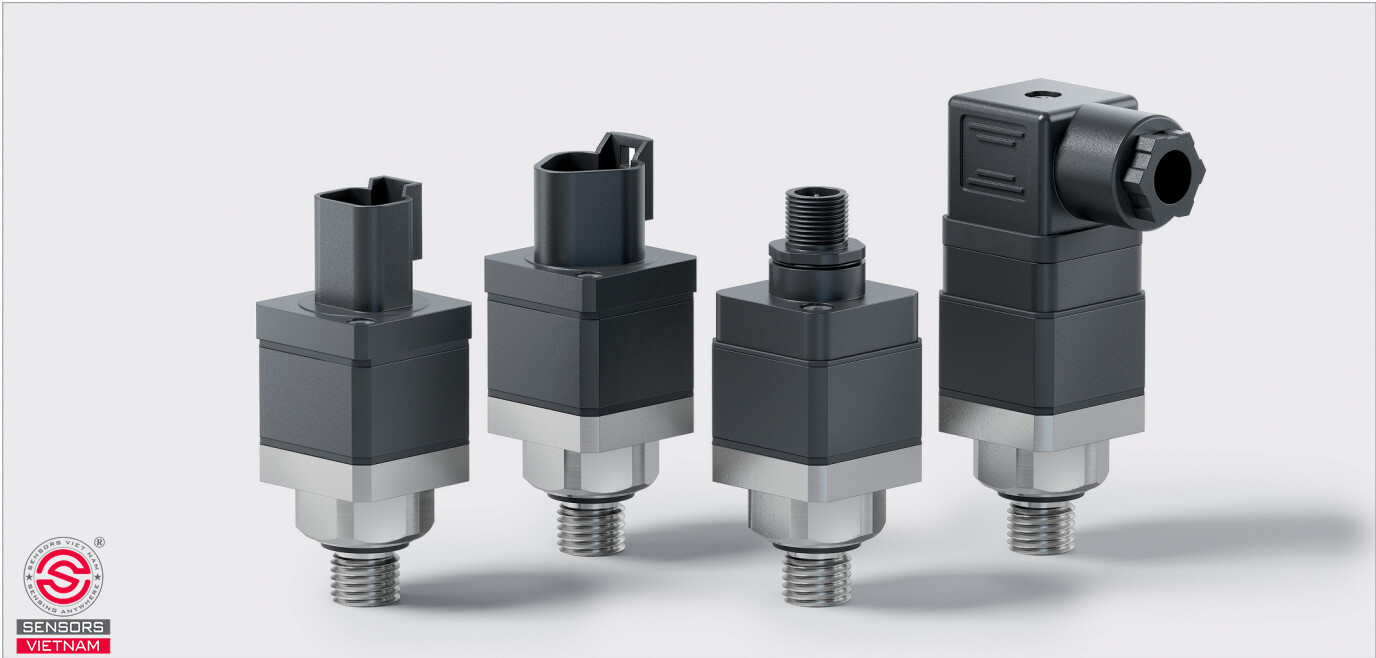
The operation of a pressure transmitter can be summarized in four continuous stages:
Step 1: Pressure input
The process medium (water, compressed air, oil, etc.) enters the sensor and applies force to the diaphragm.
Step 2: Mechanical deformation
The diaphragm deflects proportionally to the applied pressure.
Step 3: Signal conversion
The deformation changes electrical properties (resistance or capacitance), which are interpreted by the internal processor to determine the actual pressure value.
Step 4: Signal transmission
The processed signal is amplified and transmitted to the control system via current, voltage, or communication protocols.
4. Key technical specifications to consider
To ensure stable operation and cost efficiency, the following specifications are critical when selecting a pressure transmitter:
- Measuring range & overpressure
- Common ranges: 0-1 bar, 0-10 bar, 0-100 bar, etc.
- Best practice: choose a sensor with a range 20-30% higher than maximum operating pressure to prevent damage from pressure spikes (water hammer).
- Output signal
- Analog: 4-20mA (most popular, excellent noise immunity), 0-10V, 0-5V
- Digital: Modbus RTU RS485 (ideal for multi-device communication networks)
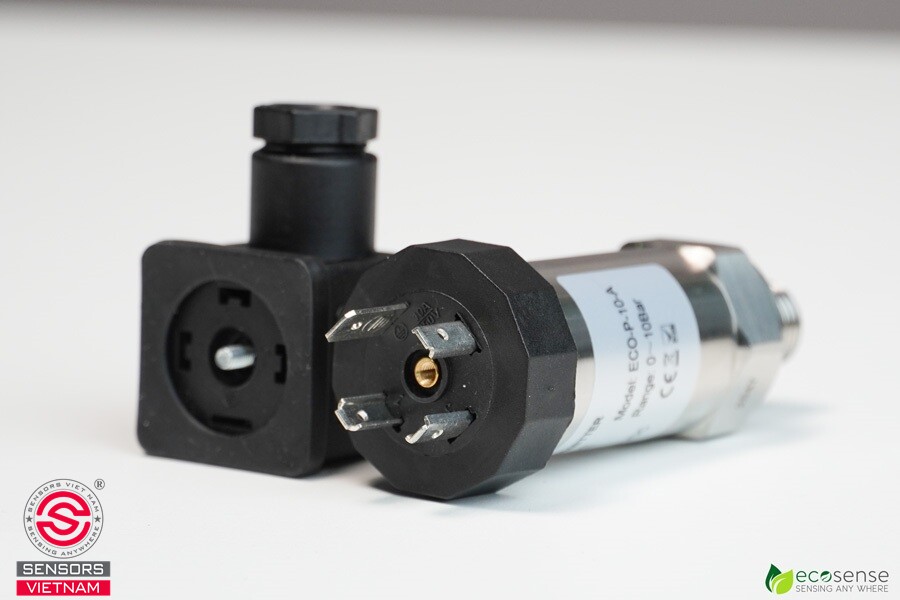
- Ingress protection (IP Rating) & operating temperature
- Recommended: IP65, IP67 or higher for harsh environments
- Typical temperature range: -20°C to 85°C (or higher depending on model)
- Thread type (Mechanical connection)
- Common standards: G1/4”, G1/2” (BSPP) or NPT 1/4”, NPT 1/2”
- Accuracy (Full Scale - FS)
- Standard applications: ±0.5% FS
- High-precision systems (laboratories, medical): ±0.25% or ±0.1% FS
5. Where to buy reliable industrial pressure transmitters?
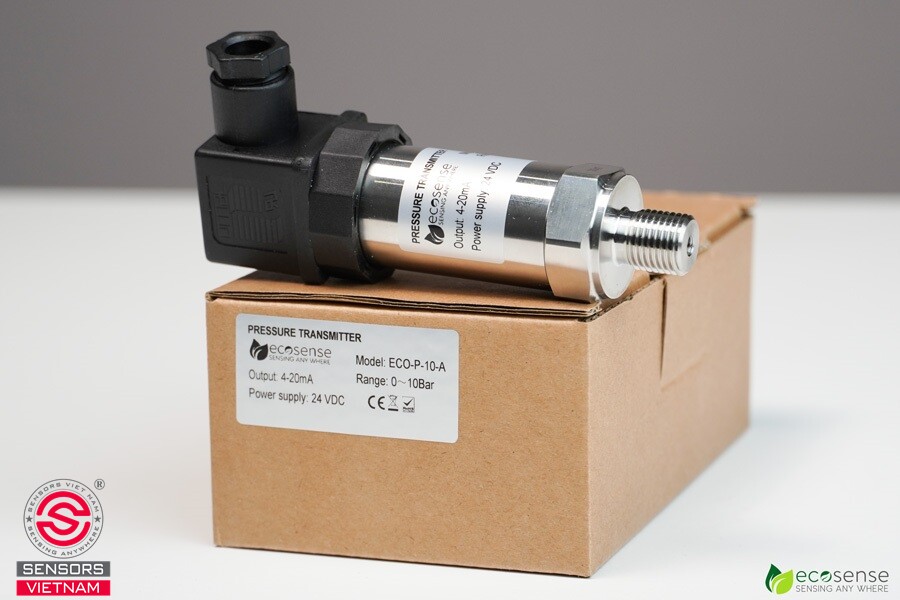
Sensors Vietnam is a trusted distributor of industrial pressure transmitters from leading global brands such as E+E Elektronik, Produal, Evikon, and Ecosense.
We guarantee:
- 100% genuine products
- Full CO/CQ certification (Certificate of Origin & Quality)
- 12-month replacement warranty
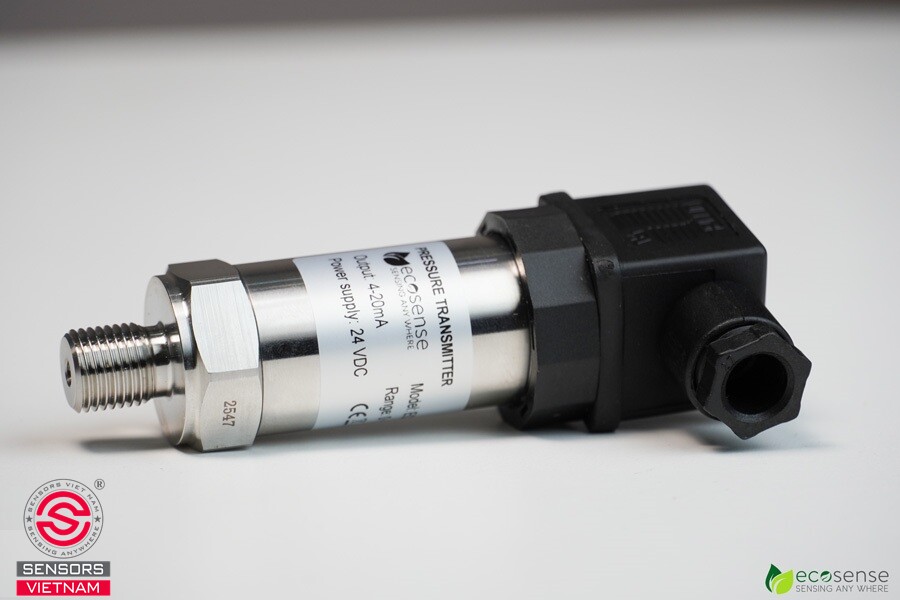
Pressure transmitters are indispensable components in industrial automation systems. Choosing the right specifications is a smart investment that minimizes maintenance costs and prevents costly system downtime.
If you are unsure which configuration best fits your project, contact Sensors Vietnam today for expert consultation and tailored solutions.
Hot news


SENSORS VIETNAM CO., LTD
VAT CODE: 0313 355 473
Head Office: 03rd Floor, Indochina Tower, 04 Nguyen Dinh Chieu, Tan Dinh Ward, Ho Chi Minh City, Vietnam.
HCM Branch: 92/14/9A Vuon Lai Str., An Phu Dong Ward, Ho Chi Minh City, Vietnam.
Hanoi Branch: S106 Tower, Vinhomes Smart City, Tay Mo Ward, Hanoi City, Vietnam.

® Registered trademark – National Office of Intellectual Property Vietnam
OUR SERVICES
Specializing in the import and distribution of industrial sensors.
Sensors for HVAC/R systems and building automation applications.
Supplying gauges, transmitters, switches, controllers, PLCs, HMIs, and gas detectors.
Providing integrated consulting services for sensor and controller systems.


CONTACT US
Email: sales(at)sensors.vn
Hotline: +84 0911 660 660
Asia Commercial Bank Account (ACB):
VND: 357 246 888 | USD: 1357 246 888
Support Online ZALO Official Account
(From 8:00 am to 5:00 pm)





SENSORS VIETNAM CO., LTD
- Specialized in the import and distribution of sensors and controllers.
- Integrated data acquisition systems and industrial communication solutions.
- Design and installation of smart home systems and industrial equipment.
- Stack lights, signal beacons, LED warning horns, and RGB warning lights.