





CUSTOMER SERVICE
www.sensors.vn
Admin@sensors.vn
www.cambien.com.vn
FLOW METER
Date 01/Apr/2026 at 03:46 PM - View: 91
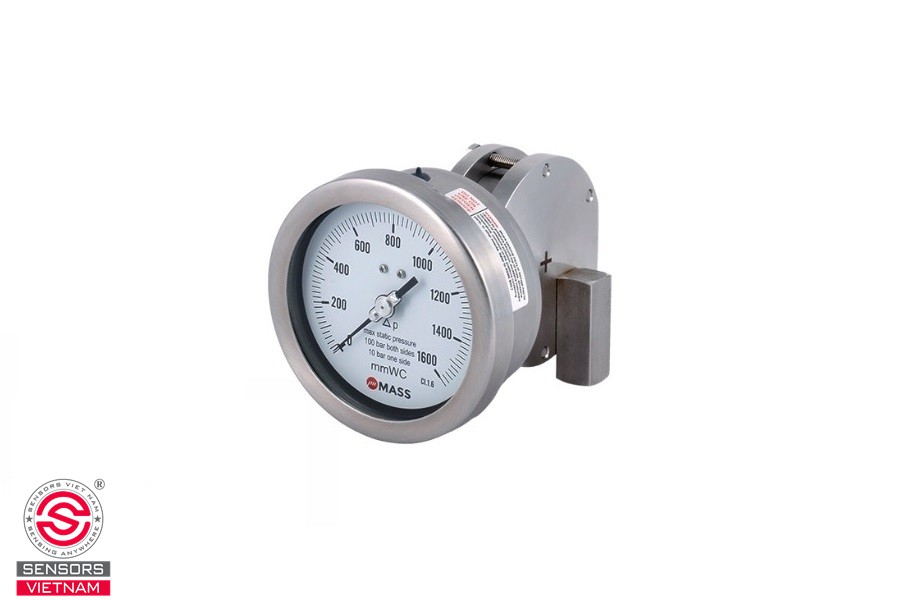
In any system involving fluid movement from domestic water supply and HVAC systems to complex industrial processes flow rate is one of the core parameters that determine performance and operational stability. If pressure reflects the “force” of the flow and temperature represents the energy state, then flow rate directly expresses the level of “consumption” and “exchange” within the entire system.
For this reason, flow measurement is not merely for display purposes; it serves as a fundamental basis for control, optimization, and even prediction of system behavior. In the era of automation and digital transformation, flow data also plays a critical role as an input for control algorithms, helping reduce energy consumption and improve overall efficiency. As a result, flow meters have become indispensable devices in modern engineering systems.
FUNDAMENTALS OF FLOW MEASUREMENT
From a technical perspective, flow rate is defined as the quantity of matter passing through a cross-sectional area per unit time. However, its representation and significance vary depending on the application.
In practice, there are two primary approaches: volumetric flow and mass flow. Volumetric flow (m³/h, L/min) is suitable for applications where volume control is essential, such as water supply, water treatment, and HVAC systems. In contrast, in industries such as chemicals, fuels, or pharmaceuticals, mass flow (kg/h, t/h) is more critical, as it accurately reflects reaction rates and mixing ratios.
An important point to note is that for the same flow stream, volumetric flow values can vary with temperature and pressure, whereas mass flow remains constant. This explains why, in high-precision applications, engineers often prioritize direct mass flow measurement over indirect methods.
Modern flow meters not only provide instantaneous readings but also integrate totalizing functions, allowing long-term monitoring of cumulative consumption. When connected to control systems, this data becomes a valuable resource for trend analysis, anomaly detection, and system optimization.
ANALYSIS OF MODERN FLOW MEASUREMENT TECHNOLOGIES
A common misconception is that a flow meter only needs the “correct size and measurement range” to be suitable for any application. In reality, this is far from true.
Each type of fluid has unique physical properties: some are conductive, others are not; some are clean, others contain particles; some have high viscosity; others operate under extreme temperature and pressure conditions. These characteristics determine which measurement method is applicable.
Therefore, flow measurement technologies are not variations of a single principle, but fundamentally different approaches, each optimized for specific applications.
VELOCITY-BASED FLOW MEASUREMENT
Most flow meters on the market do not measure flow directly. Instead, they measure fluid velocity and multiply it by the pipe’s cross-sectional area to calculate flow rate. The key point is that this method is only accurate when the flow profile is stable and undisturbed.
Under ideal conditions, velocity distribution follows a parabolic profile (laminar flow) or a flatter profile (turbulent flow). However, in real systems, elements such as reducers, valves, elbows, and pumps distort this distribution. This is one of the primary sources of measurement error.
ELECTROMAGNETIC FLOW METERS
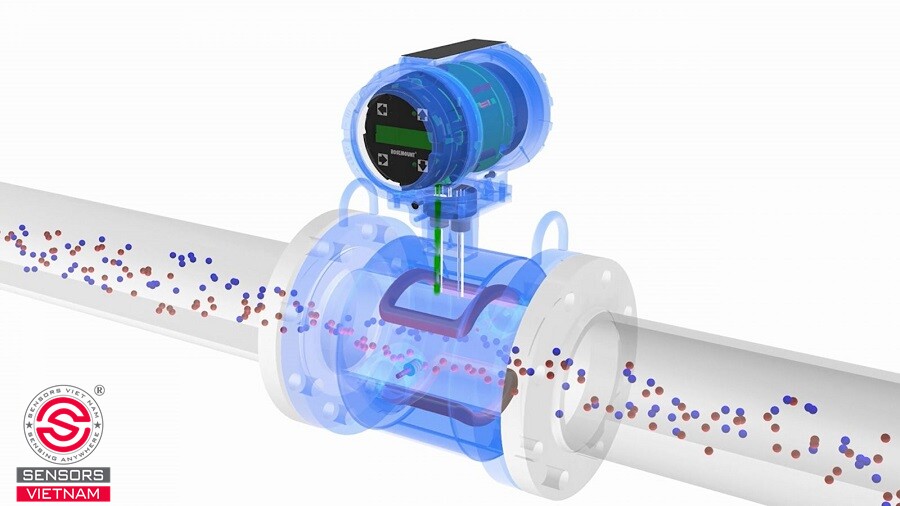
Electromagnetic flow meters measure the average velocity of conductive liquids based on the induced voltage generated in a magnetic field. Since this voltage is linearly proportional to velocity, the method offers high theoretical accuracy.
However, certain conditions must be met:
- The fluid must be conductive (typically > 5 µS/cm)
- The pipe must be completely filled (full pipe condition)
Although unaffected by pressure and temperature, electromagnetic flow meters are sensitive to electromagnetic interference and require proper grounding. In industrial environments with frequency inverters, improper installation can lead to significant signal noise.
ULTRASONIC FLOW METERS
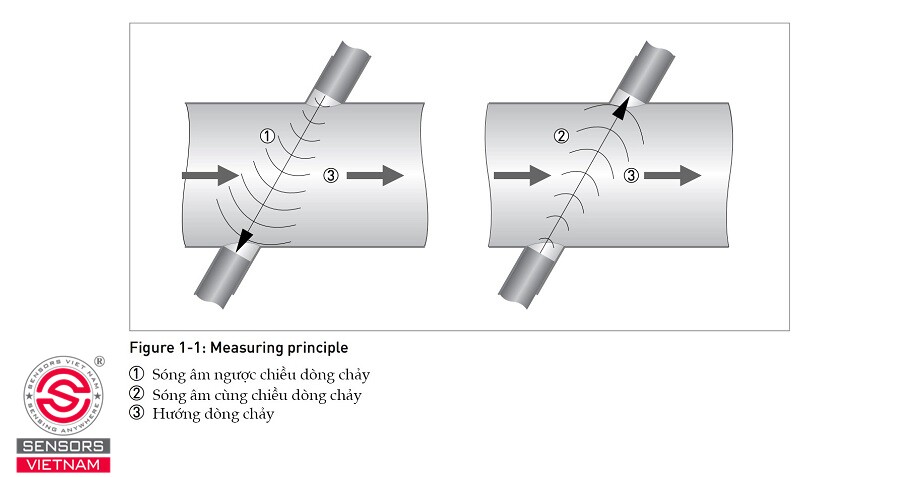
This technology measures the difference in transit time of ultrasonic waves traveling upstream and downstream. Because this difference is extremely small, accuracy depends heavily on:
- Flow uniformity
- Acoustic properties of the fluid
A commonly overlooked issue is that air bubbles or suspended solids can attenuate ultrasonic signals, causing measurement errors or signal loss. Therefore, despite being non-intrusive, ultrasonic flow meters are not always ideal, particularly for wastewater or unstable flow conditions.
VORTEX FLOW METERS
Vortex flow meters operate based on a stable physical phenomenon: when fluid passes an obstacle, it generates alternating vortices at a frequency proportional to velocity. This method is relatively insensitive to fluid properties and performs well under high temperature and pressure.
However, vortex meters require a sufficiently high Reynolds number to form stable vortices. This means they are not suitable for low flow rates or highly fluctuating flow conditions.
MECHANICAL FLOW METERS (POSITIVE DISPLACEMENT & TURBINE)
Mechanical flow meters operate based on volumetric displacement, meaning they do not measure velocity but directly “count” the volume passing through internal moving components. As fluid flows, it drives turbines or gears, with each rotation corresponding to a fixed volume.
In turbine meters, rotational speed is proportional to flow velocity. In oval gear meters, the fluid is divided into fixed segments, resulting in higher accuracy, especially at low flow rates.
The advantage of this group is stable accuracy and reduced dependence on flow profile conditions (e.g., disturbances caused by valves or elbows). However, due to direct contact with the fluid, they introduce pressure loss and are susceptible to wear or blockage in the presence of particles or corrosive substances.
CORIOLIS MASS FLOW METERS
Coriolis flow meters are unique in that they directly measure mass flow without relying on velocity calculations. The principle is based on the Coriolis effect: when fluid flows through vibrating tubes, it causes a phase shift proportional to mass flow.
Because of this, Coriolis meters are not affected by temperature, pressure, or flow profile conditions. They can also measure fluid density.
However, they come with certain drawbacks:
- High cost
- Sensitivity to external mechanical vibrations
- Large size for bigger pipe diameters
- Potential errors in fluids containing air bubbles
ROLE OF FLOW METERS IN HVAC AND INDUSTRIAL SYSTEMS
In HVAC systems, the flow rate of chilled or hot water directly determines heat exchange efficiency. If flow deviates from design specifications, the entire system may become unbalanced, leading to higher energy consumption and reduced performance. Flow meters enable engineers to balance systems, control pumps, and ensure optimal efficiency.
In industrial applications, especially those involving liquid or gas materials, flow is directly tied to cost. Even small measurement errors can result in significant financial losses or production inconsistencies. Therefore, flow meters serve not only as measurement devices but also as quality control tools.
In the energy sector, the flow of steam and fuel directly impacts combustion and thermal efficiency. Accurate measurement is essential for optimizing operations and reducing emissions.
GUIDELINES FOR SELECTING FLOW METERS
Selecting a flow meter cannot rely on a single criterion; it requires balancing multiple technical factors.
First, clearly identify the fluid type, including conductivity, viscosity, cleanliness, and corrosiveness. This determines the applicable measurement technology. Next, consider the operating flow range to ensure the device operates within its optimal performance zone.
Temperature and pressure conditions are also critical, as they affect material selection and durability. Additionally, required accuracy will influence whether to choose basic or advanced technologies.
Finally, in modern automation systems, communication and data integration capabilities are essential. A high-performance device that cannot integrate into a control system significantly reduces its practical value.
Flow meters, at a surface level, may appear to be simple measuring devices. However, at the system level, they are one of the most critical data sources for understanding, controlling, and optimizing operations. Choosing the right technology not only ensures measurement accuracy but also reduces operating costs, improves efficiency, and enhances long-term system stability.
Sensors Vietnam, with extensive experience in instrumentation and automation, provides tailored flow measurement solutions for a wide range of applications from HVAC systems to complex industrial processes. We are committed to delivering genuine products with full CO/CQ certification, along with a 12-month warranty and 1-to-1 replacement policy. If you are interested in flow meters or require consultation, contact Sensors Vietnam today for expert support.
Hot news


SENSORS VIETNAM CO., LTD
VAT CODE: 0313 355 473
Head Office: 03rd Floor, Indochina Tower, 04 Nguyen Dinh Chieu, Tan Dinh Ward, Ho Chi Minh City, Vietnam.
HCM Branch: 92/14/9A Vuon Lai Str., An Phu Dong Ward, Ho Chi Minh City, Vietnam.
Hanoi Branch: S106 Tower, Vinhomes Smart City, Tay Mo Ward, Hanoi City, Vietnam.

® Registered trademark – National Office of Intellectual Property Vietnam
OUR SERVICES
Specializing in the import and distribution of industrial sensors.
Sensors for HVAC/R systems and building automation applications.
Supplying gauges, transmitters, switches, controllers, PLCs, HMIs, and gas detectors.
Providing integrated consulting services for sensor and controller systems.


CONTACT US
Email: sales(at)sensors.vn
Hotline: +84 0911 660 660
Asia Commercial Bank Account (ACB):
VND: 357 246 888 | USD: 1357 246 888
Support Online ZALO Official Account
(From 8:00 am to 5:00 pm)





SENSORS VIETNAM CO., LTD
- Specialized in the import and distribution of sensors and controllers.
- Integrated data acquisition systems and industrial communication solutions.
- Design and installation of smart home systems and industrial equipment.
- Stack lights, signal beacons, LED warning horns, and RGB warning lights.