




CUSTOMER SERVICE
www.sensors.vn
Admin@sensors.vn
www.cambien.com.vn
INTRODUCTION TO LEVEL SENSOR
Date 06/Apr/2026 at 04:27 PM - View: 95

In HVAC systems, water treatment, and industrial automation, controlling liquid levels in tanks, reservoirs, sumps, and technical pits is a critical requirement to ensure safe and continuous operation. A low liquid level can cause pump dry-running and damage, while an excessively high level may lead to overflow, system instability, or operational failure.
To address this challenge, level sensors are used as core measurement devices, enabling real-time monitoring, visualization, and signal transmission of liquid or solid levels to control systems. So what is a level sensor, how does it work, and what are the most commonly used level measurement technologies today? Let’s explore in detail with Sensors Vietnam.
WHAT IS A LEVEL SENSOR
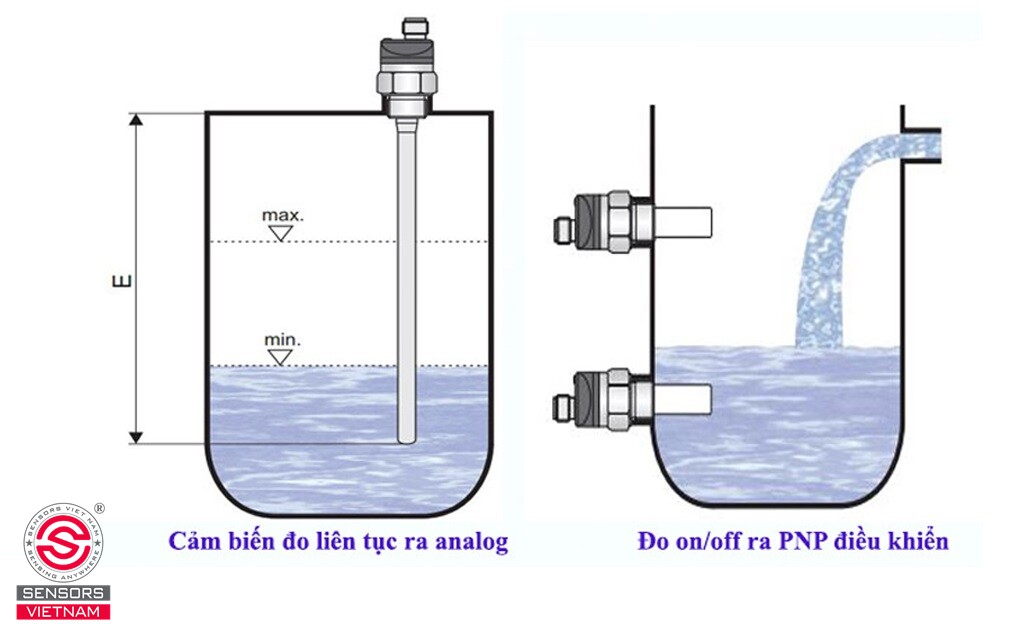
A level sensor is a device used to detect and monitor the height of liquids, solids, or sludge inside tanks, reservoirs, silos, or sumps. The measured level is converted into electrical signals (analog or digital) for display, alarm, and automated control purposes. In practice, level sensors perform two main functions:
Continuous level measurement: provides real-time level values (e.g., 0-100%, mm, m)
Point level detection: detects high level, low level, or overflow at fixed positions
With the ability to deliver accurate level data, level sensors play a vital role in:
- Protecting pumps and equipment from dry running or overload
- Preventing tank overflow, leakage, or system failure
- Optimizing operation and improving energy efficiency
In HVAC, water treatment, and industrial automation systems, level sensors are considered essential measurement instruments.
WORKING PRINCIPLE OF LEVEL SENSORS
Fundamentally, a level sensor operates by determining the position of the surface of a liquid or material inside a container, then converting this information into an electrical signal for display, alarm, or control. Depending on the measurement technology, sensors may operate based on the following principles:
- Measuring the distance from the sensor head to the material surface (ultrasonic, radar)
- Measuring hydrostatic pressure generated by the liquid column (hydrostatic, submersible)
- Detecting contact state changes at a specific level point (float switch, level switch)
- Measuring capacitance variation when the medium contacts the probe
Typical output signals include 4-20 mA, 0-10 V, RS485, Modbus, or relay switching signals for integration with PLC, BMS, and SCADA systems.
TYPES OF LEVEL SENSORS
In HVAC and industrial applications, level sensors are generally classified into two main categories: non-contact level sensors and contact level sensors. Each category includes multiple measurement technologies.
NON-CONTACT LEVEL SENSORS
This group includes sensors where the sensing element does not directly contact the medium, making them ideal for corrosive environments, high temperatures, or hygienic applications.
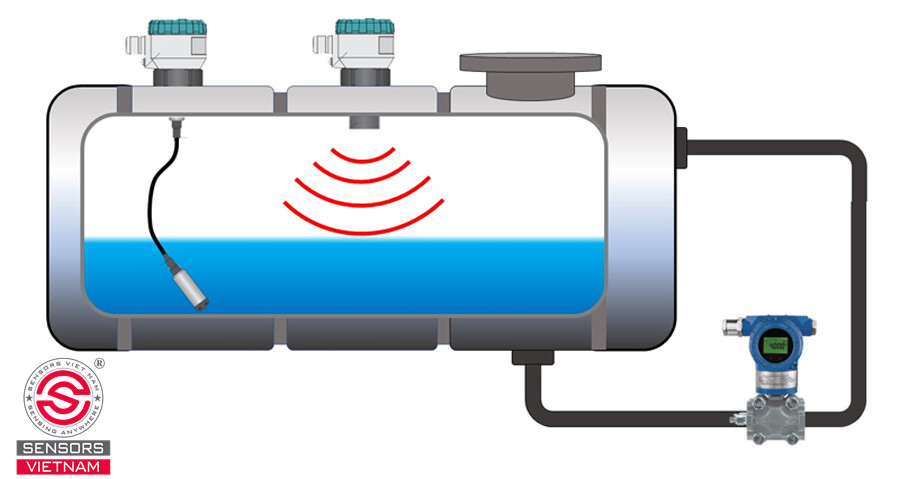
- Ultrasonic level sensors operate by transmitting ultrasonic waves from the transducer toward the liquid surface and receiving the reflected signal. Based on the time of flight, the sensor accurately calculates the distance and determines the liquid level.
- Radar level sensors use high-frequency electromagnetic waves to measure the distance to the material surface. Due to minimal influence from temperature, pressure, vapor, or dust, radar sensors are considered the most accurate and stable non-contact level measurement technology available today.
CONTACT LEVEL SENSORS
Unlike non-contact sensors, these devices are in direct contact with the measured medium, offering stable performance under specific conditions.
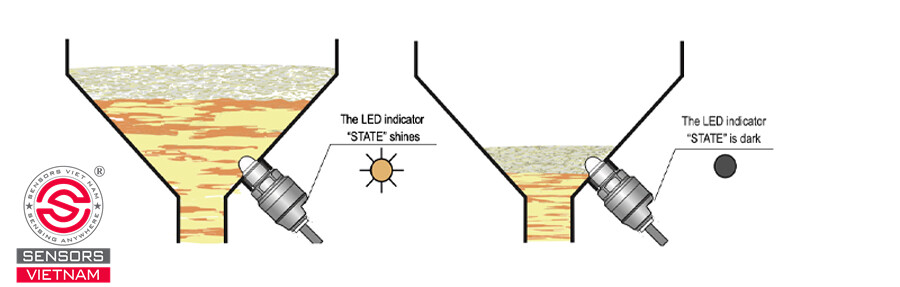
- Float level sensors operate based on the movement of a floating element that rises and falls with the liquid level. As the level changes, the float activates internal magnetic contacts.
- Hydrostatic level sensors measure the pressure at the bottom of a tank caused by the liquid column. This pressure is directly proportional to the liquid height and is converted into a level signal.
- Submersible level sensors are a type of hydrostatic sensor installed directly at the bottom of tanks or wells. They measure the water pressure above the probe and transmit level data to the control system.
- Capacitive level sensors measure level based on changes in capacitance when the medium contacts or surrounds the probe. This method is suitable for both liquids and bulk solids such as powders.
APPLICATIONS OF LEVEL SENSORS IN HVAC AND INDUSTRY
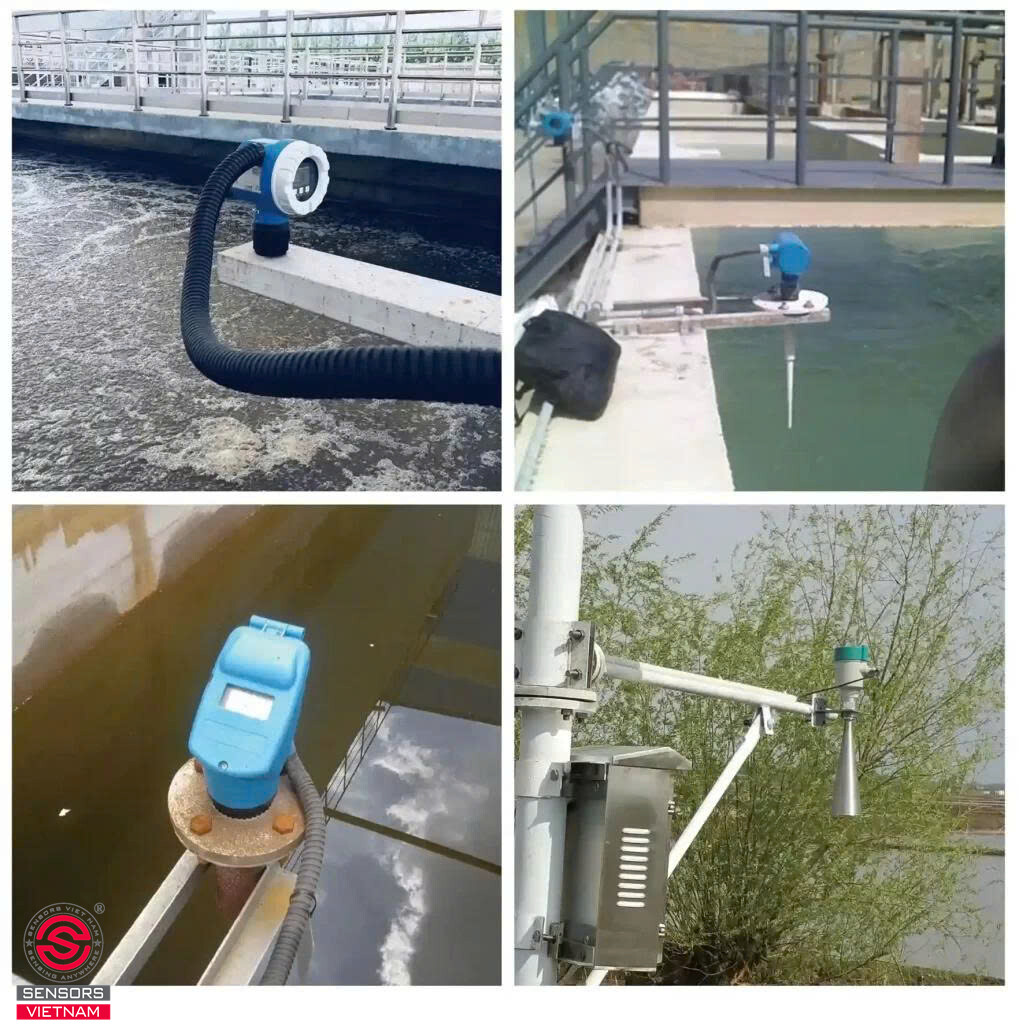
In HVAC systems, level sensors are installed to continuously monitor water levels in chilled water tanks, hot water tanks, condensate tanks, and cooling towers. Accurate level control helps protect pumps from dry operation, maintain stable flow rates, and ensure optimal heat exchange efficiency.
In water and wastewater treatment systems, level sensors play a central role in controlling supply and discharge pumps, maintaining safe water levels in technical tanks, sumps, and sedimentation basins. This ensures stable operation and minimizes the risk of overflow or dry conditions that could disrupt the treatment process.
In industrial applications, level sensors are widely used to monitor material levels in storage tanks, chemical vessels, fuel tanks, raw material containers, and silos. Level data is transmitted to PLC, BMS, or SCADA systems for monitoring, alarm management, and automated control, enhancing safety and operational efficiency.
LEVEL SENSOR SOLUTIONS FROM SENSORS VIETNAM
Sensors Vietnam provides a full range of level measurement solutions including ultrasonic, radar, float, hydrostatic, and submersible level sensors, meeting technical requirements for HVAC, BMS, and industrial systems. All products are sourced from leading global manufacturers, supplied with full CO/CQ certification, and backed by reliable warranty policies. Our experienced engineering team is ready to support your projects with optimal solutions.
Contact Sensors Vietnam today for expert consultation and technical support.
Hot news


SENSORS VIETNAM CO., LTD
VAT CODE: 0313 355 473
Head Office: 03rd Floor, Indochina Tower, 04 Nguyen Dinh Chieu, Tan Dinh Ward, Ho Chi Minh City, Vietnam.
HCM Branch: 92/14/9A Vuon Lai Str., An Phu Dong Ward, Ho Chi Minh City, Vietnam.
Hanoi Branch: S106 Tower, Vinhomes Smart City, Tay Mo Ward, Hanoi City, Vietnam.

® Registered trademark – National Office of Intellectual Property Vietnam
OUR SERVICES
Specializing in the import and distribution of industrial sensors.
Sensors for HVAC/R systems and building automation applications.
Supplying gauges, transmitters, switches, controllers, PLCs, HMIs, and gas detectors.
Providing integrated consulting services for sensor and controller systems.


CONTACT US
Email: sales(at)sensors.vn
Hotline: +84 0911 660 660
Asia Commercial Bank Account (ACB):
VND: 357 246 888 | USD: 1357 246 888
Support Online ZALO Official Account
(From 8:00 am to 5:00 pm)





SENSORS VIETNAM CO., LTD
- Specialized in the import and distribution of sensors and controllers.
- Integrated data acquisition systems and industrial communication solutions.
- Design and installation of smart home systems and industrial equipment.
- Stack lights, signal beacons, LED warning horns, and RGB warning lights.