





CUSTOMER SERVICE
www.sensors.vn
Admin@sensors.vn
www.cambien.com.vn
LIMIT SWITCHES
Date 13/Feb/2026 at 09:03 AM - View: 111
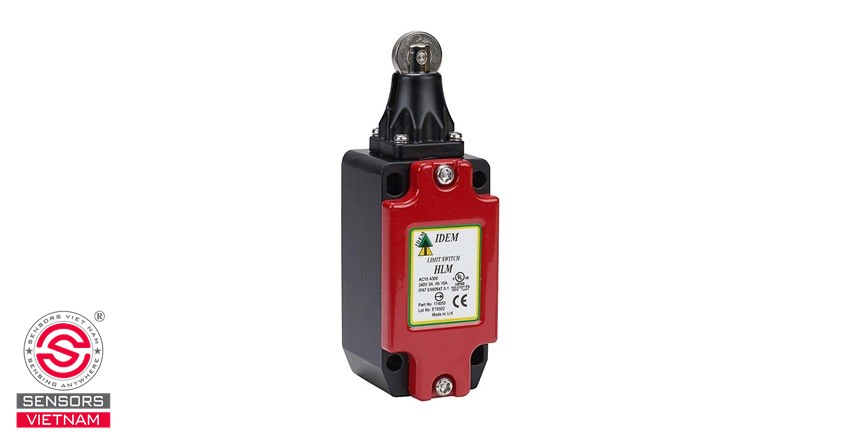
Limit Switch: Structure, Operating Principle, and Important Applications in Industry
Introduction to Limit Switch
A limit switch (also known as a travel switch or safety switch) is an electromechanical device designed to automatically disconnect the electrical circuit or stop machinery when it detects an object exceeding the allowed travel range or when a hazardous situation occurs. This device is essential in modern industrial systems, ensuring the safety of workers and preventing damage or malfunction in automated production lines.
Role of Limit Switch in Industrial Systems
The limit switch plays a crucial role in controlling and protecting equipment systems. Specifically, it serves the following functions:
Motor control: Stops the motor when an object reaches the limit position on the conveyor.
Door monitoring: Detects whether a door is fully open, partially open, or closed.
Vibration reduction: Controls and minimizes mechanical oscillations in moving parts of a system.
Structure of a Limit Switch
A limit switch is composed of three main components:
Actuator: The part that directly interacts with the moving object. Common actuator types include roller plungers, lever arms, spring levers, and pin plungers.
Housing: Made from highly durable materials such as high-tech plastic, die-cast metal, or stainless steel 316, ensuring resistance to impact and chemical corrosion.
Contact Block: Typically, it includes Normally Closed (NC) or Normally Open (NO) contacts, ensuring that the circuit is disconnected accurately and quickly.
Operating Principle of Limit Switch
The limit switch operates based on a mechanical contact principle. When an object contacts the actuator of the switch, it generates mechanical force, causing the actuator to move. This movement changes the status of the electrical contacts inside the switch, thus opening or closing the electrical circuit.
Physical impact: When machinery parts (such as doors, robotic arms, or cranes) reach their limit position, they make contact with the actuator.
Contact change: This mechanical force moves the piston or spring inside the switch, altering the state of the contacts:
Normally Open (NO): Closes, allowing current to pass.
Normally Closed (NC): Opens, interrupting the current.
System control: The change in contact state sends a signal to the controller (PLC or relay) to stop the motor or initiate a new process.
Return to initial position: When the object moves away, the spring pushes the actuator back to its original position, returning the switch to its normal operating state.
Practical Applications of Limit Switch
Limit switches are indispensable in many industries due to their high reliability and versatile applications. Some common uses include:
Position monitoring in conveyor systems: The limit switch helps monitor the movement and position of products on a conveyor.
Robotic equipment: Determines the exact position of robotic arms and other moving parts.
Safety systems: Ensures the safety of machines by automatically stopping the device when a safety cover is removed or the door is open.
Automation systems: Limit switches control the sequence of operations in automated production lines, ensuring accuracy and efficiency.
Elevators: The limit switch ensures the elevator stops at the correct floor and prevents it from bypassing floors.
Conclusion
Limit switches are vital components in modern industrial systems, enhancing safety, efficiency, and automation in production processes. Sensors Vietnam offers high-quality limit switches that meet the demanding requirements of modern industries, improving performance and safety for your production operations.
Contact Sensors Vietnam today for advice and solutions on the optimal limit switch for your production systems!
Hot news


SENSORS VIETNAM CO., LTD
VAT CODE: 0313 355 473
Head Office: 03rd Floor, Indochina Tower, 04 Nguyen Dinh Chieu, Tan Dinh Ward, Ho Chi Minh City, Vietnam.
HCM Branch: 92/14/9A Vuon Lai Str., An Phu Dong Ward, Ho Chi Minh City, Vietnam.
Hanoi Branch: S106 Tower, Vinhomes Smart City, Tay Mo Ward, Hanoi City, Vietnam.

® Registered trademark – National Office of Intellectual Property Vietnam
OUR SERVICES
Specializing in the import and distribution of industrial sensors.
Sensors for HVAC/R systems and building automation applications.
Supplying gauges, transmitters, switches, controllers, PLCs, HMIs, and gas detectors.
Providing integrated consulting services for sensor and controller systems.


CONTACT US
Email: sales(at)sensors.vn
Hotline: +84 0911 660 660
Asia Commercial Bank Account (ACB):
VND: 357 246 888 | USD: 1357 246 888
Support Online ZALO Official Account
(From 8:00 am to 5:00 pm)





SENSORS VIETNAM CO., LTD
- Specialized in the import and distribution of sensors and controllers.
- Integrated data acquisition systems and industrial communication solutions.
- Design and installation of smart home systems and industrial equipment.
- Stack lights, signal beacons, LED warning horns, and RGB warning lights.