





CUSTOMER SERVICE
www.sensors.vn
Admin@sensors.vn
www.cambien.com.vn
SPRING RETURN DAMPER ACTUATOR
Date 17/Sep/2026 at 04:59 PM - View: 18
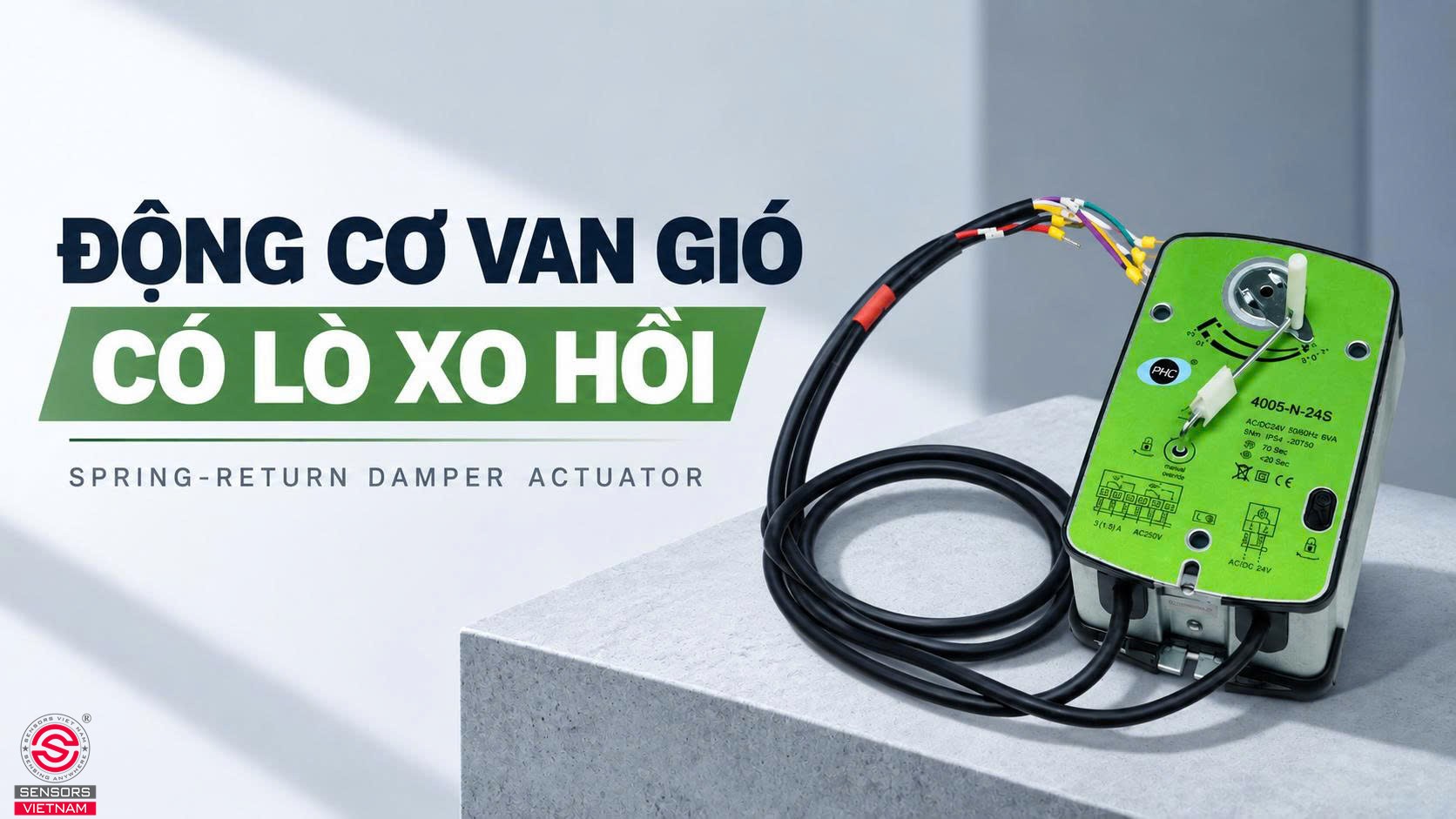
A spring return damper actuator plays a critical role in fire damper and smoke damper control systems, thanks to its ability to automatically drive the damper back to a safe position the moment power is lost. So how exactly does a spring return actuator work, where is it typically applied, and how does it differ from a non-spring return actuator? Read on to find out, so you can choose the right actuator for your system.
WHAT IS A SPRING RETURN DAMPER ACTUATOR?
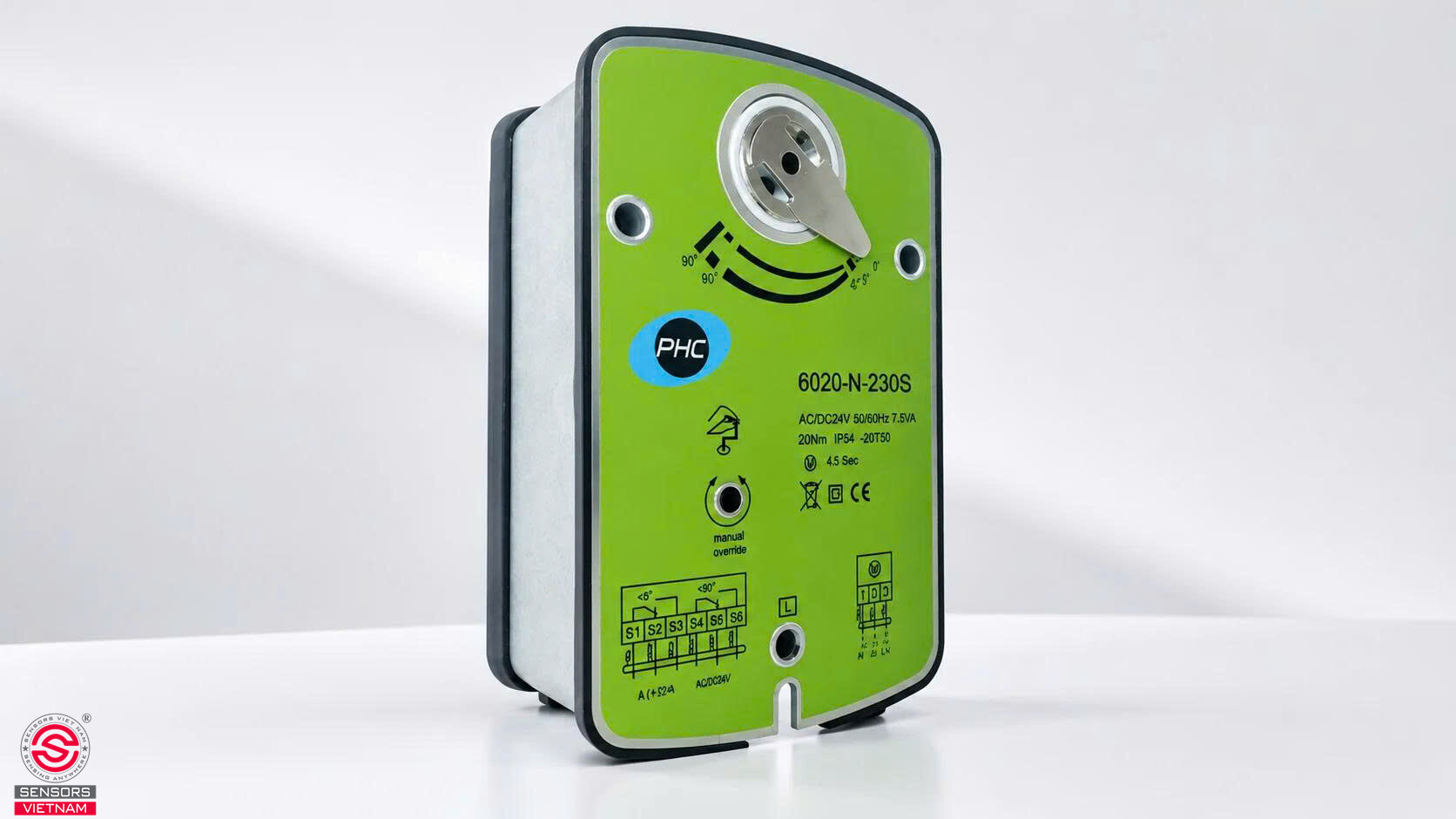
A spring return damper actuator is a type of electric actuator used to open and close air dampers in HVAC (Heating, Ventilation, and Air Conditioning) systems.
What sets this actuator apart is the built-in spring mechanism housed inside the unit. During normal operation, the spring is compressed by the force of the electric motor. However, the moment power is suddenly cut, the spring's stored energy is instantly released, driving the damper shaft back to its pre-set default position, either fully closed or fully open, depending on the system design.
Because of this fail-safe behavior, spring return actuators are also commonly known as fail-safe damper actuators or fire damper actuators. They are widely used in fire damper and smoke damper control systems across buildings such as office towers, shopping malls, hospitals, and industrial facilities.
HOW DOES A SPRING RETURN DAMPER ACTUATOR WORK?
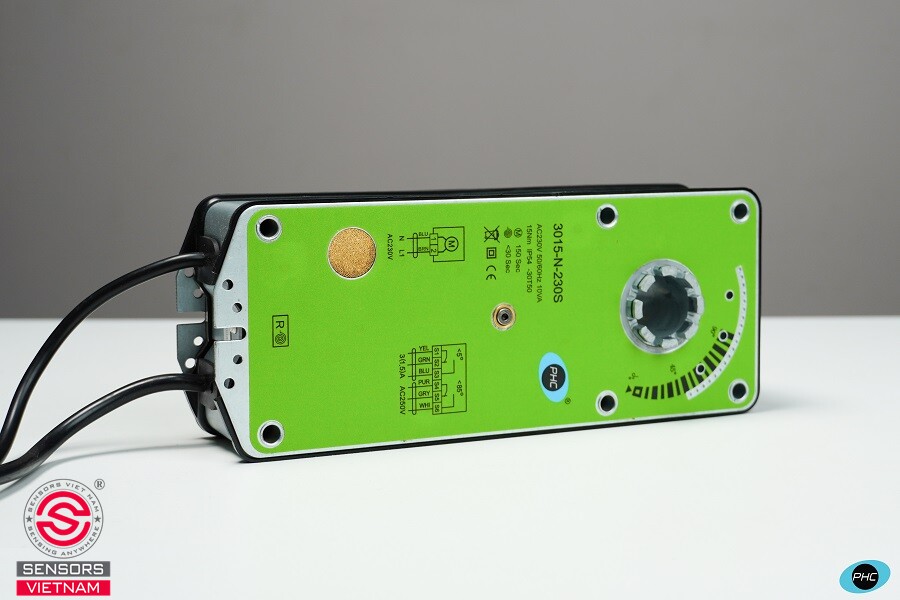
The working principle of a spring return actuator is actually quite straightforward. Inside the actuator housing, an electric motor, typically a synchronous or stepper motor, works together with a reduction gear train and a torsion spring mounted coaxially with the output shaft that drives the damper blade.
When a control signal is received and power is supplied, the motor rotates and drives the damper shaft to the desired open position. At the same time, this motion compresses or winds the spring, storing mechanical energy. The moment power is lost, that stored energy is released instantly, and the spring drives the shaft back to its pre-configured fail-safe position. This entire process happens fully automatically, with no need for any human intervention or input from the building management system. This is precisely why spring return actuators are considered the last line of defense in fire safety and smoke control systems.
Another notable technical advantage is that most modern spring return actuators come equipped with an auxiliary limit switch, which feeds back the open/closed status to the monitoring center, along with a mechanical anti-jam function that automatically shuts off the motor when it encounters abnormal resistance, protecting against motor burnout or gear damage.
 WHERE ARE SPRING RETURN DAMPER ACTUATORS USED?
Thanks to their ability to automatically fail-safe when power is lost, spring return actuators are widely deployed across a broad range of building types, particularly in facilities with stringent fire safety and smoke control requirements.
In high-rise buildings, shopping malls, and hotels
Spring return actuators are used to control fire dampers installed at fire-rated wall penetrations, as well as smoke dampers in mechanical shafts, elevator shafts, and escape corridors. In the event of a fire, the fire alarm system cuts power to the affected zone, and the dampers automatically close under spring force to prevent smoke and fire from spreading to other areas, giving occupants a safer window for evacuation and rescue operations.
In hospitals and healthcare facilities
Spring return actuators are commonly installed in operating rooms, negative-pressure isolation rooms, and ICUs, locations that demand extremely strict airflow control to prevent cross-contamination. If the system fails, the damper automatically closes to maintain the room's designed pressure differential.
In other facility types
This type of actuator is also widely used in manufacturing plants, industrial warehouses, data centers, parking structures, airports, and subway stations, essentially any high-occupancy facility or site with high-value assets that need to be protected against fire risk.
SPRING RETURN VS. NON-SPRING RETURN DAMPER ACTUATORS: KEY DIFFERENCES
To better understand the value a spring return actuator delivers, it helps to compare it directly against a non-spring return actuator.
Power-loss behavior is the most fundamental difference. A spring return actuator automatically drives the damper to a pre-defined safe position the instant power is lost. A non-spring return actuator, by contrast, holds its last position when power is cut, meaning the damper could be left partially open, fully open, or fully closed depending on exactly when the outage occurred, with no predictable outcome.
In terms of size and construction, because a spring return actuator needs to house the spring mechanism and the space required for it to store energy, it's typically larger and heavier than a non-spring return actuator of the same torque rating.
In terms of response speed, a spring return actuator can drive the damper to its fail-safe position very quickly, usually within a few seconds up to 15 seconds. A non-spring return actuator has no such capability at all; the damper simply stays put until power is restored.
In terms of durability and service life, non-spring return actuators tend to have a slightly longer mechanical lifespan since they aren't subjected to continuous spring compression throughout operation. That said, this gap is minimal when the product comes from a reputable manufacturer.
 SPRING RETURN VS. NON-SPRING RETURN ACTUATORS: WHICH ONE IS BETTER?
Each actuator type is engineered to solve a different problem, not to serve as an upgraded version of the other.
If your project involves fire dampers, smoke dampers, or any application where fail-safe behavior during a power outage is essential, a spring return actuator should be the priority choice.
On the other hand, if your application is simply standard airflow modulation within a central HVAC system, with no fire safety implications, a non-spring return actuator is the more cost-effective and practical option.
BUY GENUINE DAMPER ACTUATORS AT THE BEST PRICE FROM SENSORS VIETNAM
At Sensors Vietnam, we carry the full range of genuine damper actuators and damper controllers from trusted brands, complete with CO/CQ certification, competitive pricing, fast nationwide delivery, a reliable 12 to 24 month warranty, and free expert consultation.
The technical team at Sensors Vietnam will help you select the right model, the right torque rating, the right control signal type, and any advanced configuration your project specifically requires, avoiding the wrong purchase while ensuring long-term operating performance.
For consultation or to order a damper actuator, please contact our hotline at 0911 660 660 or visit https://cambien.com.vn/ | https://www.sensors.vn/ for the fastest support.
Hot news


SENSORS VIETNAM CO., LTD
VAT CODE: 0313 355 473
Head Office: 03rd Floor, Indochina Tower, 04 Nguyen Dinh Chieu, Tan Dinh Ward, Ho Chi Minh City, Vietnam.
HCM Branch: 92/14/9A Vuon Lai Str., An Phu Dong Ward, Ho Chi Minh City, Vietnam.
Hanoi Branch: S106 Tower, Vinhomes Smart City, Tay Mo Ward, Hanoi City, Vietnam.

® Registered trademark – National Office of Intellectual Property Vietnam
OUR SERVICES
Specializing in the import and distribution of industrial sensors.
Sensors for HVAC/R systems and building automation applications.
Supplying gauges, transmitters, switches, controllers, PLCs, HMIs, and gas detectors.
Providing integrated consulting services for sensor and controller systems.


CONTACT US
Email: sales(at)sensors.vn
Hotline: +84 0911 660 660
Asia Commercial Bank Account (ACB):
VND: 357 246 888 | USD: 1357 246 888
Support Online ZALO Official Account
(From 8:00 am to 5:00 pm)





SENSORS VIETNAM CO., LTD
- Specialized in the import and distribution of sensors and controllers.
- Integrated data acquisition systems and industrial communication solutions.
- Design and installation of smart home systems and industrial equipment.
- Stack lights, signal beacons, LED warning horns, and RGB warning lights.