






CUSTOMER SERVICE
www.sensors.vn
Admin@sensors.vn
www.cambien.com.vn
PH3 (PHOSPHINE) SENSOR
Date 17/Aug/2026 at 03:25 PM - View: 15
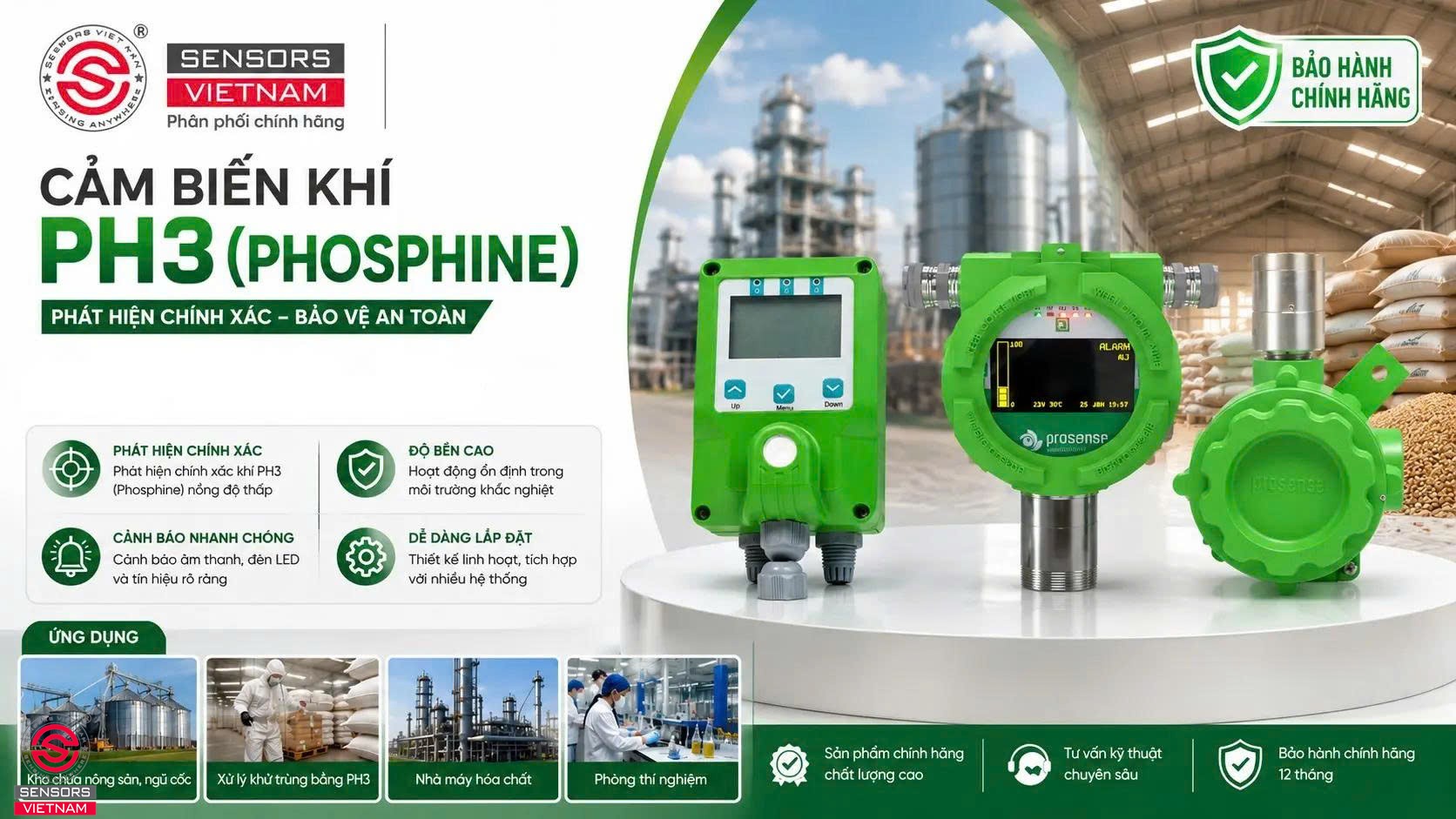
0.3 ppm. That is the entire margin between what is considered a safe exposure level and a serious health risk for PH3 gas. This figure is low enough to surprise many engineers encountering this gas for the first time, and it is exactly why the PH3 gas detector has become mandatory equipment at agricultural fumigation facilities, semiconductor plants and related chemical manufacturing operations.
HOW DANGEROUS IS PH3 (PHOSPHINE) GAS?
PH3, chemically known as phosphine, is a colorless gas. In its pure form, phosphine is nearly odorless, but commercial grade phosphine typically has an unpleasant fish-like or garlic-like odor due to trace impurities. This is a gas that is both toxic and flammable, and it can even self-ignite on contact with air (pyrophoric) if a small amount of diphosphane impurity is present.
The occupational exposure limit set by OSHA for PH3 is only 0.3 ppm as an 8 hour time weighted average, while the immediately dangerous to life or health (IDLH) threshold set by NIOSH is 50 ppm. The gap between these two figures is relatively narrow compared with many other toxic gases, highlighting how much sensitivity is required when controlling gas concentration in the workplace. When inhaled, PH3 can react with moisture in the lungs, causing pulmonary edema and serious lung tissue damage.
One point worth noting is that the odor of phosphine is not always a reliable warning sign, since the human odor detection threshold falls close to the permissible exposure limit, making reliance on smell alone a risky way to detect a leak.
 PH3 (PHOSPHINE) GAS DETECTORS AND WHY THEY MATTER
A PH3 gas detector is a dedicated device used to detect the presence and measure the concentration of phosphine gas in the air, typically expressed in ppm given that this toxic gas must be controlled at extremely low concentration levels.
Because the gap between PH3's safe exposure threshold and its dangerous threshold is so narrow, a detector with high sensitivity and fast response time is nearly a mandatory requirement, not merely a recommendation, at any facility that uses or generates this gas.
ELECTROCHEMICAL TECHNOLOGY: THE LEADING CHOICE FOR PH3 (PHOSPHINE) GAS DETECTORS
Most PH3 gas detectors on the market today use electrochemical sensing technology. PH3 gas diffuses into the sensor chamber and undergoes an oxidation-reduction reaction at the electrode, generating an electrical current proportional to the gas concentration. This current signal is then measured by the processing unit and converted into a concentration value, triggering an alarm once the configured threshold is exceeded.
Electrochemical technology has become the leading choice for PH3 gas detectors due to its accurate measurement at low ppm ranges, matching the very strict occupational exposure limit for this gas, along with good selectivity that helps minimize cross-sensitivity to other gases commonly present in the same environment. However, because of the consumable nature of electrochemical sensors, the device requires periodic calibration and replacement to maintain accuracy throughout its operating life.
KEY APPLICATIONS OF PH3 (PHOSPHINE) GAS DETECTORS
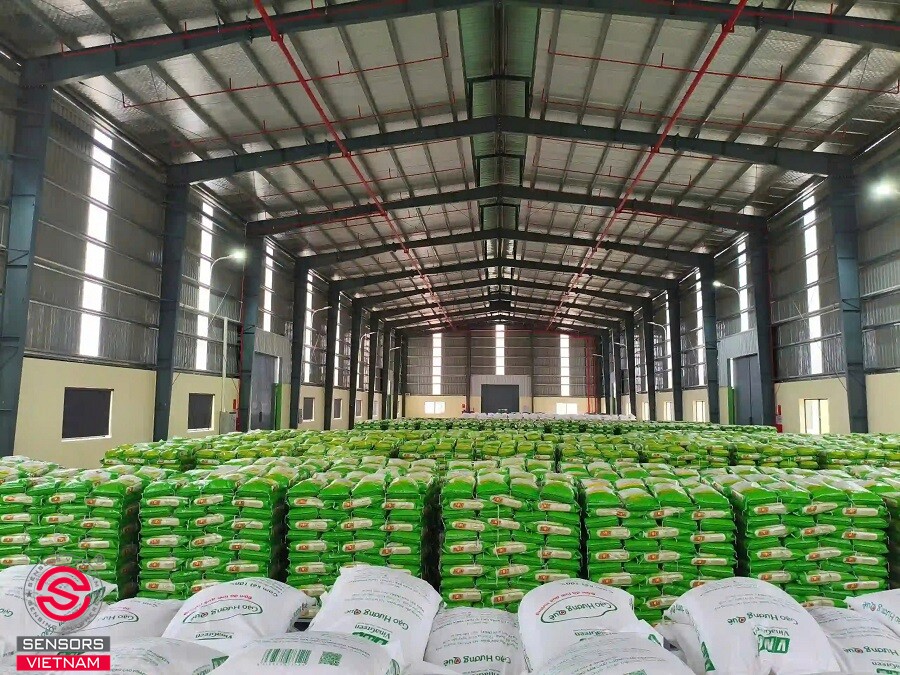
The most common application of PH3 gas detectors is in agricultural fumigation, where phosphine is used as an insecticidal fumigant gas for grain, animal feed and tobacco before international shipment. Detectors are installed in storage warehouses, shipping containers and fumigation areas to monitor gas concentration throughout the treatment process and after ventilation, before workers are permitted to re-enter.
In the semiconductor industry, PH3 is used as a doping agent to introduce phosphorus atoms into silicon crystals, meaning cleanrooms and specialty gas handling areas at chip manufacturing plants require detectors to protect operating technicians.
In addition, PH3 gas detectors are also applied at facilities producing flame-retardant compounds for textiles, chemical plants synthesizing organophosphorus compounds, and research laboratories working with this gas.
 PROSENSE - A LEADING GLOBAL PH3 (PHOSPHINE) GAS DETECTOR BRAND
For a gas with such a low safety threshold and high inherent risk as PH3, choosing a detector from a reputable brand with accuracy and long-term stability should be a top priority.
Prosense is a manufacturer of high-quality gas detectors and automation equipment from Turkey. Notably, the company is well known for many years of experience supplying industrial gas detection and measurement equipment.
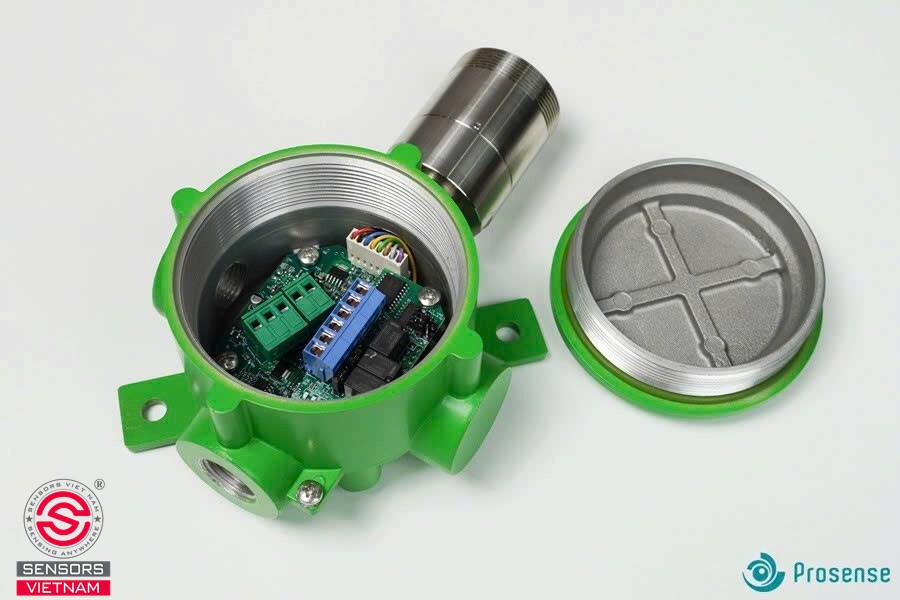
The PH3 (phosphine) gas detector, also known as a PH3 gas sensor, is designed for stable operation in industrial environments and convenient integration with a facility's centralized gas monitoring system. Prosense's PH3 gas detector, part of the P Series, uses electrochemical sensing technology with a measurement range of 0-10ppm, matching the high toxicity and very low occupational exposure limit characteristic of this gas.
Hot news


SENSORS VIETNAM CO., LTD
VAT CODE: 0313 355 473
Head Office: 03rd Floor, Indochina Tower, 04 Nguyen Dinh Chieu, Tan Dinh Ward, Ho Chi Minh City, Vietnam.
HCM Branch: 92/14/9A Vuon Lai Str., An Phu Dong Ward, Ho Chi Minh City, Vietnam.
Hanoi Branch: S106 Tower, Vinhomes Smart City, Tay Mo Ward, Hanoi City, Vietnam.

® Registered trademark – National Office of Intellectual Property Vietnam
OUR SERVICES
Specializing in the import and distribution of industrial sensors.
Sensors for HVAC/R systems and building automation applications.
Supplying gauges, transmitters, switches, controllers, PLCs, HMIs, and gas detectors.
Providing integrated consulting services for sensor and controller systems.


CONTACT US
Email: sales(at)sensors.vn
Hotline: +84 0911 660 660
Asia Commercial Bank Account (ACB):
VND: 357 246 888 | USD: 1357 246 888
Support Online ZALO Official Account
(From 8:00 am to 5:00 pm)





SENSORS VIETNAM CO., LTD
- Specialized in the import and distribution of sensors and controllers.
- Integrated data acquisition systems and industrial communication solutions.
- Design and installation of smart home systems and industrial equipment.
- Stack lights, signal beacons, LED warning horns, and RGB warning lights.