






CUSTOMER SERVICE
www.sensors.vn
Admin@sensors.vn
www.cambien.com.vn
WHAT IS VIBRATION SENSOR
Date 16/Oct/2026 at 12:37 PM - View: 25
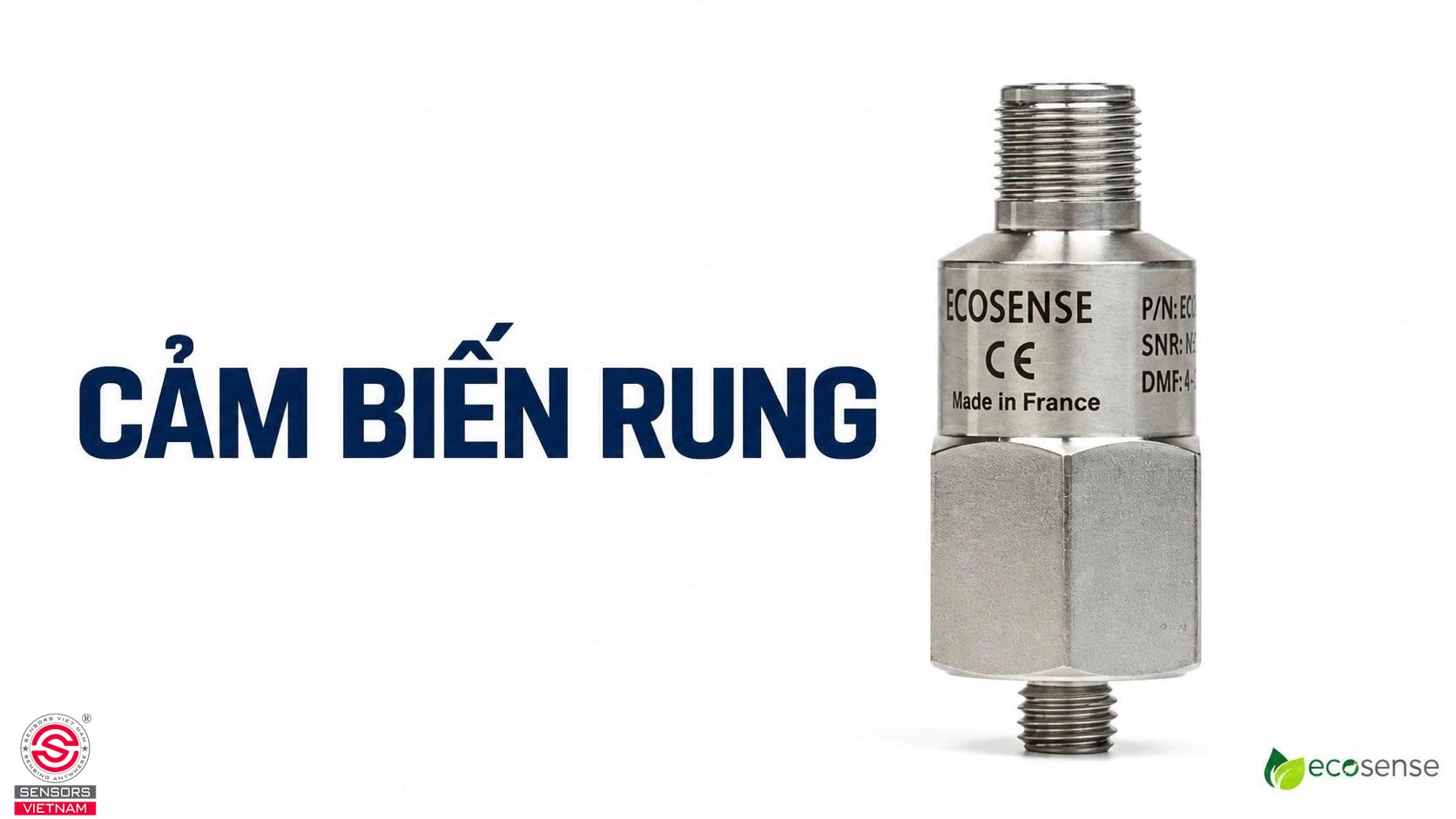
WHAT IS A VIBRATION SENSOR?
A vibration sensor is a device used to detect and measure vibrations in machinery, equipment, or structures during operation. Depending on the device type, a vibration sensor can measure vibration velocity, vibration acceleration, or other vibration characteristics to help assess machine condition.
HVAC systems contain many rotating pieces of equipment, including AHU fans, axial fans in cooling systems, chilled water pumps, and drive motors. When a bearing begins to fail or a fan blade becomes dirty and unbalanced, vibration can change before the problem becomes apparent through noise, temperature, or current variations. Vibration sensors are therefore installed to detect abnormalities such as imbalance, shaft misalignment, and bearing wear in fans, pumps, and compressors. They also support predictive maintenance for machinery.
HOW DOES A VIBRATION SENSOR WORK?
Imagine a vibration sensor as a special listening device for machinery. While the human ear detects sound, a vibration sensor detects the mechanical oscillations of a machine and converts them into signals that a control system can process.
A vibration measurement sensor operates through the following steps:
Step 1: Detecting vibration
When machinery such as a motor, fan, or pump operates, it generates mechanical vibrations. The sensor is mounted on the equipment to detect these vibratory movements.
Step 2: Detecting vibration inside the sensor
Depending on the technology, vibration sensors detect vibration in different ways:
- A piezoelectric accelerometer contains a seismic mass and a piezoelectric crystal. When the sensor vibrates, the seismic mass applies force to the crystal, causing it to generate an electrical charge. This signal is used to determine vibration acceleration.
- A MEMS accelerometer uses a microscopic mechanical structure inside a chip. When the sensor vibrates, this structure moves and changes its capacitance, allowing the acceleration to be determined.
- A vibration velocity sensor uses relative motion between a magnet and a coil to generate a voltage related to vibration velocity.
- A proximity probe uses the eddy current principle to measure the distance between the probe tip and a metallic shaft, allowing shaft displacement to be monitored.
Step 3: Converting vibration into an electrical signal
The vibration sensor contains a sensing element that converts mechanical motion into an electrical signal. This signal represents the vibratory movement and is processed to determine the corresponding measurement. For example, a piezoelectric accelerometer generates a signal related to the force applied to its crystal, while a MEMS sensor operates based on changes in capacitance.
Step 4: Processing the signal and determining vibration parameters
The electrical signal is processed to determine parameters such as vibration acceleration, measured in m/s² or g, vibration velocity, measured in mm/s, or vibration displacement, measured in µm. Some systems also use Fast Fourier Transform (FFT) frequency analysis to help identify signs of imbalance, shaft misalignment, or bearing failure.
Step 5: Transmitting signals to the control system
Depending on the device type, measurement results can be transmitted to a PLC, DDC, or BMS through analog signals such as 4 to 20 mA or 0 to 10 V, digital communication protocols such as Modbus, or contacts from a vibration switch.
The system uses vibration data to monitor machinery condition. When vibration exceeds a preset threshold or an abnormal pattern is detected, the system can generate an alarm, support maintenance planning, or shut down the machine if the system is designed to perform this function.
WHAT PARAMETERS DOES A VIBRATION SENSOR MEASURE?
Not all vibration sensors measure the same parameters. Three basic parameters are commonly used in vibration measurement:
Vibration displacement
A vibration sensor indicates how far a vibrating component moves back and forth relative to a reference position. For example, it can measure whether a machine shaft oscillates with a small or large displacement amplitude. This parameter is particularly useful for monitoring shaft movement in certain types of industrial machinery.
Vibration velocity
The output from a vibration sensor indicates how fast a vibrating component moves during oscillation. The common unit is mm/s. Vibration velocity is widely used to assess the overall vibration severity of many types of industrial rotating machinery.
Vibration acceleration
This parameter indicates how quickly the velocity of vibratory motion changes. Common units include m/s² and g. Vibration acceleration sensors are used to analyze high frequency vibrations, including those associated with bearing defects.
A sensor may be designed to measure one parameter directly or provide data that another device processes to calculate related parameters.
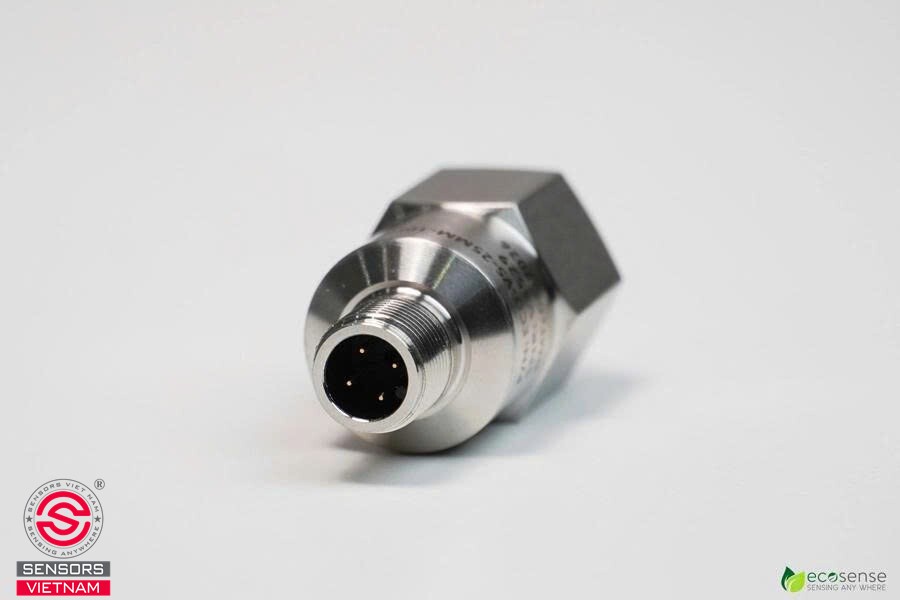
See also: Industrial vibration measurement sensors
APPLICATIONS OF VIBRATION SENSORS IN HVAC SYSTEMS
Vibration sensors are widely used in industries that rely on moving machinery, rotating equipment, or structures that require vibration monitoring. Key applications include:
- In industrial manufacturing, vibration sensors monitor motors, pumps, compressors, and production lines to detect abnormal conditions, support maintenance, and reduce the risk of equipment damage.
- In HVAC and building management systems, vibration measurement sensors monitor ventilation fans, AHU motors, water pumps, and compressors to detect abnormal vibration and support equipment maintenance.
- In the energy sector, vibration measurement devices monitor turbines, generators, and large rotating equipment to assess operating conditions.
Vibration sensors are also used in several other fields, including automotive systems and transportation, construction and civil engineering, electronics, and smart devices. In industrial applications, vibration sensors help monitor machinery condition, detect abnormal vibration, and support predictive maintenance, particularly for motors, pumps, industrial fans, and compressors.
IMPORTANT FACTORS TO CONSIDER WHEN SELECTING A VIBRATION MEASUREMENT DEVICE
When selecting a vibration sensor, consider the following key factors:
- Application requirements: Determine whether the device is intended for overall vibration monitoring, machinery fault analysis, or alarms when vibration exceeds a preset threshold.
- Measurement parameter: Select an acceleration, velocity, or displacement sensor according to the type of machinery and monitoring requirements.
- Measurement range and frequency range: Ensure that the sensor can measure the vibration levels and frequencies relevant to the equipment being monitored.
- Sensor type: Choose a piezoelectric accelerometer, MEMS accelerometer, vibration velocity sensor, proximity probe, or vibration switch according to the application.
- Output signal: Check compatibility with the control system through 4 to 20 mA, 0 to 10 V, Modbus, or relay contacts, depending on the model.
- Installation conditions: Consider temperature, humidity, dust, water exposure, vibration levels, and the sensor mounting method to ensure reliable operation.
- Accuracy and cost: Evaluate sensitivity, measurement error, calibration requirements, and operating and maintenance costs to select a suitable device.
When selecting a vibration measurement device, prioritize the application, measurement parameter, measurement range, frequency range, output signal, and installation conditions. These factors determine whether the device can provide accurate measurements and meet the requirements of an industrial system.
FREQUENTLY ASKED QUESTIONS ABOUT VIBRATION SENSORS
What is the difference between a vibration sensor and an accelerometer?
An accelerometer is a device that measures acceleration, which describes how quickly an object's velocity changes over time. When used to measure acceleration caused by vibration, it can be referred to as a vibration accelerometer.
Vibration sensor is a broader term commonly used for devices designed to measure or monitor mechanical vibration. Depending on the type, a vibration sensor may measure acceleration, velocity, or displacement.
Many industrial vibration sensors are actually accelerometers, but not all vibration sensors measure acceleration. For example, a vibration velocity sensor measures vibration velocity, while a proximity probe can measure changes in the distance between the probe and a rotating shaft.
Do vibration sensors work on all types of machinery?
Vibration sensors are commonly used on machinery with moving components, such as motors, pumps, compressors, industrial fans, gearboxes, and turbines. They can also monitor structural vibration in bridges and buildings when an appropriate sensor is selected.
For low speed rotating equipment, such as machinery operating below 300 RPM, it is advisable to choose a sensor capable of measuring low frequency vibration. Piezoelectric accelerometers, MEMS accelerometers, and vibration velocity sensors may all be suitable, depending on the required frequency range and measurement conditions. For large machines equipped with journal bearings, proximity probes are commonly used to monitor shaft movement.
How long does a vibration sensor last?
A wired industrial vibration sensor can operate for approximately 10 to 20 years or longer when properly selected, installed, and operated under suitable conditions. For battery powered wireless vibration sensors, battery life may typically range from 3 to 7 years.
To maintain measurement accuracy, the device should be inspected and calibrated periodically. A calibration interval of approximately 1 to 3 years may be appropriate, depending on the application and manufacturer recommendations.
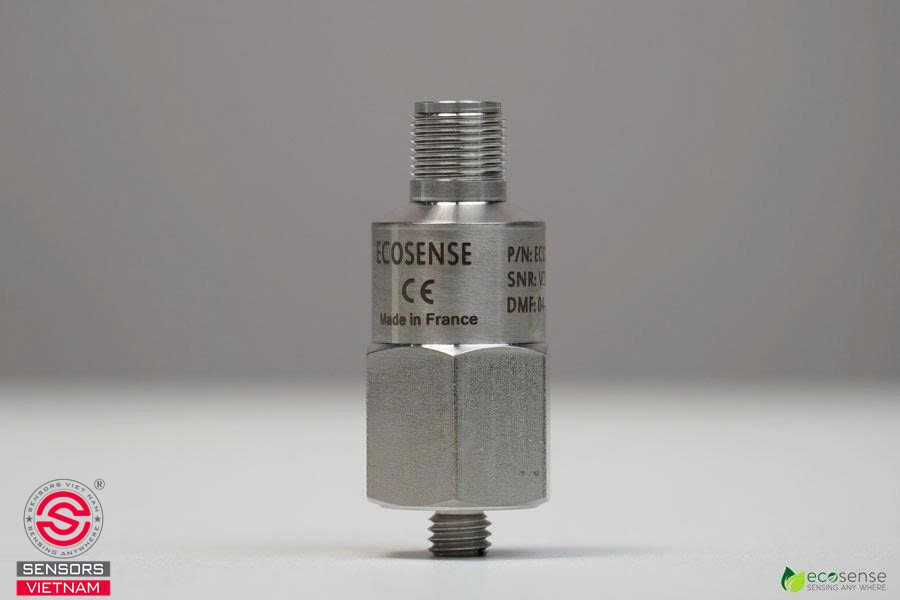
→ See also: Vibration sensor products distributed by Sensors Vietnam
BUY GENUINE VIBRATION SENSORS FROM SENSORS VIETNAM
Sensors Vietnam supplies a wide range of vibration sensors with different measurement ranges and mounting configurations, suitable for applications ranging from HVAC systems to machinery used in industrial production lines.
When purchasing vibration sensors from Sensors Vietnam, customers receive genuine products with complete Certificates of Origin and Certificates of Quality (CO/CQ), competitive pricing, dedicated technical support, and warranty coverage in accordance with the manufacturer's policies.
For more product information and technical advice, please visit our websites: https://cambien.com.vn/ | https://www.sensors.vn/. Sensors Vietnam is ready to help you find suitable temperature sensing solutions and measurement instruments for your application.
Hot news


SENSORS VIETNAM CO., LTD
VAT CODE: 0313 355 473
Head Office: 03rd Floor, Indochina Tower, 04 Nguyen Dinh Chieu, Tan Dinh Ward, Ho Chi Minh City, Vietnam.
HCM Branch: 92/14/9A Vuon Lai Str., An Phu Dong Ward, Ho Chi Minh City, Vietnam.
Hanoi Branch: S106 Tower, Vinhomes Smart City, Tay Mo Ward, Hanoi City, Vietnam.

® Registered trademark – National Office of Intellectual Property Vietnam
OUR SERVICES
Specializing in the import and distribution of industrial sensors.
Sensors for HVAC/R systems and building automation applications.
Supplying gauges, transmitters, switches, controllers, PLCs, HMIs, and gas detectors.
Providing integrated consulting services for sensor and controller systems.


CONTACT US
Email: sales(at)sensors.vn
Hotline: +84 0911 660 660
Asia Commercial Bank Account (ACB):
VND: 357 246 888 | USD: 1357 246 888
Support Online ZALO Official Account
(From 8:00 am to 5:00 pm)





SENSORS VIETNAM CO., LTD
- Specialized in the import and distribution of sensors and controllers.
- Integrated data acquisition systems and industrial communication solutions.
- Design and installation of smart home systems and industrial equipment.
- Stack lights, signal beacons, LED warning horns, and RGB warning lights.