






CUSTOMER SERVICE
www.sensors.vn
Admin@sensors.vn
www.cambien.com.vn
WHAT IS A SENSOR?
Date 25/Aug/2021 at 09:17 AM - View: 6595

What is A Sensors? A sensor is a device that detects the change in the environment and responds to some output on the other system. A sensor converts a physical phenomenon into a measurable analog voltage (or sometimes a digital signal) converted into a human-readable display or transmitted for reading or further processing.
One of the best-known sensors is the microphone, which converts sound energy to an electrical signal that can be amplified, transmitted, recorded, and reproduced.
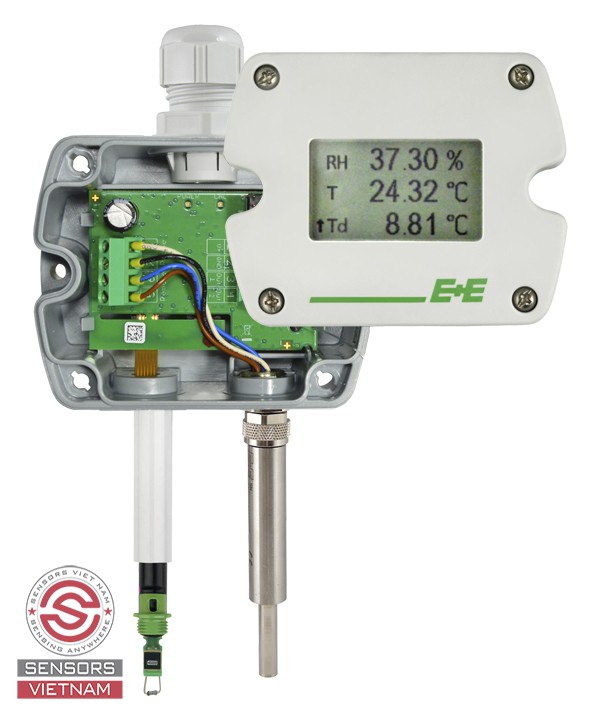
There are many types of sensors that have been invented to measure physical phenomenon:
Thermocouples, RTDs and Thermistors: for measuring temperature
Strain gages: to measure strain on an object, e.g. pressure, tension, weight, etc.,
Load cells: for measuring weight and load
LVDT sensors: LVDTs are used to measure displacement in distance
Accelerometers: measuring vibration and shock
Microphones: for capturing sound waves
Current transducers: for measuring AC or DC current
Voltage transformers: for measuring high voltage potentials
Optical sensors: used to detect light, transmit data, and replace conventional sensors
Camera sensors: used to capture single and continuous 2D images
Digital sensors: used for discrete on/off counting, linear and rotary encoding, position measurements, etc.
Positioning sensors (GPS): used to capture the longitudinal, latitudinal position based on GPS, GLONASS, and other satellite positioning systems. Different GPS sensors with different accuracy are available.
and countless more.
Depending on the type of sensor, its electrical output can be a voltage, current, resistance, or another electrical attribute that varies over time. Some sensors are available with digital outputs, whereby they output a series of bytes of scaled or unscaled data. The output of these analog sensors is typically connected to the input of a signal conditioner, which we will discuss in the next section.
Hot news


SENSORS VIETNAM CO., LTD
VAT CODE: 0313 355 473
Head Office: 03rd Floor, Indochina Tower, 04 Nguyen Dinh Chieu, Tan Dinh Ward, Ho Chi Minh City, Vietnam.
HCM Branch: 92/14/9A Vuon Lai Str., An Phu Dong Ward, Ho Chi Minh City, Vietnam.
Hanoi Branch: S106 Tower, Vinhomes Smart City, Tay Mo Ward, Hanoi City, Vietnam.

® Registered trademark – National Office of Intellectual Property Vietnam
OUR SERVICES
Specializing in the import and distribution of industrial sensors.
Sensors for HVAC/R systems and building automation applications.
Supplying gauges, transmitters, switches, controllers, PLCs, HMIs, and gas detectors.
Providing integrated consulting services for sensor and controller systems.


CONTACT US
Email: sales(at)sensors.vn
Hotline: +84 0911 660 660
Asia Commercial Bank Account (ACB):
VND: 357 246 888 | USD: 1357 246 888
Support Online ZALO Official Account
(From 8:00 am to 5:00 pm)





SENSORS VIETNAM CO., LTD
- Specialized in the import and distribution of sensors and controllers.
- Integrated data acquisition systems and industrial communication solutions.
- Design and installation of smart home systems and industrial equipment.
- Stack lights, signal beacons, LED warning horns, and RGB warning lights.