






CUSTOMER SERVICE
www.sensors.vn
Admin@sensors.vn
www.cambien.com.vn
WHAT IS FAN VIBRATION SENSOR ?
Date 15/May/2026 at 08:30 AM - View: 93
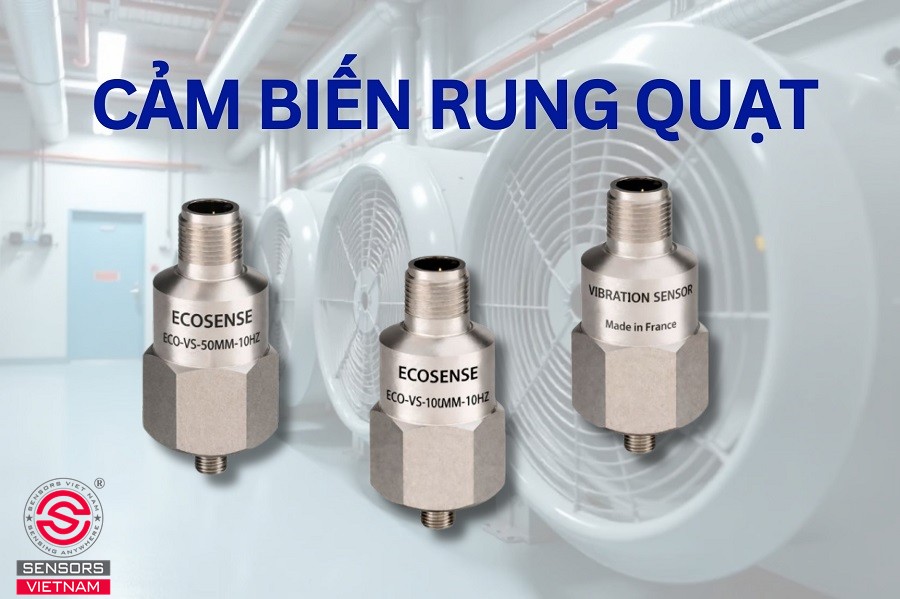
In an industrial area, industrial fans (cooling fans, AHU/FCU fans in HVAC systems, and smoke exhaust fans) are required to operate continuously 24/7. Once abnormal vibration begins to occur, it not only generates excessive noise but also indicates a range of potential failures such as fan blade imbalance, bearing wear, and shaft misalignment. To detect and address these issues promptly, fan vibration sensors have become an essential component in modern industrial systems.
MAIN CAUSES OF FAN VIBRATION
Before understanding vibration sensors for fans, it is important to identify the root causes of fan vibration. In practice, there are five common causes:
Dynamic imbalance: Dust accumulation, debris, or uneven blade wear causes vibration at a frequency corresponding to the rotational speed.
- Shaft misalignment: Misalignment between the fan shaft and motor shaft creates abnormal vibration. This condition is particularly dangerous because it may simultaneously damage couplings and bearings.
- Bearing failure: Bearing defects generate characteristic high-frequency vibration signals, which can often be detected 3-4 weeks before complete bearing failure occurs.
- Structural resonance: When the fan operating frequency matches the natural frequency of the support structure, vibration amplitude may increase dramatically even if the equipment appears to operate normally.
- Mechanical looseness: Loose foundation bolts or worn mounting structures are among the leading causes of high-order vibration patterns.
By implementing vibration sensors, maintenance engineers can continuously monitor fan vibration conditions and accurately diagnose faults remotely without dismantling the equipment.
→ See more: Fan motor vibration sensors
BENEFITS OF USING FAN VIBRATION SENSORS FOR 24/7 CONDITION MONITORING
Integrating fan vibration sensors into ventilation and HVAC systems provides several important advantages:
- Early detection of imbalance issues when fan blades accumulate dirt or experience static/dynamic deformation, allowing engineers to perform balancing procedures before centrifugal forces damage the bearing system.
- Vibration monitoring protects bearings and motors by continuously tracking bearing wear conditions. The system can automatically trigger alarms or shut down equipment when vibration exceeds safety thresholds.
- Reduced operating costs by minimizing unexpected downtime and eliminating unnecessary periodic replacement of components.
 → See more: PT100 Temperature sensors
INSTALLATION GUIDELINES AND TECHNICAL CONSIDERATIONS FOR FAN VIBRATION SENSORS
To ensure accurate and long-term operation, the following installation guidelines should be considered:
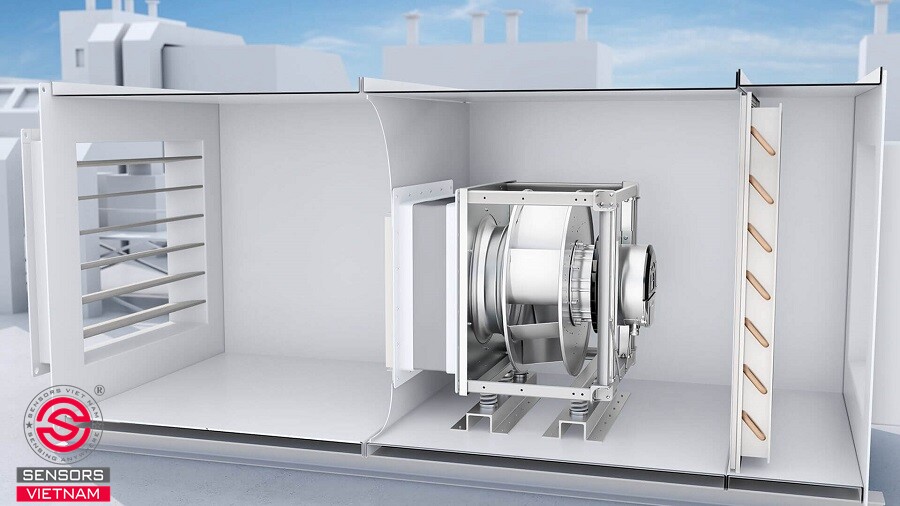
- Installation position: Mount the industrial vibration sensor directly on the bearing housing or machine casing, perpendicular to the rotating shaft, where abnormal vibration can be detected most effectively.
- Mounting surface: The surface must be flat, clean, and free from rust or gaps between the sensor and machine structure.
- Electrical connection: Use high-quality shielded cables and route wiring away from power cables to minimize electromagnetic interference. The power supply must comply with industrial specifications recommended by the manufacturer.
- Alarm threshold settings: Configure warning and shutdown thresholds according to manufacturer recommendations and equipment operating conditions.
- Periodic inspection: Mechanical and electrical connections should be inspected every six months to maintain long-term measurement accuracy.
→ See more: Vibration sensors and the 4 most common types
HOW TO SELECT THE RIGHT FAN VIBRATION SENSOR
When selecting a fan vibration sensor, the following factors should be carefully evaluated:
- Measurement range: AHU/FCU fans typically operate within 0-25 mm/s, while large industrial fans and compressors may require ranges of 0-50 mm/s or 0-100 mm/s.
- Frequency range: Ensure the sensor covers the actual operating frequency of the fan. In most applications, a range of 10-1000 Hz is sufficient.
- Output signal: Choose 4-20mA, 0-10V, or Modbus RTU RS485 outputs for PLC/SCADA integration; select relay or switch outputs for simple alarm applications.
- Installation environment: Consider temperature, humidity, and chemical exposure. Industrial and outdoor environments generally require protection ratings of IP65 or higher.
- Standards and certifications: Select products with clear origin documentation, CO/CQ certification, and reliable warranty support.
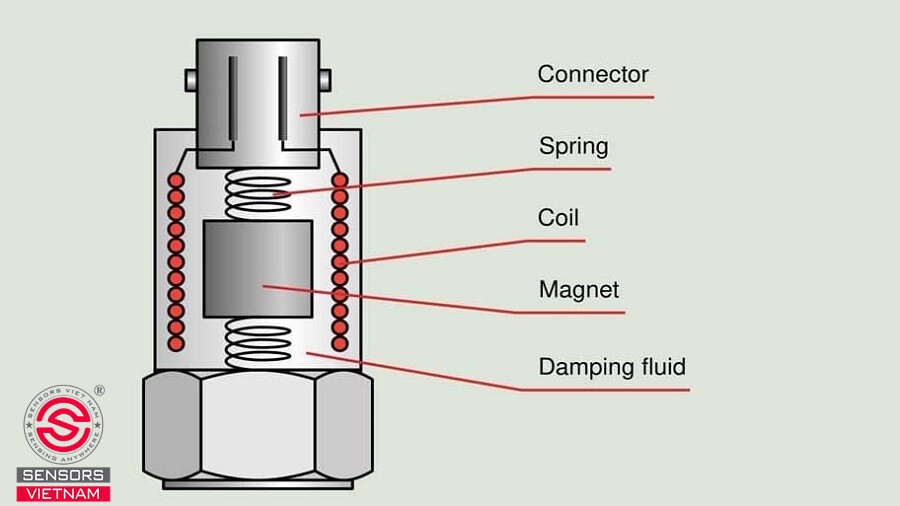 → See more: Vibration sensors and applications in industrial automation
ECO-VS: HIGH-PERFORMANCE FAN VIBRATION SENSOR SERIES
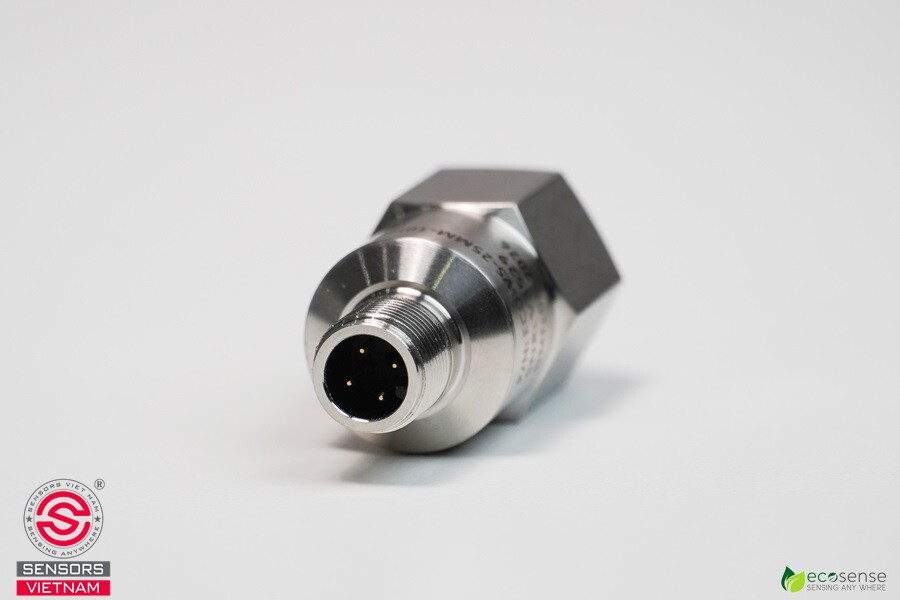
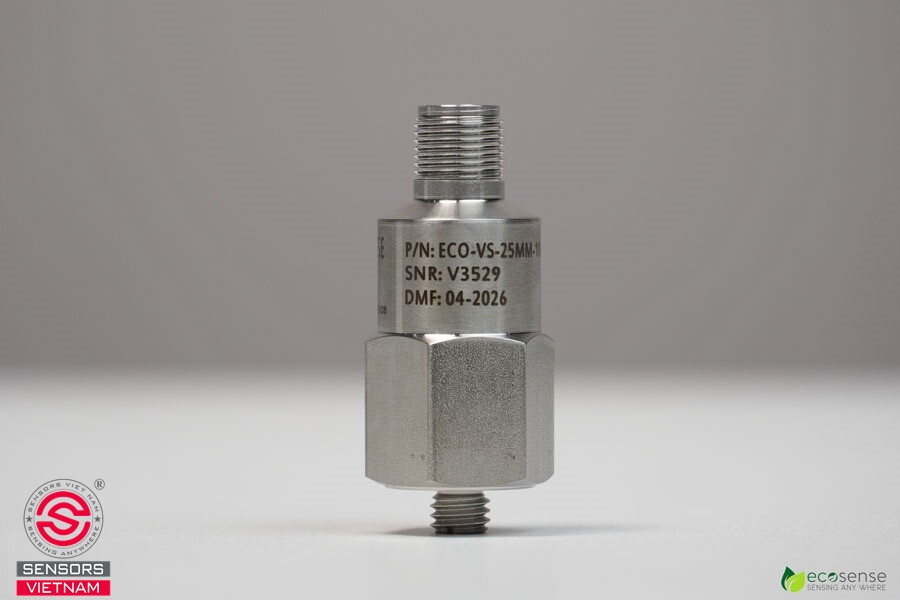
The ECO-VS vibration sensor series from ECOSENSE is widely used in industrial automation systems thanks to the following advantages:
- Stainless steel housing with IP67 protection: Resistant to high-pressure washdowns, rainwater exposure, nearby water leakage, oil contamination, and continuous vibration without corrosion or structural damage.
- Wide operating temperature range from -50°C to +90°C: Allows stable operation in cold rooms, compressor rooms, mechanical plants, and high-temperature environments without requiring additional thermal insulation or cooling accessories.
- Four optimized models for different applications: Instead of using one broad measurement range with reduced resolution, ECOSENSE designed four dedicated ECO-VS versions optimized for specific vibration monitoring requirements.
→ See more: ECO-VS vibration sensors
Fan vibration sensors are a smart and essential investment for modern industrial automation systems. The ECO-VS series from ECOSENSE is officially distributed by Sensors Việt Nam with full CO/CQ documentation, professional technical support, and reliable manufacturer-backed warranty services. For detailed information and technical consultation, please contact us directly for the fastest support.
Hot news


SENSORS VIETNAM CO., LTD
VAT CODE: 0313 355 473
Head Office: 03rd Floor, Indochina Tower, 04 Nguyen Dinh Chieu, Tan Dinh Ward, Ho Chi Minh City, Vietnam.
HCM Branch: 92/14/9A Vuon Lai Str., An Phu Dong Ward, Ho Chi Minh City, Vietnam.
Hanoi Branch: S106 Tower, Vinhomes Smart City, Tay Mo Ward, Hanoi City, Vietnam.

® Registered trademark – National Office of Intellectual Property Vietnam
OUR SERVICES
Specializing in the import and distribution of industrial sensors.
Sensors for HVAC/R systems and building automation applications.
Supplying gauges, transmitters, switches, controllers, PLCs, HMIs, and gas detectors.
Providing integrated consulting services for sensor and controller systems.


CONTACT US
Email: sales(at)sensors.vn
Hotline: +84 0911 660 660
Asia Commercial Bank Account (ACB):
VND: 357 246 888 | USD: 1357 246 888
Support Online ZALO Official Account
(From 8:00 am to 5:00 pm)





SENSORS VIETNAM CO., LTD
- Specialized in the import and distribution of sensors and controllers.
- Integrated data acquisition systems and industrial communication solutions.
- Design and installation of smart home systems and industrial equipment.
- Stack lights, signal beacons, LED warning horns, and RGB warning lights.