





CUSTOMER SERVICE
www.sensors.vn
Admin@sensors.vn
www.cambien.com.vn
TEMPERATURE AND HUMIDITY DEVICE
Date 10/Mar/2026 at 11:01 AM - View: 85
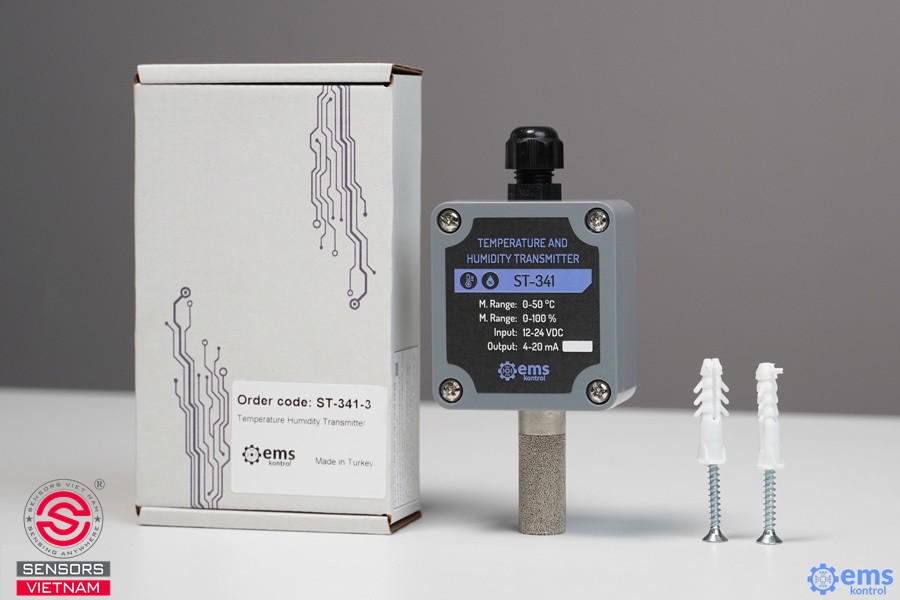
In environments that require strict environmental control such as pharmaceutical storage warehouses, cleanrooms, greenhouses, and smart buildings, temperature and humidity are two critical parameters that must be continuously monitored. Even a small deviation can directly affect product quality, system performance, or even lead to significant economic losses.
For this reason, temperature and humidity sensors have become essential components in many modern technical systems. These devices act as environmental monitoring tools, accurately tracking changes in temperature and humidity while providing data that allows control systems to maintain optimal operating conditions.
Importance of temperature and humidity monitoring devices
Installing suitable temperature and humidity measurement devices enables businesses and system operators to manage environmental conditions more proactively and efficiently.
In industries such as food storage, pharmaceuticals, and electronic component manufacturing, these devices ensure that products are stored under the required temperature and humidity conditions. This helps prevent deterioration, contamination, or loss of product quality.
Beyond storage applications, precise control of environmental conditions is also critical in manufacturing sectors such as textile production, printing, and electronic assembly. Stable temperature and humidity levels help maintain consistent production processes and reduce defects caused by environmental fluctuations.
In addition, measurement data collected from sensors can support HVAC systems in operating more efficiently. By providing real-time environmental feedback, the system can avoid excessive cooling or dehumidification, thereby reducing unnecessary energy consumption.
Temperature and humidity monitoring devices also play an important role in meeting strict quality management standards such as GSP (Good Storage Practice) and GDP (Good Distribution Practice) in the pharmaceutical industry, as well as cleanroom standards in high-tech manufacturing.
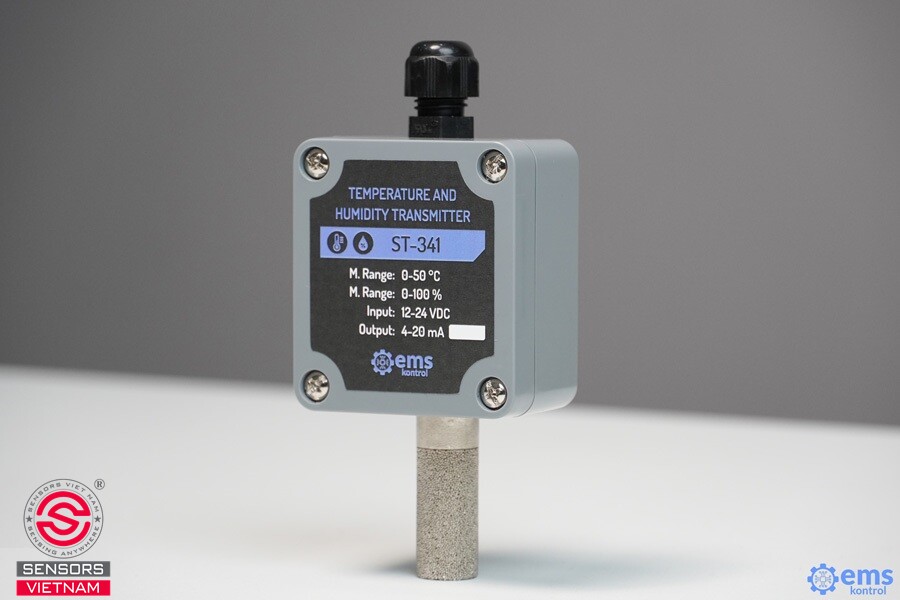
Common types of temperature and humidity sensors
Depending on the installation location and specific application requirements, temperature and humidity monitoring devices are designed in various forms to suit different environmental conditions.
Room temperature and humidity sensors
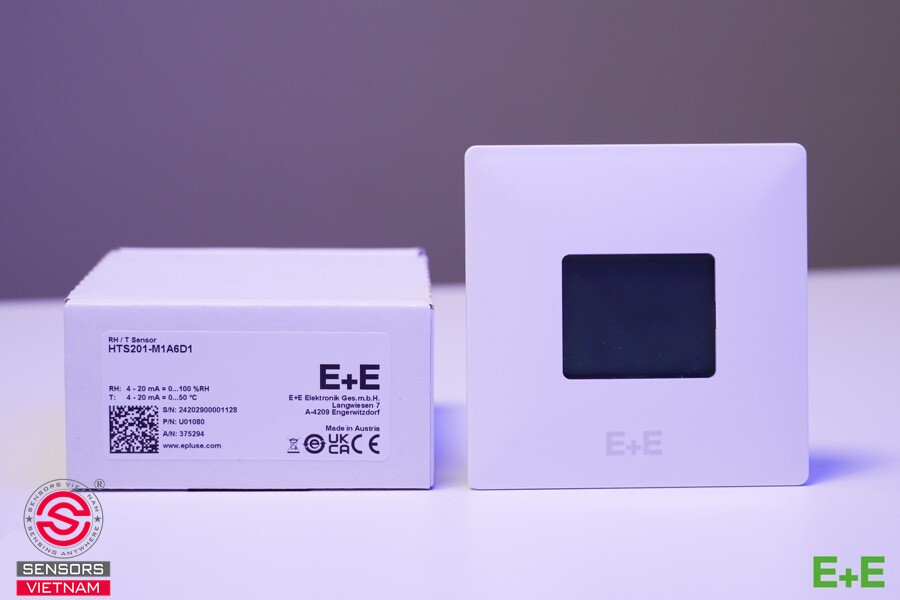
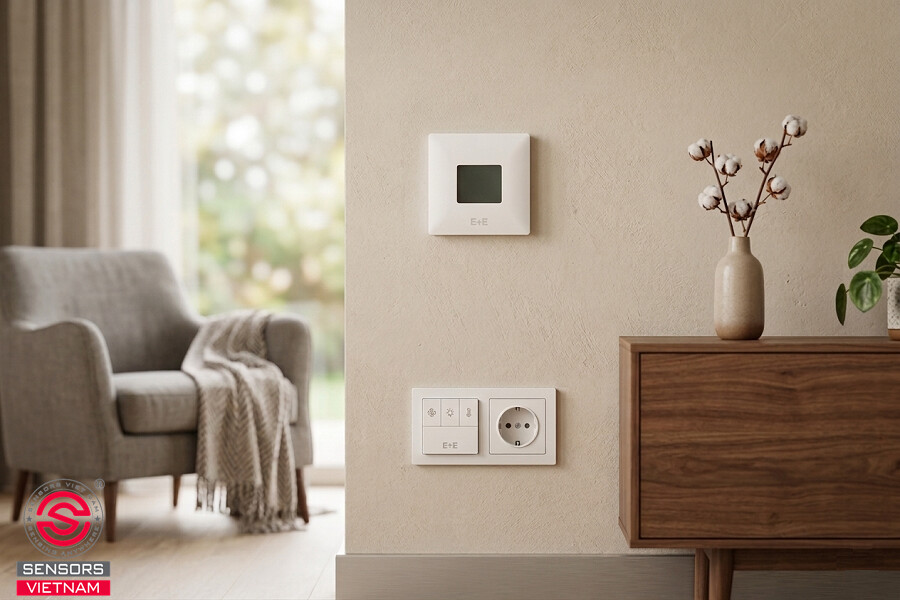
Room temperature and humidity sensors are commonly used in indoor environments such as offices, hospitals, schools, residential buildings, and commercial facilities.
These sensors typically feature a compact and aesthetic design, allowing them to be mounted directly on walls to measure the surrounding environmental conditions.
In addition to displaying measurements locally, many modern sensors can transmit data to central controllers using industrial signal standards such as 4-20 mA, 0-10 V, or communication protocols like Modbus RTU RS485.
This capability allows Building Management Systems (BMS) or HVAC systems to automatically adjust equipment such as ventilation fans, air conditioning units, or dehumidifiers to maintain ideal environmental conditions.
Duct temperature and humidity sensors
In central HVAC systems, temperature and humidity sensors are often installed directly inside air ducts to monitor the condition of the airflow circulating through the system.
These sensors are designed with long probes that extend through the duct wall, enabling accurate measurement of the temperature and humidity of moving air streams.
By collecting real-time data from these sensors, HVAC systems can adjust airflow rates, temperature, and humidity levels to maintain optimal system performance and ensure consistent indoor air quality throughout the building.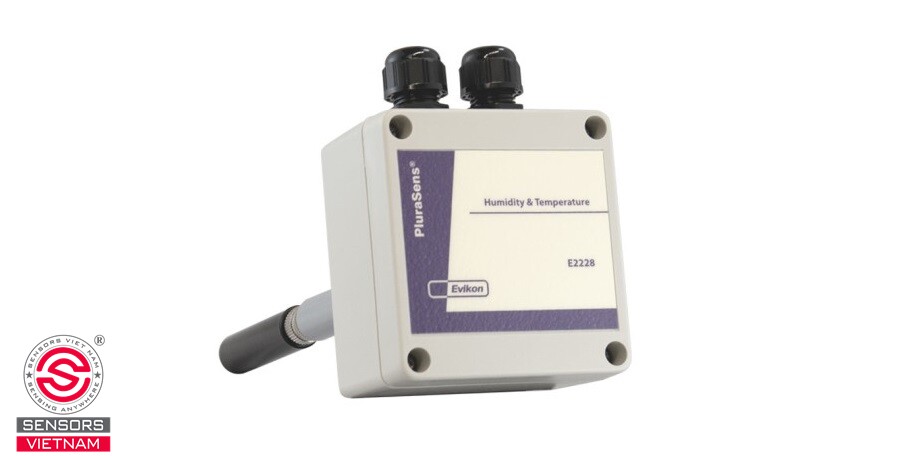
Industrial temperature and humidity sensors
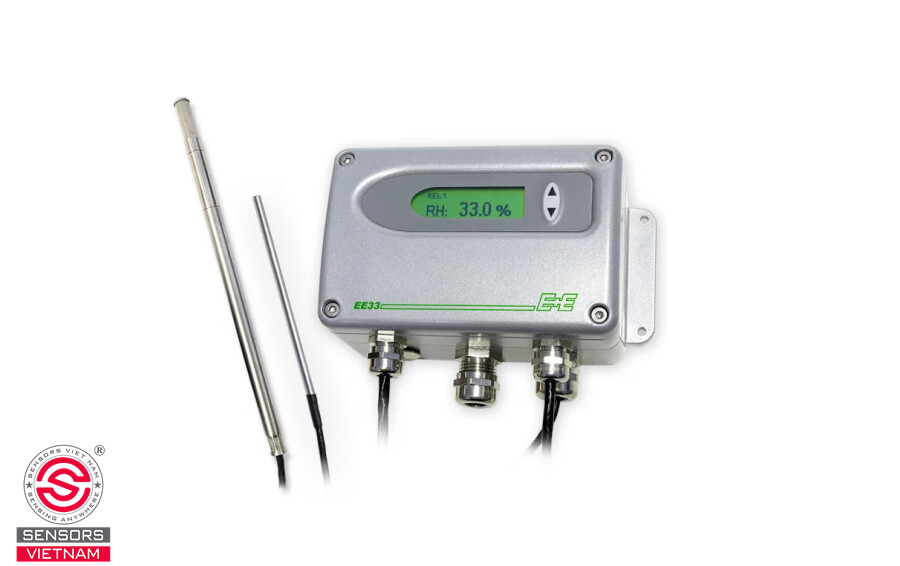
In harsh environments such as cold storage facilities, drying ovens, chemical plants, or industrial production lines, conventional sensors may not withstand long-term operation.
Therefore, industrial-grade temperature and humidity sensors are typically designed with durable protective housings made from metal alloys or high-performance engineering plastics. These housings provide excellent resistance to dust, moisture, and extreme temperatures.
Thanks to this robust construction, industrial sensors can operate reliably even in challenging environmental conditions while maintaining high measurement accuracy.
Practical applications of temperature and humidity sensors
Due to their ability to provide accurate and continuous environmental monitoring, temperature and humidity sensors are widely used in many industrial and commercial sectors.
- In HVAC systems, temperature and humidity sensors help maintain optimal humidity levels, typically between 40% and 60% RH. This range helps prevent the growth of mold and bacteria while reducing the risk of corrosion or equipment damage caused by excessive moisture.
- Accurate humidity control also allows air conditioning systems to operate more efficiently, resulting in significant energy savings.
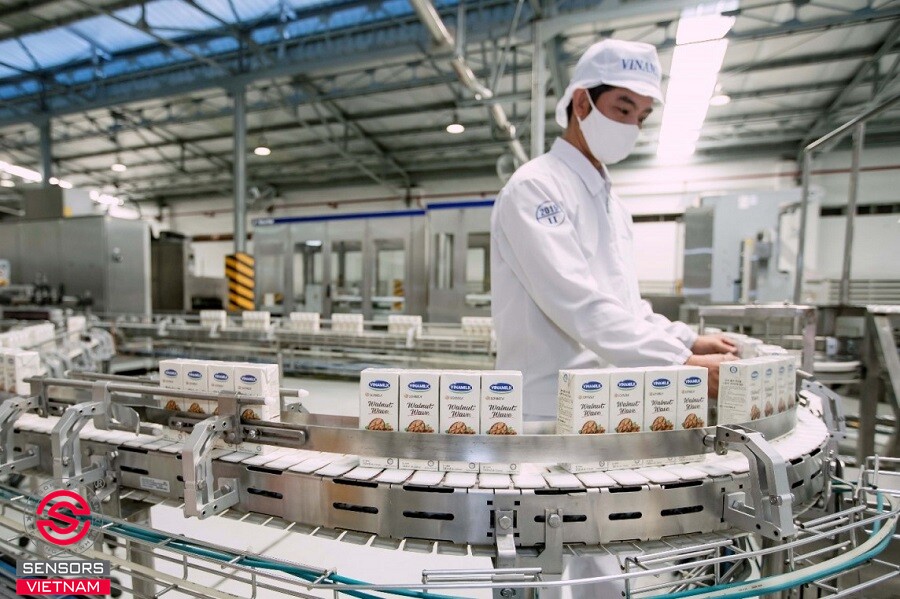
- In the food processing and storage industry, temperature and humidity sensors play an important role in monitoring environmental conditions within storage facilities and production areas. Continuous monitoring helps prevent issues such as moisture loss in meat products, food oxidation, or changes in product quality, ensuring compliance with food safety standards.
- For cold storage warehouses and logistics centers, industrial temperature and humidity sensors are often used to monitor environmental conditions across wide temperature ranges, typically from -50°C to +50°C. Many systems also include automatic data logging functions to support regulatory inspections and compliance with quality standards such as HACCP or ISO 22000.
- In smart agriculture, temperature and humidity sensors are connected to IoT-based monitoring systems to track environmental conditions in greenhouses. The collected data enables automated adjustments of irrigation, ventilation, and fertilization processes, optimizing crop growth while significantly reducing resource consumption.
- Temperature and humidity sensors also play a critical role in data centers, where maintaining stable environmental conditions is essential for protecting server infrastructure. These sensors help maintain humidity levels within the recommended range of 45-55% RH, preventing static electricity when humidity is too low and reducing the risk of corrosion when humidity is too high.
- By providing continuous monitoring and timely alerts, these sensors help data centers maintain a stable operating environment for servers and networking equipment.
- In addition to the applications mentioned above, temperature and humidity sensors are widely used in manufacturing plants, laboratories, server rooms, logistics systems, and modern smart buildings. In these environments, sensors are often integrated into building management systems (BMS) to automatically regulate air conditioning systems, improving occupant comfort while optimizing energy efficiency.
Hot news


SENSORS VIETNAM CO., LTD
VAT CODE: 0313 355 473
Head Office: 03rd Floor, Indochina Tower, 04 Nguyen Dinh Chieu, Tan Dinh Ward, Ho Chi Minh City, Vietnam.
HCM Branch: 92/14/9A Vuon Lai Str., An Phu Dong Ward, Ho Chi Minh City, Vietnam.
Hanoi Branch: S106 Tower, Vinhomes Smart City, Tay Mo Ward, Hanoi City, Vietnam.

® Registered trademark – National Office of Intellectual Property Vietnam
OUR SERVICES
Specializing in the import and distribution of industrial sensors.
Sensors for HVAC/R systems and building automation applications.
Supplying gauges, transmitters, switches, controllers, PLCs, HMIs, and gas detectors.
Providing integrated consulting services for sensor and controller systems.


CONTACT US
Email: sales(at)sensors.vn
Hotline: +84 0911 660 660
Asia Commercial Bank Account (ACB):
VND: 357 246 888 | USD: 1357 246 888
Support Online ZALO Official Account
(From 8:00 am to 5:00 pm)





SENSORS VIETNAM CO., LTD
- Specialized in the import and distribution of sensors and controllers.
- Integrated data acquisition systems and industrial communication solutions.
- Design and installation of smart home systems and industrial equipment.
- Stack lights, signal beacons, LED warning horns, and RGB warning lights.