






CUSTOMER SERVICE
www.sensors.vn
Admin@sensors.vn
www.cambien.com.vn
TEMPERATURE AND HUMIDITY TRANSMITTER
Date 25/Jul/2023 at 05:17 AM - View: 4194
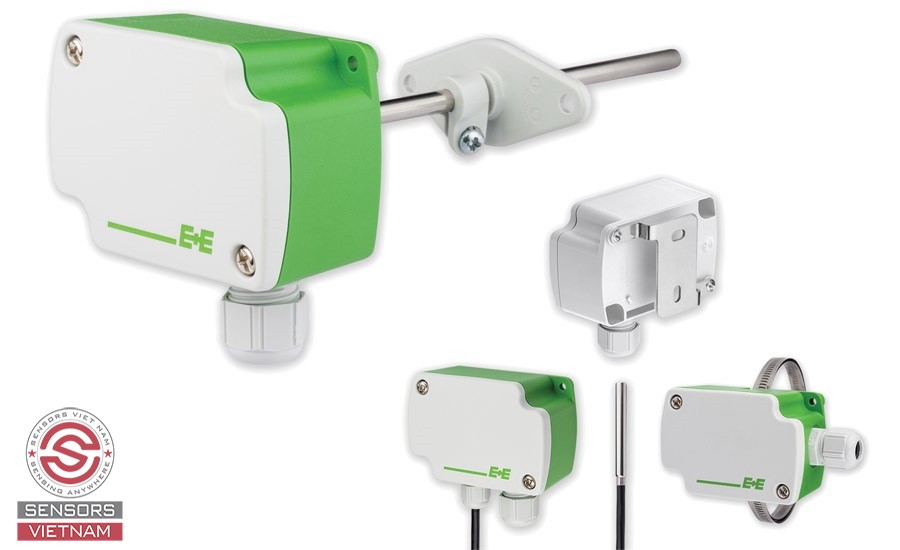
The Earth’s atmosphere plays host to numerous weather phenomena that affect life and shape the planet. Understanding these phenomena requires knowledge of the interaction between temperature and humidity. Temperature affects humidity, which in turn affects the potential for precipitation. The interaction of temperature and humidity also directly affects the health and well-being of humans. Relative humidity and dew point, values commonly used by meteorologists, give the means to understand this interaction.
What is Humidity?
Also referred to as absolute humidity, this is the amount of water or moisture that is present in the air in the form of water vapour. It is measured in mass or volume; it depends on the annual season as well as the atmosphere of the location.
Humidity is lower in dry areas and higher in bodies that are near rainforests and oceans. It is also high in the winter and low in the dry seasons such as summer. Sometimes, humidity can increase above the normal limits, causing droplets commonly known as fog. Humidity is also used as a determinant for the likelihood of precipitation, dew or fog.
What is Temperature?
This is a physical quantity that expresses climatic conditions, whether cold or hot. It is present in all matter and is the source of heat when bodies come into contact with each other. Measured with thermometers, temperatures use temperature scales in thermometers to give reference points. The most common measurement points are the Celsius scale, Fahrenheit scale and Kelvin scale.
The lowest temperature (theoretical) is absolute zero where no more thermal energy can be derived. Temperature plays a vital role in all scientific fields as well as all aspects of human, animal and plant life.
The higher the temperature, the hotter it becomes. For instance, summers are hotter than winter since the temperatures get higher in the summer.
Summary of Humidity and Temperature
Humidity refers to the amount of water or moisture that is present in the air in the form of water vapour. It is measured in mass or volume. On the other hand, temperature refers to a physical quantity that expresses climatic conditions, whether cold or hot. It is measured using the Celsius scale, Fahrenheit scale and Kelvin scale.
Humidity & Temp transmitters are designed for environmental monitoring and controlling in industrial, commercial and other buildings. The relation between humidity and temperature formula simply says they are inversely proportional. If temperature increases it will lead to a decrease in relative humidity, thus the air will become drier whereas when temperature decreases, the air will become wet means the relative humidity will increase.
Absolute Humidity
The absolute humidity expresses how much water vapor is in a volume of air without considering the temperature of the air. It is determined by dividing the mass of water vapor in the volume by the total mass of air and water vapor in the volume.
Relative Humidity
The relative humidity relates the absolute humidity to the temperature. It is calculated as the actual amount of water vapor in a volume of air divided by the maximum amount of water vapor the volume can hold. When the relative humidity reaches 100%, the volume has become saturated and can no longer hold any more water as vapor, and additional water will condense out as liquid.
Relation between temperature and humidity
Tables that show the effect of temperature upon the saturation mixing ratio rw are readily available. Humidity of the air at saturation is expressed more commonly, however, as vapour pressure. Thus, it is necessary to understand vapour pressure and in particular the gaseous nature of water vapour.
Hot news





SENSORS VIETNAM CO., LTD
VAT CODE: 0313 355 473
Head Office: 03rd Floor, Indochina Tower, 04 Nguyen Dinh Chieu, Tan Dinh Ward, Ho Chi Minh City, Vietnam.
HCM Branch: 92/14/9A Vuon Lai Str., An Phu Dong Ward, Ho Chi Minh City, Vietnam.
Hanoi Branch: S106 Tower, Vinhomes Smart City, Tay Mo Ward, Hanoi City, Vietnam.

® Registered trademark – National Office of Intellectual Property Vietnam
OUR SERVICES
Specializing in the import and distribution of industrial sensors.
Sensors for HVAC/R systems and building automation applications.
Supplying gauges, transmitters, switches, controllers, PLCs, HMIs, and gas detectors.
Providing integrated consulting services for sensor and controller systems.


CONTACT US
Email: sales(at)sensors.vn
Hotline: +84 0911 660 660
Asia Commercial Bank Account (ACB):
VND: 357 246 888 | USD: 1357 246 888
Support Online ZALO Official Account
(From 8:00 am to 5:00 pm)





SENSORS VIETNAM CO., LTD
- Specialized in the import and distribution of sensors and controllers.
- Integrated data acquisition systems and industrial communication solutions.
- Design and installation of smart home systems and industrial equipment.
- Stack lights, signal beacons, LED warning horns, and RGB warning lights.