






CUSTOMER SERVICE
www.sensors.vn
Admin@sensors.vn
www.cambien.com.vn
VOLATILE ORGANIC COMPOUND TRANSMITTER
Date 26/Aug/2025 at 02:30 PM - View: 254
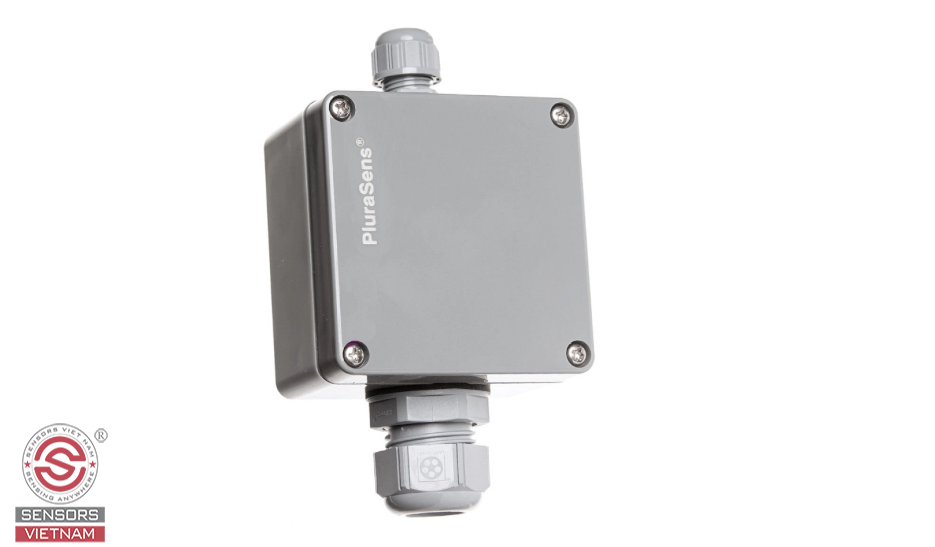
A Solvent Vapors Detector, also known as a VOC (Volatile Organic Compounds) Sensor, is a device used to detect and monitor the concentration of volatile solvent vapors in the air. Common VOCs such as acetone, ethanol, toluene, xylene, isopropanol, and MEK are widely used in laboratories, paint factories, printing facilities, as well as in pharmaceutical and chemical production. Monitoring solvent vapor levels helps protect worker safety, prevent fire and explosion hazards, and ensure compliance with environmental safety standards.
Key Functions of a Solvent Vapors Detector
Real-time detection of solvent vapors and VOCs.
Safety alarms when concentrations exceed permissible exposure limits (OSHA, NIOSH, ATEX, etc.).
Explosion prevention by monitoring vapors near the Lower Explosive Limit (LEL).
Continuous monitoring to ensure workplace safety and process control.
Detection Technologies
PID Sensor (Photoionization Detector)
Measures a wide range of VOCs at very low concentrations (ppb–ppm).
High sensitivity with fast response.
Catalytic Bead Sensor
Detects flammable solvent vapors.
Measures in %LEL range.
NDIR Sensor (Non-Dispersive Infrared)
High stability and long lifetime.
Ideal for fixed installations.
Electrochemical Sensor
Designed for specific toxic vapors such as formaldehyde and methanol.
Features of VOC Detectors
Measuring range: from ppm (toxic monitoring) to %LEL (explosive monitoring).
Signal outputs: 4–20 mA, RS485 Modbus, relay contacts.
Alarm system: visual and audible alarms (LED indicators, buzzers, sirens).
Form factor: available as portable handheld devices or fixed transmitters/probes.
Applications
VOC monitoring in paint, printing, and packaging industries.
Solvent vapor detection in chemical and pharmaceutical manufacturing.
Safety monitoring in solvent and chemical storage areas.
VOC detection in laboratories and R&D facilities.
Hot news


SENSORS VIETNAM CO., LTD
VAT CODE: 0313 355 473
Head Office: 03rd Floor, Indochina Tower, 04 Nguyen Dinh Chieu, Tan Dinh Ward, Ho Chi Minh City, Vietnam.
HCM Branch: 92/14/9A Vuon Lai Str., An Phu Dong Ward, Ho Chi Minh City, Vietnam.
Hanoi Branch: S106 Tower, Vinhomes Smart City, Tay Mo Ward, Hanoi City, Vietnam.

® Registered trademark – National Office of Intellectual Property Vietnam
OUR SERVICES
Specializing in the import and distribution of industrial sensors.
Sensors for HVAC/R systems and building automation applications.
Supplying gauges, transmitters, switches, controllers, PLCs, HMIs, and gas detectors.
Providing integrated consulting services for sensor and controller systems.


CONTACT US
Email: sales(at)sensors.vn
Hotline: +84 0911 660 660
Asia Commercial Bank Account (ACB):
VND: 357 246 888 | USD: 1357 246 888
Support Online ZALO Official Account
(From 8:00 am to 5:00 pm)





SENSORS VIETNAM CO., LTD
- Specialized in the import and distribution of sensors and controllers.
- Integrated data acquisition systems and industrial communication solutions.
- Design and installation of smart home systems and industrial equipment.
- Stack lights, signal beacons, LED warning horns, and RGB warning lights.