





CUSTOMER SERVICE
www.sensors.vn
Admin@sensors.vn
www.cambien.com.vn
CH4 SENSOR - A SOLUTION TO DETECT CH4
Date 11/Apr/2026 at 04:30 PM - View: 197

Methane (CH4) is a colorless, odorless gas that is not directly toxic; however, it poses serious risks of explosion and asphyxiation in confined spaces. Due to its ability to accumulate rapidly and remain undetectable by human senses, CH4 has become a gas that must be continuously monitored in industrial facilities, buildings, and biogas systems. This article helps you understand the nature of methane gas, how CH4 gas sensors work, and how to choose the right monitoring solution to ensure safe and reliable system operation.
OVERVIEW OF CH4 GAS
Methane (CH4) is a colorless, odorless gas that is not directly toxic like CO or NH3. However, that does not mean it is safe.
In reality, CH4 poses a serious risk due to two critical physical properties. First, methane is highly flammable and explosive. When its concentration in air ranges from 5% to 17% by volume, it enters the explosive range (LEL/UEL). At this point, even a small spark from a relay, metal friction, or electrical equipment can trigger a powerful explosion in confined spaces.
In addition, CH4 creates an asphyxiation hazard by displacing oxygen. In enclosed environments such as mines or storage tanks, rising methane levels reduce oxygen concentration. When oxygen drops below 16%, it can cause dizziness, and below 10% it may lead to unconsciousness and death.
Methane is commonly found in environments such as landfills, biogas systems, coal mining, natural gas systems, and livestock farming. Therefore, monitoring CH4 is no longer optional but a mandatory requirement in many industries.
SEE MORE: COMMON TYPES OF CH4 GAS SENSORS

THE IMPORTANCE OF CH4 SENSOR
A CH4 gas sensor is an electronic device designed to detect and measure methane concentration in real time. It converts this data into electrical signals for display, alarm, or system control.
Many people assume that gas leaks can be detected by smell. However, this is a common misconception. Methane itself is completely odorless. The “gas smell” in daily life comes from mercaptan, an artificial odorant added to domestic gas supplies to help detect leaks.
In industrial environments such as mines or biogas systems, methane does not contain this odorant. As a result, human senses cannot detect it. More importantly, the smell detection threshold is far lower than the explosion threshold. By the time gas is noticeable, the risk is already extremely high.
Therefore, CH4 gas sensors play a critical role in early detection, often from as low as 1% LEL, helping prevent accidents before reaching dangerous levels.
SEE MORE: O2 SENSOR
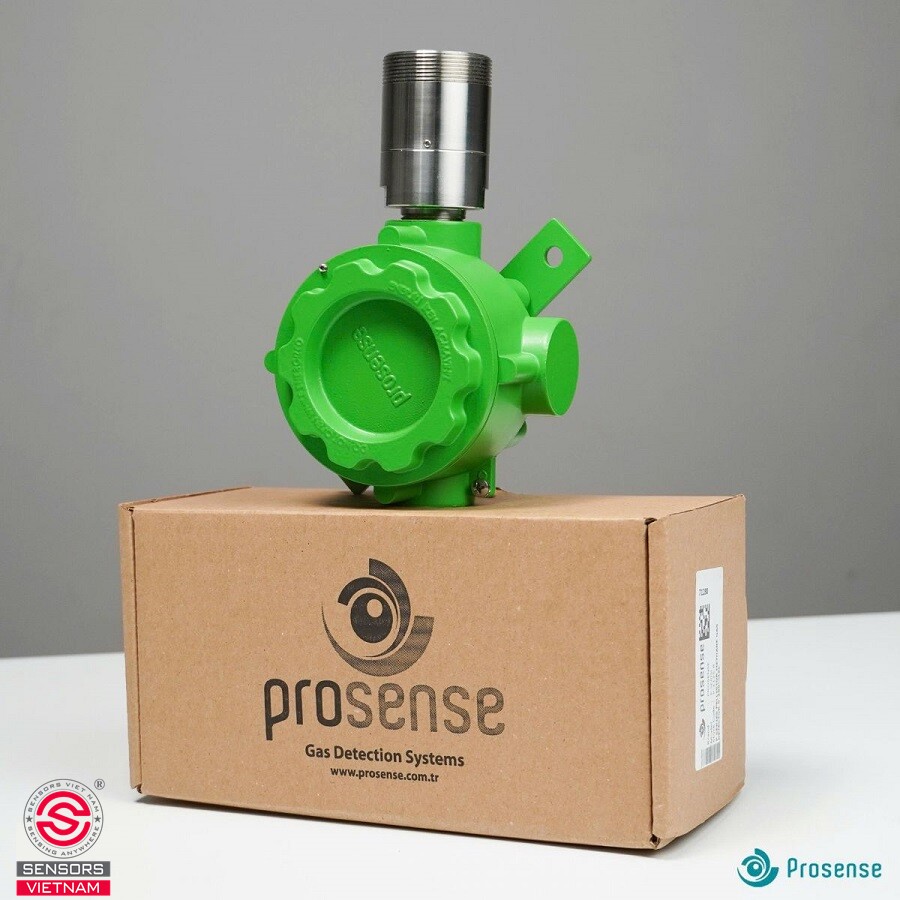
TWO COMMON CH4 GAS SENSOR TECHNOLOGIES
Currently, industrial CH4 gas sensors are mainly based on two technologies: catalytic sensors and infrared sensors.
Catalytic gas sensors operate based on the oxidation of methane on a heated catalytic surface. When CH4 is present, the reaction generates heat, which changes the electrical resistance and allows the sensor to determine gas concentration. This technology offers advantages such as low cost, fast response, and proven reliability in harsh industrial environments.
However, catalytic sensors can be poisoned by substances such as silicon, sulfur, or halogen compounds. In addition, they require oxygen to function, making them unsuitable for oxygen-deficient environments.
 SEE MORE: NH3 SENSOR IN LIVESTOCK FARMING
In contrast, infrared sensors (NDIR) work by measuring the absorption of infrared light by methane molecules. The concentration is determined based on how much light is absorbed at a specific wavelength. This technology does not depend on oxygen, is resistant to poisoning, and has a significantly longer lifespan.
Although the initial cost is higher, NDIR sensors provide superior stability and long-term reliability, especially in critical applications such as enclosed tanks, tunnels, and biogas systems.

SEE MORE: H2 SENSOR IN LITHIUM FACTORY
INDUSTRIAL APPLICATIONS OF CH4 GAS SENSOR
In coal mining, methane is naturally present in geological formations and can accumulate rapidly in confined spaces. Therefore, sensor systems must meet explosion-proof standards such as ATEX or IECEx and be capable of automatically triggering ventilation or power shutdown in hazardous conditions.
In the oil and gas industry, methane flows through complex pipeline systems. Sensors are typically installed at high-risk leakage points and integrated into SCADA systems for continuous monitoring.
In buildings and underground parking areas, methane tends to rise because it is lighter than air. Therefore, sensors should be installed near the ceiling for accurate detection.
In biogas systems, sensors not only ensure safety but also help optimize production efficiency by monitoring methane concentration.
In residential applications, gas sensors detect leaks and automatically shut off gas valves, reducing risks caused by human error.

SEE MORE: APPLICATION OF GAS SENSOR IN INDUSTRY
KEY CONSIDERATIONS WHEN CHOOSING A CH4 GAS SENSOR
When selecting a CH4 gas sensor, the first important factor is choosing the correct measurement unit. Sensors typically display readings in %LEL or %VOL depending on the application.
Resolution, response time, and signal stability directly affect early detection capability. In addition, explosion-proof certification is mandatory for hazardous environments.
Sensor lifespan and output options such as 4–20 mA or RS485 should also be considered to ensure compatibility with control systems.
1. Proper Installation of CH4 gas sensors
Because methane is lighter than air, sensors should be installed at high positions near the ceiling. In addition, placing the sensor along airflow direction ensures faster detection in case of leaks.
Avoid installing sensors near strong airflow sources, as this may dilute gas concentration around the sensor head. In large systems such as mines, installation positions should be carefully calculated based on airflow patterns rather than simply increasing the number of sensors.
2. Maintenance and calibration of CH4 gas sensors
Regular calibration is essential to ensure accuracy. Catalytic sensors require more frequent calibration due to poisoning risks, while NDIR sensors have longer intervals but still need periodic checks.
After major gas leak incidents, recalibration is necessary to maintain reliable performance.

SELECTING CH4 SENSOR IN SENSORS VIETNAM - THE LEADING SENSOR DISTRIBUTOR IN VIETNAM
Sensors Vietnam provides both catalytic and infrared CH4 gas sensors suitable for various applications including industrial systems, oil and gas, biogas, and residential use. All products come with full CO/CQ certification, a 12-month warranty with replacement policy, and technical support from experienced engineers.
If you are looking for reliable CH4 gas sensor solutions, contact Sensors Vietnam today for consultation and fast support.
Hot news





SENSORS VIETNAM CO., LTD
VAT CODE: 0313 355 473
Head Office: 03rd Floor, Indochina Tower, 04 Nguyen Dinh Chieu, Tan Dinh Ward, Ho Chi Minh City, Vietnam.
HCM Branch: 92/14/9A Vuon Lai Str., An Phu Dong Ward, Ho Chi Minh City, Vietnam.
Hanoi Branch: S106 Tower, Vinhomes Smart City, Tay Mo Ward, Hanoi City, Vietnam.

® Registered trademark – National Office of Intellectual Property Vietnam
OUR SERVICES
Specializing in the import and distribution of industrial sensors.
Sensors for HVAC/R systems and building automation applications.
Supplying gauges, transmitters, switches, controllers, PLCs, HMIs, and gas detectors.
Providing integrated consulting services for sensor and controller systems.


CONTACT US
Email: sales(at)sensors.vn
Hotline: +84 0911 660 660
Asia Commercial Bank Account (ACB):
VND: 357 246 888 | USD: 1357 246 888
Support Online ZALO Official Account
(From 8:00 am to 5:00 pm)





SENSORS VIETNAM CO., LTD
- Specialized in the import and distribution of sensors and controllers.
- Integrated data acquisition systems and industrial communication solutions.
- Design and installation of smart home systems and industrial equipment.
- Stack lights, signal beacons, LED warning horns, and RGB warning lights.