




CUSTOMER SERVICE
www.sensors.vn
Admin@sensors.vn
www.cambien.com.vn
AMMONIA SENSOR
Date 23/Oct/2025 at 10:28 AM - View: 207
Ammonia (NH3) is a colorless gas with a distinct pungent odor, composed of nitrogen and hydrogen. It is a naturally occurring compound found widely in the environment — including soil, water, and air. Ammonia plays a vital role in the nitrogen cycle, where microorganisms break down organic matter to release nitrogen-containing compounds essential for life.
In the industrial sector, ammonia is one of the most widely produced and utilized chemicals worldwide, used in fertilizers, cleaning agents, refrigeration systems, and various industrial processes. However, due to its high toxicity and corrosive nature, exposure to ammonia poses serious risks to human health and the environment, making accurate monitoring and control essential for safety.
What is a Ammonia Gas Sensor ?
To ensure safety in workplaces and industrial operations, an ammonia gas sensor (NH3 sensor) is used to detect and measure ammonia concentration in the air. These devices provide early warnings when ammonia levels exceed permissible limits, helping prevent toxic gas leaks and protect workers’ health.
NH3 gas sensors are widely used in chemical plants, refrigeration systems, wastewater treatment facilities, and agricultural environments, offering high accuracy, fast response, and reliable performance even in harsh conditions.
Working Principle of Ammonia Gas Sensors
An ammonia gas sensor operates by detecting changes in the chemical or physical properties of the sensing material when exposed to ammonia gas (NH3). When ammonia molecules interact with the sensing surface, the resulting reaction is converted into an electrical signal that can be measured and displayed as gas concentration.
Depending on the sensing technology used, ammonia sensors can operate based on different detection principles, including:
Electrochemical sensors: Measure the electric current generated from oxidation–reduction reactions between ammonia and the electrode, providing high precision and sensitivity.
Semiconductor (Metal Oxide) sensors: Detect changes in electrical conductivity of metal oxides (e.g., SnO2) upon exposure to NH3, suitable for continuous industrial monitoring.
Optical sensors: Identify variations in light absorption or reflection when ammonia interacts with the sensing layer.
Photoacoustic and NDIR sensors: Use specific infrared wavelengths to detect ammonia absorption or acoustic signals, ensuring long-term accuracy and stability.
Electrochemical Ammonia Sensor
The electrochemical ammonia sensor operates by oxidizing or reducing NH3 molecules at the electrode surface, generating a current directly proportional to the ammonia concentration in the environment. This current is processed and converted into a measurable signal, allowing for fast and accurate gas detection.
With high selectivity, low power consumption, and a linear response over a wide concentration range, electrochemical sensors are ideal for demanding applications that require precision and reliability.
Typical applications: industrial environmental monitoring, confined space detection, gas treatment facilities, and portable ammonia detectors.
Semiconductor Ammonia Sensor (MOS – Metal Oxide Semiconductor)
Semiconductor ammonia sensors (MOS) use metal oxide materials such as tin dioxide (SnO2) or zinc oxide (ZnO). When exposed to ammonia gas, the electrical resistance of the sensing layer changes, and this variation is converted into an electrical signal corresponding to the NH3 concentration.
These sensors are known for their robust design, long-term stability, and suitability for continuous monitoring. Thanks to their reliability, MOS sensors are widely integrated into systems that require automated, continuous ammonia detection.
Common applications: smart agriculture, gas leak detection, refrigeration systems, and industrial air quality monitoring.
Optical Ammonia Sensor
Optical ammonia sensors detect ammonia concentrations based on interactions between light and NH3 molecules. When light passes through or reflects off a sample containing ammonia, the changes in light intensity or wavelength are analyzed and converted into quantitative readings.
Common optical technologies include:
- UV/Vis absorption: measures changes in ultraviolet or visible light absorption in the presence of NH3.
- Infrared spectroscopy (IR): identifies ammonia’s unique infrared absorption characteristics.
- Colorimetric sensing: uses chemical dyes that change color when reacting with NH3, allowing for quick and visual detection.
With high sensitivity and non-invasive measurement capability, optical sensors are often used in laboratories, environmental monitoring, and advanced gas analysis systems.
Photoacoustic and NDIR Ammonia Sensors
Photoacoustic and Non-Dispersive Infrared (NDIR) ammonia sensors detect NH3 based on its characteristic infrared absorption spectrum. When infrared light at specific wavelengths interacts with ammonia molecules, part of the energy is absorbed, generating a measurable signal.
In photoacoustic sensors, modulated infrared light causes ammonia molecules to produce pressure fluctuations (sound waves) upon absorption. These acoustic signals are detected by sensitive microphones and converted into gas concentration values.
NDIR sensors, on the other hand, use an infrared light source, an optical chamber, and wavelength filters to precisely measure light absorption without direct gas contact.
Thanks to their high accuracy, long-term stability, and minimal cross-sensitivity, Photoacoustic and NDIR technologies are widely used in environmental monitoring, chemical plants, laboratories, and industrial exhaust control systems.
Applications of Ammonia Gas Sensors
Agriculture and Livestock Management
Ammonia (NH3) is a major pollutant in livestock environments, particularly in poultry and pig farms, where it is generated from the breakdown of urea in animal waste. Monitoring ammonia concentration using sensors helps ensure animal welfare, prevent respiratory diseases in both animals and workers, and improve overall farm productivity. Ammonia sensors are often integrated into automated ventilation and air quality monitoring systems, providing real-time data for environmental control and optimized livestock housing conditions.
Industrial Safety
In industries that produce or use ammonia — such as chemical manufacturing, fertilizer production, and wastewater treatment — continuous monitoring is critical for ensuring workplace safety. Ammonia gas detectors help identify leaks early, protect workers from toxic exposure, and maintain compliance with industrial safety regulations. Both fixed gas detection systems and portable NH3 detectors are commonly deployed to prevent exposure incidents and occupational hazards in high-risk environments.
Industrial Refrigeration Systems
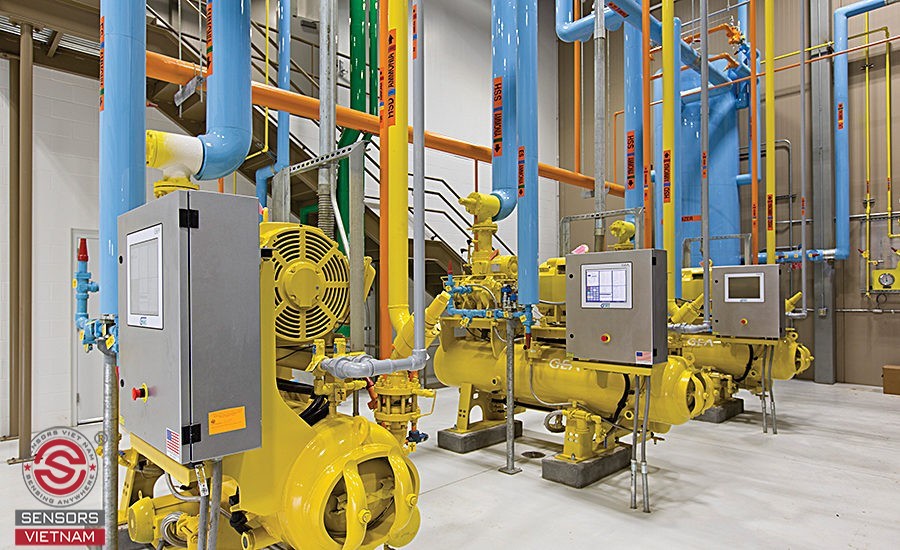
Ammonia (R-717) is an efficient, eco-friendly natural refrigerant used in large-scale cooling and refrigeration systems. However, due to its toxic and corrosive properties, continuous leak monitoring is essential. Ammonia sensors in refrigeration systems are designed to detect gas leaks early, prevent compressor failures, and ensure compliance with international safety standards such as IIAR and OSHA.
Environmental Monitoring and Research
Ammonia is a key air pollutant contributing to fine particulate matter (PM2.5) formation and eutrophication of water bodies. Environmental agencies and research institutions use ammonia sensors to monitor air quality, study agricultural and industrial emissions, and assess ammonia’s impact on climate change.
Ammonia gas sensors (NH3 sensors) play a critical role in environmental protection, industrial safety, and process efficiency across diverse applications. From agriculture and manufacturing to refrigeration and air quality management, these sensors provide reliable detection, accurate measurement, and proactive leak prevention.
Sensors Vietnam is a leading importer and distributor of industrial sensors and automation equipment in Vietnam. For consultation and quotation on ammonia gas sensors, please contact Sensors Vietnam
E2618-NH3-E100-W-24VDC – Ammonia (NH3) Gas Sensor Evikon
Measuring range: 0–100 ppm
Output: 2 × 4–20 mA / 0–10 V, RS485 user settable
Power supply: 24VDC
E2638-NH3-E1000-W-24VDC – Ammonia (NH3) Gas Sensor Evikon
Measuring range: 0–1000 ppm
Output: 2 × 4–20 mA / 0–10 V, RS485 user settable
Power supply: 24VDC
E2618-NH3-E1000-W-24VDC – Ammonia (NH3) Gas Sensor Evikon
Measuring range: 0–1000 ppm
Output: 2 × 4–20 mA / 0–10 V, RS485 user settable
Power supply: 24VDC
E2638-NH3-E1000-CP-RP33-3-24VDC – Ammonia (NH3) Gas Sensor Evikon
Measuring range: 0–1000 ppm
Resolution: 1 ppm
Output: 4–20 mA / 0–10 V, user settable
RS485 communication, Modbus RTU protocol
Remote probe with 3-meter cable
For more information: https://cambien.com.vn/cam-bien-khi-nh3
Hot news


SENSORS VIETNAM CO., LTD
VAT CODE: 0313 355 473
Head Office: 03rd Floor, Indochina Tower, 04 Nguyen Dinh Chieu, Tan Dinh Ward, Ho Chi Minh City, Vietnam.
HCM Branch: 92/14/9A Vuon Lai Str., An Phu Dong Ward, Ho Chi Minh City, Vietnam.
Hanoi Branch: S106 Tower, Vinhomes Smart City, Tay Mo Ward, Hanoi City, Vietnam.

® Registered trademark – National Office of Intellectual Property Vietnam
OUR SERVICES
Specializing in the import and distribution of industrial sensors.
Sensors for HVAC/R systems and building automation applications.
Supplying gauges, transmitters, switches, controllers, PLCs, HMIs, and gas detectors.
Providing integrated consulting services for sensor and controller systems.


CONTACT US
Email: sales(at)sensors.vn
Hotline: +84 0911 660 660
Asia Commercial Bank Account (ACB):
VND: 357 246 888 | USD: 1357 246 888
Support Online ZALO Official Account
(From 8:00 am to 5:00 pm)





SENSORS VIETNAM CO., LTD
- Specialized in the import and distribution of sensors and controllers.
- Integrated data acquisition systems and industrial communication solutions.
- Design and installation of smart home systems and industrial equipment.
- Stack lights, signal beacons, LED warning horns, and RGB warning lights.