






CUSTOMER SERVICE
www.sensors.vn
Admin@sensors.vn
www.cambien.com.vn
INTRODUCTION TO ON/OFF DAMPER ACTUATOR
Date 06/Jul/2026 at 11:41 AM - View: 10
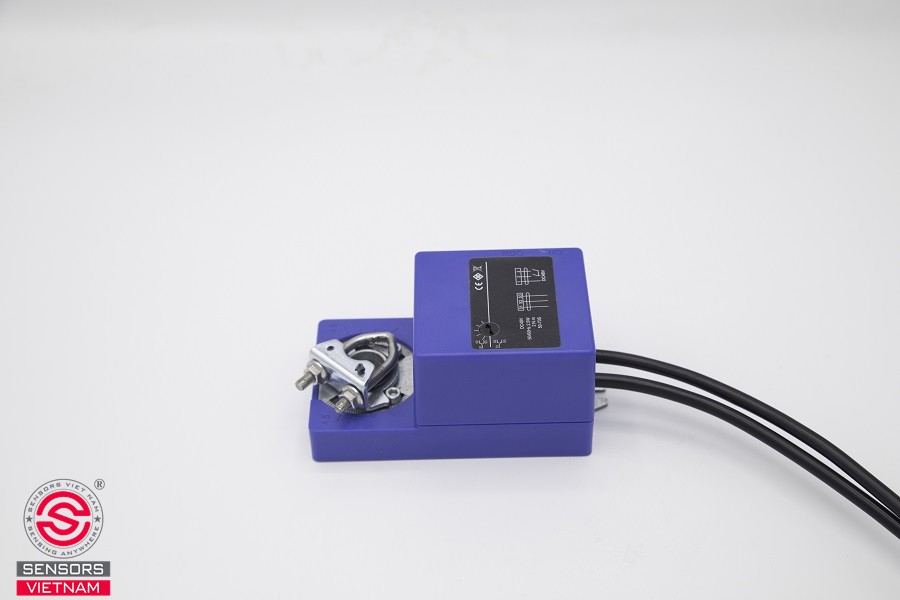
In HVAC systems, a damper actuator is responsible for controlling the opening angle of an air damper, thereby regulating airflow throughout the duct system. Among the various actuator types available today, the ON/OFF damper actuator remains one of the most widely used due to its simple operating principle, reliable performance, and cost-effectiveness.
This article explains what an ON/OFF damper actuator is, how it differs from other actuator types, and its advantages, limitations, and ideal HVAC applications.
Overview of damper actuators
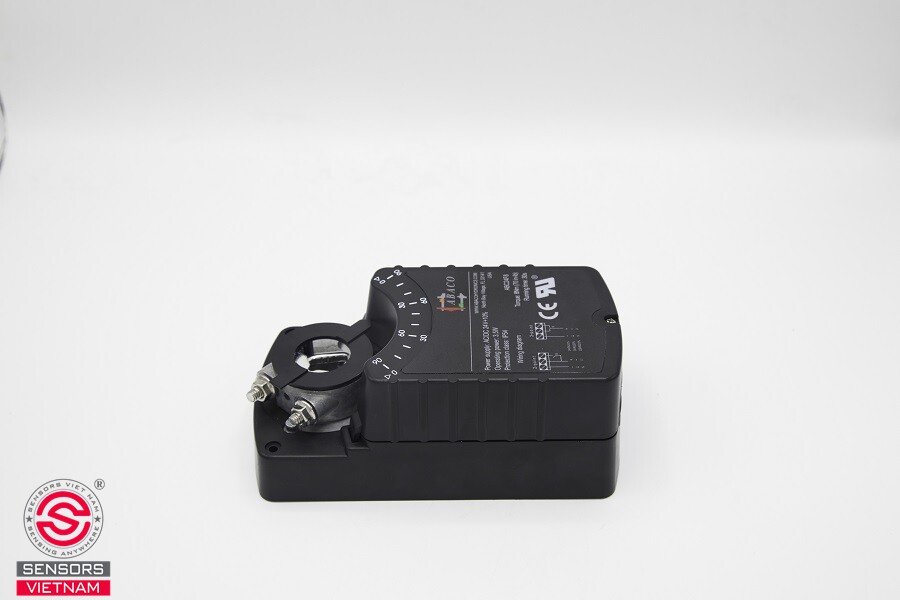
A damper actuator is a motorized device mounted directly onto the shaft of an HVAC damper. Its primary function is to rotate the damper blades to a predetermined angle, controlling the volume of air flowing through the ductwork. By regulating airflow, the actuator helps maintain the desired air pressure, temperature, ventilation rate, and indoor air quality throughout the building.
The actuator receives control signals from a Building Management System (BMS) or a dedicated HVAC controller and converts those electrical signals into mechanical movement to open, close, or position the damper.
Based on their control method, damper actuators are generally classified into four main categories:
- ON/OFF damper actuators - Operate in only two positions: fully open or fully closed.
- Modulating damper actuators - Continuously adjust the damper position in response to analog control signals such as 0-10 VDC or 4-20 mA.
- Spring return damper actuators - Automatically drive the damper to a predetermined fail-safe position during a power failure.
- Fire damper actuators - Designed for high-temperature operation and used with fire and smoke dampers in life-safety systems.
Each actuator type offers different control capabilities, installation costs, and application ranges. Among them, the ON/OFF damper actuator is considered the most economical solution for HVAC systems that do not require precise airflow modulation.
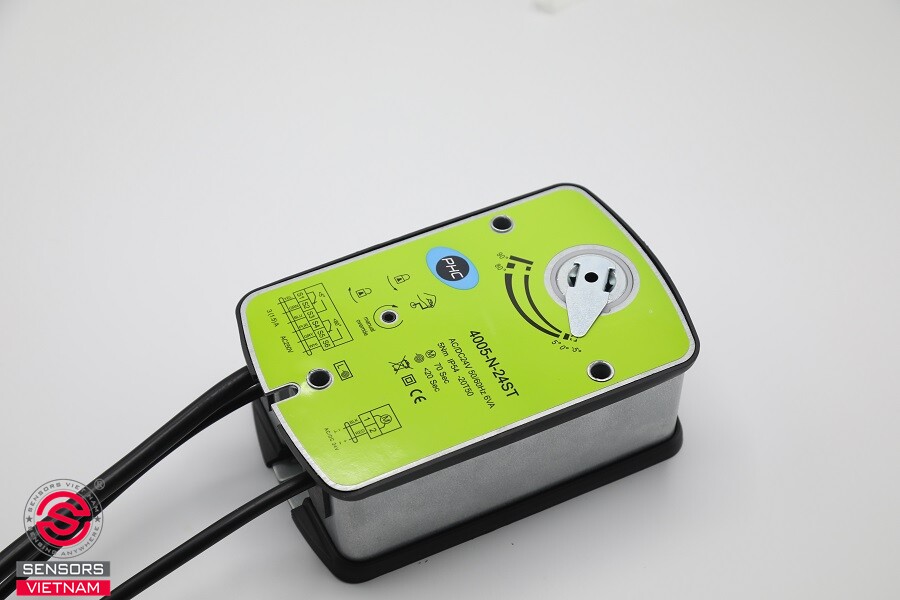 What is an ON/OFF damper actuator?
An ON/OFF damper actuator is a motorized actuator designed to operate in only two positions:
- Fully Closed (0°)
- Fully Open (90°)
Unlike modulating actuators, it cannot stop at intermediate positions to regulate airflow incrementally.
When electrical power is applied, the actuator rotates the damper shaft to the fully open position. Once the control signal is removed, the actuator returns the damper to the fully closed position (or remains in its last position, depending on the actuator design).
Most ON/OFF damper actuators operate using common HVAC supply voltages such as: 24 VAC or 230 VAC. Control is typically achieved through a simple relay contact or standard switching device.
Because the actuator uses binary control rather than analog positioning, it requires no sophisticated controller or signal converter, making installation straightforward and reducing overall system costs.
ON/OFF damper actuator vs. Other Types
- ON/OFF vs. Modulating damper actuator
The primary difference lies in positioning capability.
An ON/OFF actuator moves only between the fully closed and fully open positions.
A modulating actuator, by contrast, can stop at any angle between 0° and 90°, continuously adjusting airflow according to analog input signals from the HVAC control system.
As a result:
- ON/OFF actuators are ideal for applications where airflow simply needs to be enabled or disabled.
- Modulating actuators are preferred wherever airflow must be precisely regulated.
Because of their simpler electronics and control circuitry, ON/OFF actuators are generally much more affordable than modulating models.
- ON/OFF vs. Spring return damper actuator
A spring return actuator is not a separate control type but rather a fail-safe feature that can be incorporated into either ON/OFF or modulating actuators.
The key distinction is the actuator's behavior during a power outage.
A standard ON/OFF actuator without spring return typically remains in its last operating position when power is lost.
A spring return actuator, however, automatically drives the damper to its designated fail-safe position, either fully open or fully closed, using stored spring energy.
This feature is essential in applications involving: Smoke control, fire safety systems, emergency ventilation and critical airflow management.
- ON/OFF vs. Fire damper actuator
Fire damper actuators are specifically engineered for life-safety applications.
Compared with standard ON/OFF actuators, they feature:
- High-temperature-resistant construction
- Heat-resistant materials
- Integrated spring return mechanisms
- Compliance with fire protection standards
These actuators are designed to operate fire and smoke dampers during emergency conditions.
By contrast, a standard ON/OFF damper actuator is intended for normal HVAC operating temperatures and is not designed to function during fire events.
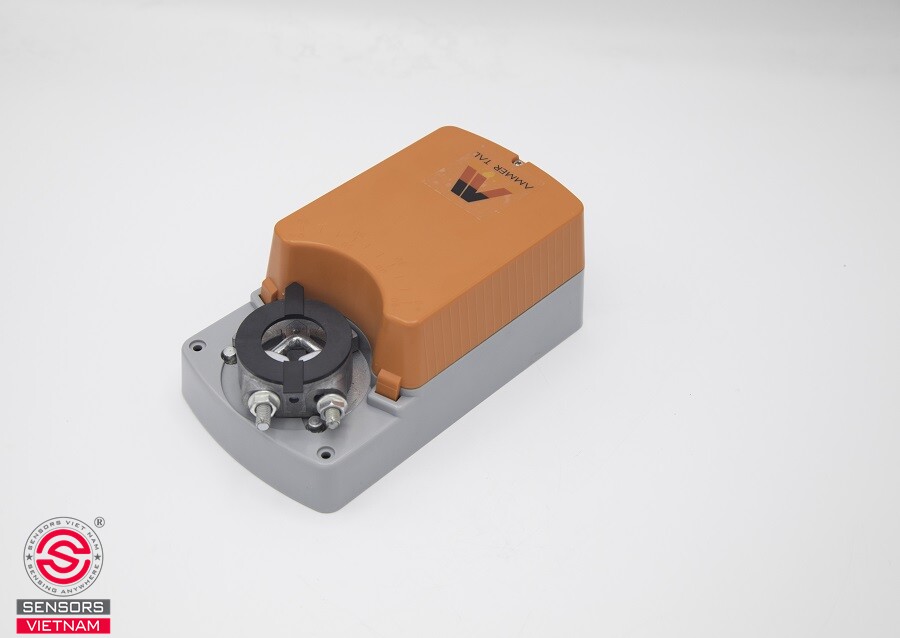 When should you choose an ON/OFF damper actuator?
An ON/OFF damper actuator is the best choice for HVAC systems where continuous airflow modulation is unnecessary.
Typical applications include:
- Basement ventilation systems activated by carbon monoxide (CO) sensors
- Industrial kitchen exhaust systems operating on fixed schedules
- Warehouse ventilation
- Utility rooms and service areas
- General exhaust or fresh air systems requiring simple open/close control
For facilities requiring highly accurate environmental control such as cleanrooms, operating theaters, pharmaceutical manufacturing plants, laboratories, or data centers, a modulating damper actuator is generally the preferred solution because it provides continuous airflow adjustment and superior control accuracy.
The ON/OFF damper actuator is a practical, reliable, and economical solution for HVAC systems that require straightforward open/close airflow control rather than continuous modulation. Its simple design, ease of installation, and low maintenance requirements make it a popular choice across commercial, industrial, and institutional buildings.
 Selecting the appropriate actuator should always be based on the control requirements of the HVAC system. Where precise airflow regulation, pressure control, or intelligent building automation is required, a modulating actuator may provide significantly better long-term performance.
If you are looking for high-quality damper actuators for your HVAC project, the technical team at Sensors Vietnam can provide expert product selection, engineering support, and fast delivery to meet your project requirements.
Hot news


SENSORS VIETNAM CO., LTD
VAT CODE: 0313 355 473
Head Office: 03rd Floor, Indochina Tower, 04 Nguyen Dinh Chieu, Tan Dinh Ward, Ho Chi Minh City, Vietnam.
HCM Branch: 92/14/9A Vuon Lai Str., An Phu Dong Ward, Ho Chi Minh City, Vietnam.
Hanoi Branch: S106 Tower, Vinhomes Smart City, Tay Mo Ward, Hanoi City, Vietnam.

® Registered trademark – National Office of Intellectual Property Vietnam
OUR SERVICES
Specializing in the import and distribution of industrial sensors.
Sensors for HVAC/R systems and building automation applications.
Supplying gauges, transmitters, switches, controllers, PLCs, HMIs, and gas detectors.
Providing integrated consulting services for sensor and controller systems.


CONTACT US
Email: sales(at)sensors.vn
Hotline: +84 0911 660 660
Asia Commercial Bank Account (ACB):
VND: 357 246 888 | USD: 1357 246 888
Support Online ZALO Official Account
(From 8:00 am to 5:00 pm)





SENSORS VIETNAM CO., LTD
- Specialized in the import and distribution of sensors and controllers.
- Integrated data acquisition systems and industrial communication solutions.
- Design and installation of smart home systems and industrial equipment.
- Stack lights, signal beacons, LED warning horns, and RGB warning lights.