






CUSTOMER SERVICE
www.sensors.vn
Admin@sensors.vn
www.cambien.com.vn
NTC THERMISTOR PROBE
Date 06/May/2023 at 03:26 PM - View: 15475

What Is An NTC Thermistor
Thermistors are temperature-sensing elements made of semiconductor material that has been sintered in order to display large changes in resistance in proportion to small changes in temperature.
This resistance can be measured by using a small and measured direct current, or dc, passed through the thermistor in order to measure the voltage drop produced. These solid state temperature sensors actually act like electrical resistors that are temperature sensitive. That is where the name, a clear combination of the words thermal and resistor, comes from.
When to Use NTC Thermistor Probes and Why It’s Necessary
NTC Thermistor Probes for green energy and automotive applications
NTC Thermistor Probes Have Endless Applications
NTC thermistor probes measure liquid levels and temperature in industries that extend from automotive electronics to medical technology to green energy. Their applications are endless, and their purpose ensures the operability of the applications they serve.
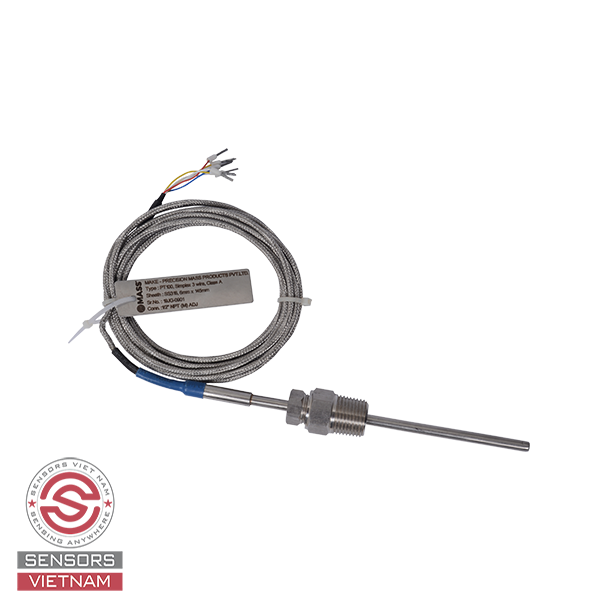
A thermistor probe, can also be as simple as an NTC thermistor chip, encapsulated with epoxy or glass. Or, it can be potted in a metal or plastic housing with two high-temperature insulated wire leads.
These NTC thermistors are in all the places that we live and work, from the moment we wake up and make coffee until the end of the day when we arrive home and relax in front of the television. They are indispensable to the cars we drive to work, the computers necessary to do our jobs, and the appliances we use to prepare food at the end of the day.
Understanding temperature sensing probes and their applications
It is essential to understand how NTC thermistor probes operate, in what capacity, and what their potential is. Part of this understanding includes the electrical properties of probes that abide by certain operating principles, including electrical resistance, responsiveness, and pressure and thermal conductivity.
Given their pervasiveness and range of applications, and despite many thermistor sizes and shapes, it is impossible to manufacture a universal NTC thermistor probe assembly. Temperature sensors used in automobiles are different from the temperature sensors used in wind turbines.
Thermistor probes in automotive innovation
Thermistor probes help maintain an ideal temperature while electric cars charge. Without thermistor temperature sensing probes, many automobiles, appliances, industrial equipment, and anything that requires feedback control would not function properly, or at all. Engineers depend on these NTC thermistor sensors as a design consideration for any product that generates energy, hot or cold, and requires temperature measurement, compensation, and control.
In 1966, automotive vehicles used around two thermistors per unit. This number grew to 60 thermistors per unit in the 90s, and today there are between 80 to 100 NTC thermistors in one vehicle. The exponential increase in temperature sensing devices parallels the complexity and refinement of technology. As automotive technology has increased and improved, so has the demand for temperature sensors. Car seat heaters, air conditioners, window defrosters, and oil temperature gauges require detection, regulation, and temperature control. Now, as electric vehicles become more common, NTC thermistors are used more than ever. Li-ion batteries in cars have become much more economical in the last 7-10 years. Thermistors are vital for maintaining an ideal battery temperature during the charge and discharge cycle. Improving technology allows for more features and processes requiring accurate and reliable temperature sensing. For example, thermostats previously measured coolant temperature and controlled the cabin climate; today, thermistors have replaced thermostats as thermistors are faster, more accurate, and more reliable. NTC sensors can also detect oil levels and viscosity, alerting the driver when it needs to be changed.
Medical Technology
Today, especially during Covid-19, thermistor probes have a crucial role in medical technology. Ventilators are machines that help patients breathe. In a healthy person, the inside of the nose and mouth warms and humidifies the air we breathe to body temperature, roughly 37°C. When a patient is in respiratory failure, like seen with the coronavirus, a ventilator does the breathing for them. A temperature sensor must be accurate, sensitive, and responsive for such a task. A discrete temperature sensor analyzes the air temperature and sends signals to the respirator, ensuring the airflow is appropriate.
Thermistors also have a role in cardiac output assessments. A thermistor probe makes up the tip of a Swan-Ganz catheter. After injecting a cold solution into the bloodstream, doctors use the thermistor to detect blood temperature changes. Doctors can calculate the amount of blood pumped by the heart within a specific time frame. Again, the temperature sensing device must be incredibly accurate to detect the minuscule changes in temperature.
Green energy
Green energy is an area where the use of thermistor probes is making great strides. In 2007, a team in Japan used an NTC Thermistor to create a better braking system for small wind turbines. The traditional breaking circuit damages the turbine’s rotors and the generator’s windings through a short-circuit current. Using an NTC thermistor in the breaking circuit was safer and more cost-effective.
Hot news





SENSORS VIETNAM CO., LTD
VAT CODE: 0313 355 473
Head Office: 03rd Floor, Indochina Tower, 04 Nguyen Dinh Chieu, Tan Dinh Ward, Ho Chi Minh City, Vietnam.
HCM Branch: 92/14/9A Vuon Lai Str., An Phu Dong Ward, Ho Chi Minh City, Vietnam.
Hanoi Branch: S106 Tower, Vinhomes Smart City, Tay Mo Ward, Hanoi City, Vietnam.

® Registered trademark – National Office of Intellectual Property Vietnam
OUR SERVICES
Specializing in the import and distribution of industrial sensors.
Sensors for HVAC/R systems and building automation applications.
Supplying gauges, transmitters, switches, controllers, PLCs, HMIs, and gas detectors.
Providing integrated consulting services for sensor and controller systems.


CONTACT US
Email: sales(at)sensors.vn
Hotline: +84 0911 660 660
Asia Commercial Bank Account (ACB):
VND: 357 246 888 | USD: 1357 246 888
Support Online ZALO Official Account
(From 8:00 am to 5:00 pm)





SENSORS VIETNAM CO., LTD
- Specialized in the import and distribution of sensors and controllers.
- Integrated data acquisition systems and industrial communication solutions.
- Design and installation of smart home systems and industrial equipment.
- Stack lights, signal beacons, LED warning horns, and RGB warning lights.