






CUSTOMER SERVICE
www.sensors.vn
Admin@sensors.vn
www.cambien.com.vn
ROOM TEMPERATURE SENSOR
Date 12/Mar/2026 at 02:47 PM - View: 70
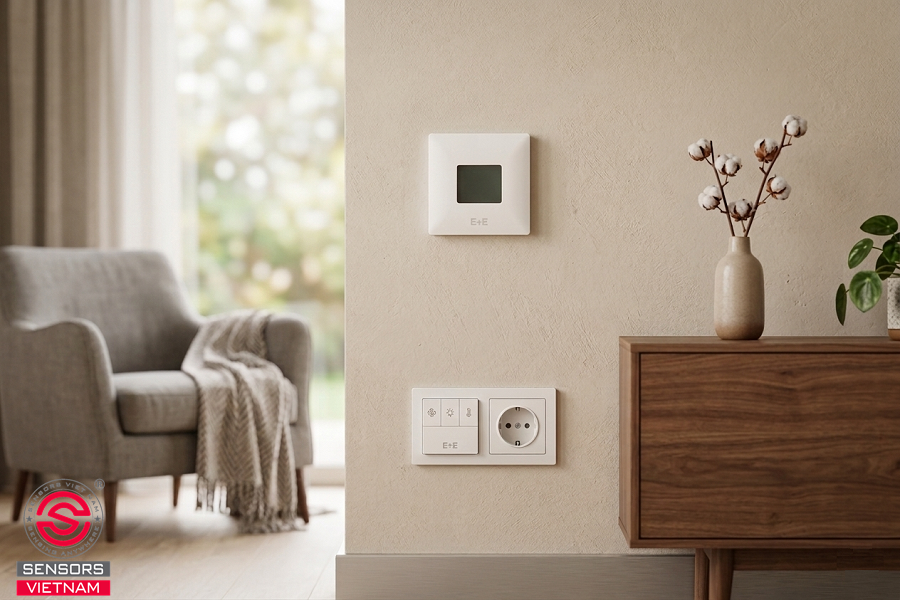
Room temperature is a critical operational parameter that directly affects system performance, energy consumption, and indoor comfort. To accurately monitor and control indoor temperature, HVAC systems rely on room temperature sensors - input devices that collect real-time temperature data and transmit signals to the central controller.
In this article, we will explore what a room temperature sensor is, how it works, the ideal indoor temperature range for human comfort, and its role in modern HVAC systems.
What is a room temperature sensor?
A room temperature sensor is a device designed to measure the air temperature inside enclosed spaces such as offices, technical rooms, equipment rooms, or living areas within buildings. The sensor is typically wall-mounted at a representative location to accurately monitor the indoor environment.
In HVAC systems, the sensor collects real-time temperature data and sends signals to control devices such as thermostats, PLCs, DDC controllers, or building management systems (BMS).
The temperature data from the sensor is used to:
- Adjust cooling or heating capacity
- Control airflow in ventilation systems
- Maintain room temperature according to the setpoint value
By continuously monitoring indoor conditions, HVAC systems can operate efficiently while maintaining a comfortable environment for occupants.
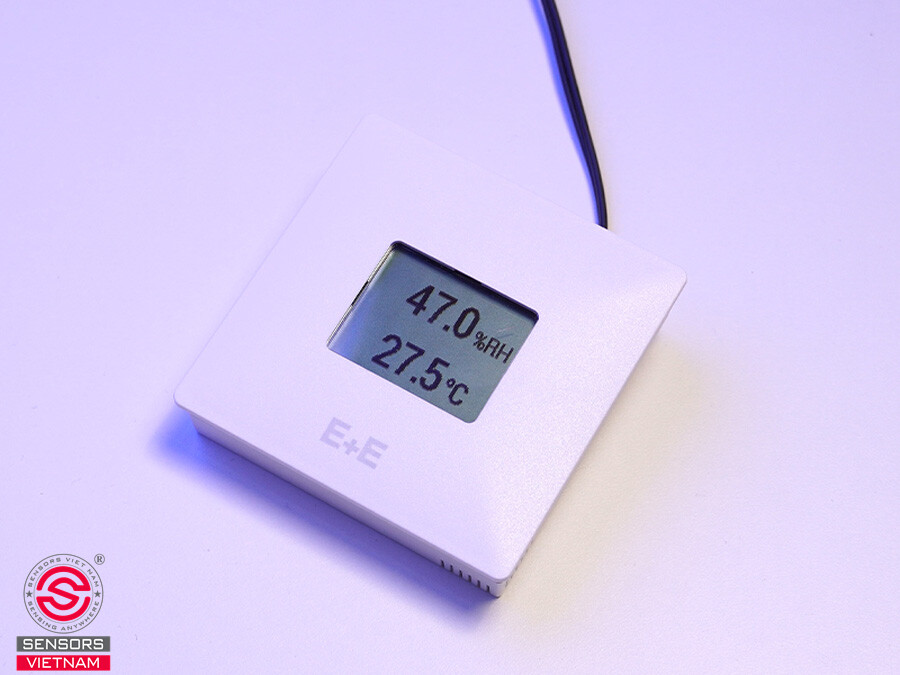
Working principle of a room temperature sensor
A room temperature sensor operates by converting changes in ambient temperature into electrical signals, enabling monitoring and control within HVAC systems.
When the air temperature inside a room changes, the sensing element inside the sensor reacts by altering its electrical characteristics. The internal electronic circuitry processes this change and converts it into a standardized output signal.
In HVAC applications, the two most common sensing elements are:
RTD (Resistance temperature detector)
RTD sensors use metal elements, typically platinum, whose electrical resistance changes in response to temperature variations. As temperature increases or decreases, the resistance changes proportionally, allowing accurate temperature measurement.
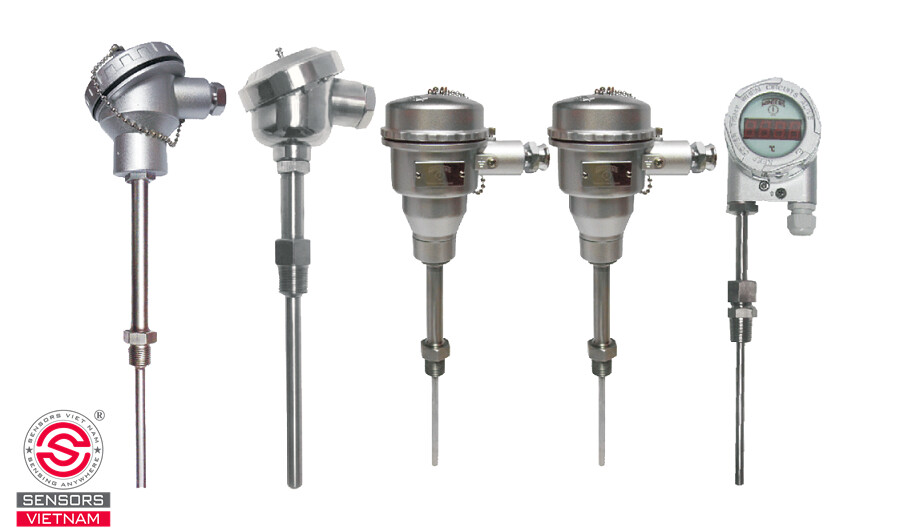
Thermistor
Thermistors are made from semiconductor materials that exhibit highly sensitive resistance changes with temperature. This type of sensor is often used in applications requiring fast response times.
After detecting resistance variations, the sensor converts the measurement into standard output signals such as 4-20 mA and 0-10 VDC
These analog signals allow stable data transmission and are highly resistant to electrical noise in industrial environments.
Modern temperature sensors may also support Modbus RTU (RS-485) communication, enabling digital data transmission directly to PLCs, DDC controllers, or building management systems.
Within the HVAC closed-loop control system, the controller continuously compares the actual temperature measured by the sensor with the predefined setpoint. Based on this comparison, the system adjusts the operation of equipment such as AHU, FCU, chillers, or heating systems to maintain a stable indoor temperature.
Ideal indoor temperature to protect health
According to indoor environmental standards and HVAC operational practices, the optimal room temperature for human comfort typically ranges from 20°C to 25°C. This temperature range allows the human body to maintain thermal balance while minimizing stress on the respiratory and circulatory systems.
In many commercial buildings, indoor temperature settings vary depending on the type of space:
20°C - 22°C: office workspaces and control rooms
22°C - 25°C: living areas, rest zones, or public spaces
For environments with children, elderly occupants, or high occupancy levels, the temperature is often set slightly higher to reduce the risk of thermal shock or dry mucous membranes.
In modern HVAC systems, room temperature sensors continuously monitor indoor conditions and ensure that actual temperature remains close to the designed setpoint, preventing uncomfortable temperature fluctuations.
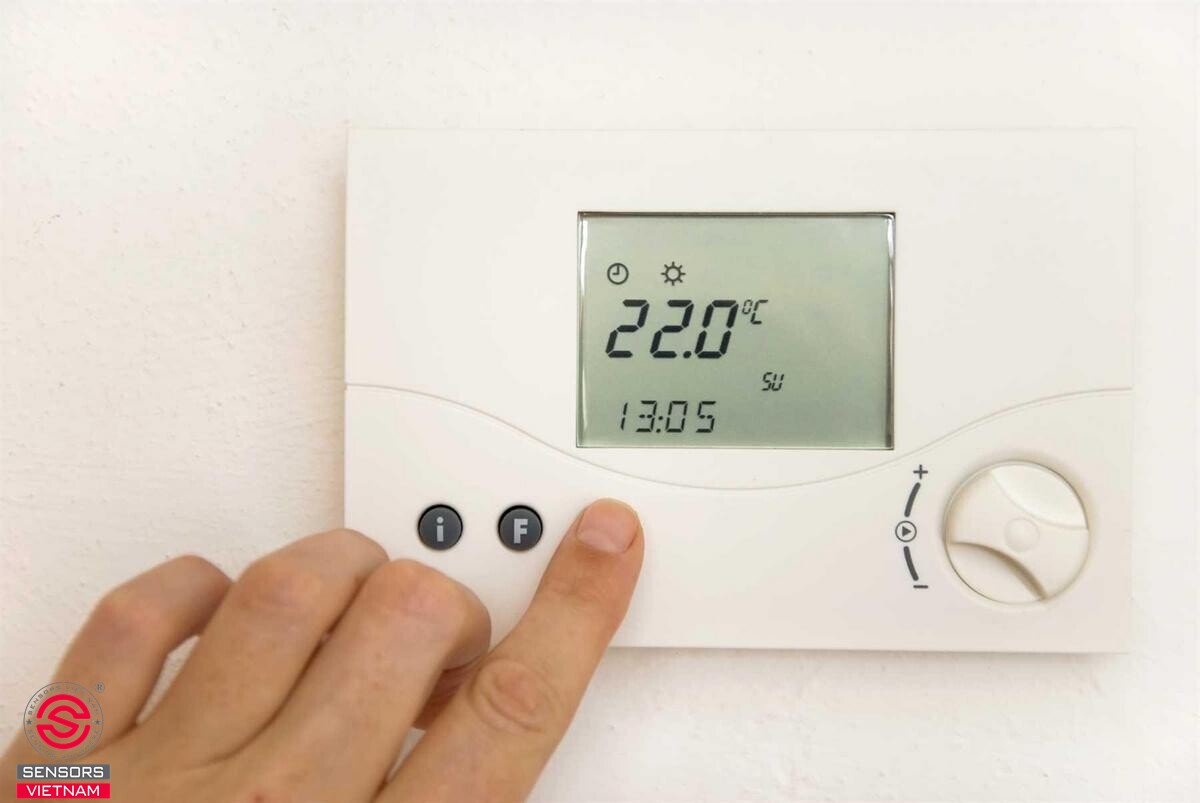
The role of room temperature sensors in HVAC systems
In HVAC systems, industrial room temperature sensors serve more than just temperature display functions. They act as feedback elements within a closed-loop control system.
Temperature data collected by the sensor enables HVAC controllers to:
- Compare real-time temperature with the setpoint
- Analyze actual thermal load in the space
- Adjust the operation of equipment such as chillers, AHU, FCU, or VAV systems
With continuous feedback signals from the sensor, HVAC systems can respond quickly to environmental changes such as:
- Increased occupancy levels
- Heat generated by equipment
- Outdoor weather fluctuations
Timely adjustments help prevent overcooling or overheating, which reduces energy consumption and extends the lifespan of mechanical equipment.
Additionally, room temperature sensors contribute to maintaining stable thermal comfort conditions and improving Indoor Air Quality (IAQ) when integrated with humidity sensors and ventilation systems.
In large-scale facilities such as office buildings, hospitals, or shopping centers, sensors are often installed in different zones to support zoning control strategies. This approach allows HVAC systems to deliver cooling or heating capacity only where needed, improving energy efficiency and system performance.

Practical applications of room temperature sensors
In modern buildings, room temperature sensors are essential components of HVAC and indoor environmental control systems.
They are widely used in:
- Central air conditioning systems in commercial buildings
- HVAC systems in hospitals and cleanrooms
- Shopping malls and mixed-use complexes
- Server rooms, technical rooms, and control centers
In critical environments such as server rooms or control rooms, room temperature sensors continuously monitor temperature conditions to detect overheating early, protect sensitive equipment, and ensure stable system operation 24/7.
These sensors are often integrated directly into Building Management Systems (BMS) through analog signals or industrial communication protocols. Centralized monitoring allows engineers to analyze HVAC performance and optimize energy consumption across the building.

Sensors Vietnam - Leading supplier of room temperature sensors
Sensors Vietnam is a leading supplier of high-quality room temperature sensors from globally recognized manufacturers, providing reliable solutions for residential, commercial, and industrial HVAC systems.
Our products are imported from Europe and meet strict quality standards, ensuring:
- High measurement accuracy
- Long-term operational stability
- Reliable performance in demanding industrial environments
- All products are supplied with full CO/CQ documentation and a warranty of up to 12 months.
Contact Sensors Vietnam today to receive expert consultation and the most suitable room temperature sensing solutions for your HVAC applications.
Hot news


SENSORS VIETNAM CO., LTD
VAT CODE: 0313 355 473
Head Office: 03rd Floor, Indochina Tower, 04 Nguyen Dinh Chieu, Tan Dinh Ward, Ho Chi Minh City, Vietnam.
HCM Branch: 92/14/9A Vuon Lai Str., An Phu Dong Ward, Ho Chi Minh City, Vietnam.
Hanoi Branch: S106 Tower, Vinhomes Smart City, Tay Mo Ward, Hanoi City, Vietnam.

® Registered trademark – National Office of Intellectual Property Vietnam
OUR SERVICES
Specializing in the import and distribution of industrial sensors.
Sensors for HVAC/R systems and building automation applications.
Supplying gauges, transmitters, switches, controllers, PLCs, HMIs, and gas detectors.
Providing integrated consulting services for sensor and controller systems.


CONTACT US
Email: sales(at)sensors.vn
Hotline: +84 0911 660 660
Asia Commercial Bank Account (ACB):
VND: 357 246 888 | USD: 1357 246 888
Support Online ZALO Official Account
(From 8:00 am to 5:00 pm)





SENSORS VIETNAM CO., LTD
- Specialized in the import and distribution of sensors and controllers.
- Integrated data acquisition systems and industrial communication solutions.
- Design and installation of smart home systems and industrial equipment.
- Stack lights, signal beacons, LED warning horns, and RGB warning lights.