






CUSTOMER SERVICE
www.sensors.vn
Admin@sensors.vn
www.cambien.com.vn
TOP 5 GAS SENSOR TECHNOLOGIES
Date 22/Apr/2026 at 05:14 PM - View: 82
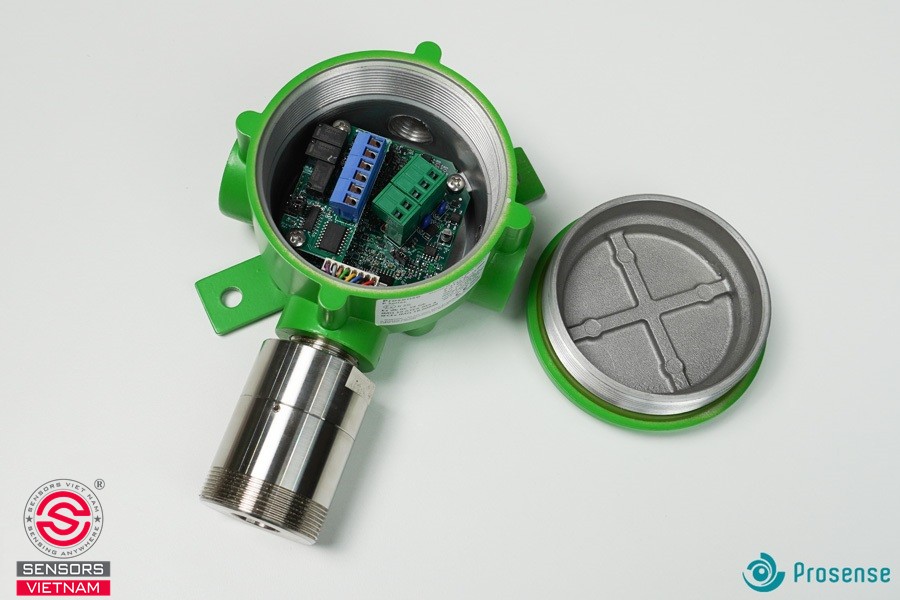
From industrial refrigeration systems to chemical plants, gas sensors serve as the first line of defense against leaks and explosion risks. This article provides a comprehensive analysis of the five core sensing technologies, helping you select the right solution for each application.
WHAT IS A GAS SENSOR?
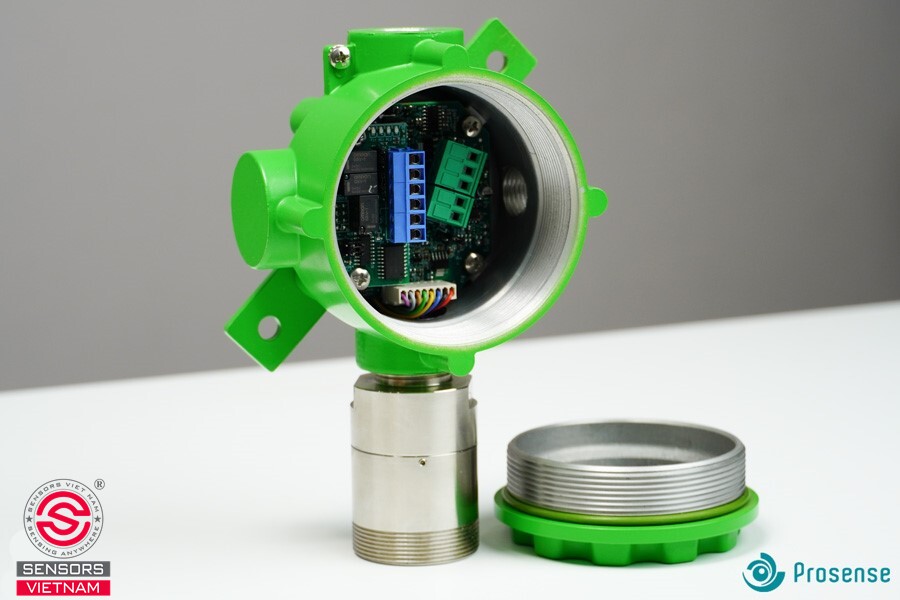
A gas sensor (gas detector) is an electronic device designed to detect, identify, and measure the concentration of specific gases in the surrounding environment. These sensors are capable of accurately quantifying hazardous, colorless, and odorless gases such as CO, H2S, NH3, and CH4.
Fundamentally, a gas sensor acts as a signal transducer: it receives input from chemical or physical changes in the ambient gas and converts them into measurable electrical signals, typically 4-20 mA current, 0-10 V voltage, or digital communication outputs such as RS485/Modbus RTU.
Gas sensor vs. Gas detector (Alarm): A gas sensor provides continuous concentration measurement and transmits real-time data to control systems. In contrast, a gas detector (alarm) typically triggers a binary ON/OFF signal when gas concentration exceeds a predefined threshold. In HVAC and industrial systems, both devices are often used in combination.
GENERAL OPERATING PRINCIPLE OF GAS SENSOR
Despite variations in sensing technologies, all gas sensors follow a standardized four-step signal processing sequence:
- Step 1: Gas exposure
Target gas diffuses through a protective filter and reaches the sensing element. This filter prevents dust, moisture, and contaminants from interfering with measurements.
- Step 2: Physical or chemical reaction
Depending on the sensing technology, the gas undergoes electrochemical reactions, resistance changes, infrared absorption, or ionization. This step determines selectivity and sensor type.
- Step 3: Signal conversion
The internal electronics amplify and process the raw signal, applying temperature and humidity compensation to ensure measurement accuracy.
- Step 4: Output & communication
The processed signal is standardized into outputs such as 4-20 mA, 0-10 V, or digital protocols (Modbus RTU, HART, IO-Link) for integration into PLC, BMS, or SCADA systems.
Important note: The operating principle is directly dependent on sensing technology. For example, methane (CH4) can be measured using catalytic, NDIR, or thermal conductivity sensors, each offering different accuracy, response time, and lifespan.
TOP 5 GAS SENSOR TECHNOLOGIES
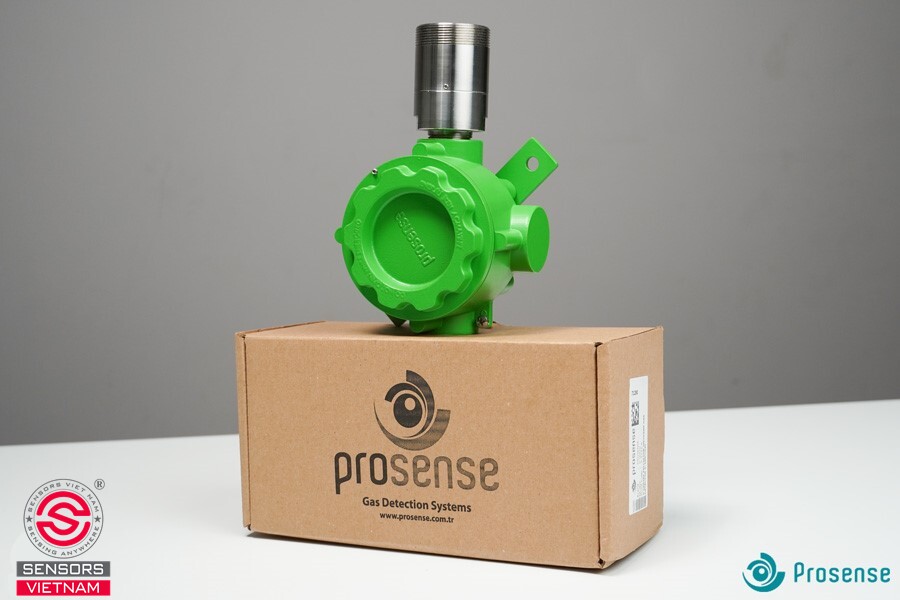
The industrial gas detection market is dominated by five primary sensing technologies, each suited for specific gases and environments.
-
Electrochemical Sensors
Electrochemical sensors operate based on oxidation-reduction reactions between the target gas and electrodes immersed in an electrolyte. When gas diffuses through a permeable membrane, a reaction at the working electrode generates a current proportional to gas concentration.
This technology is widely used for toxic gases such as CO, H2S, NO2, NH3, and O2. It offers high sensitivity, fast response time (typically <30 seconds), and cost-effectiveness. However, the sensing cell usually requires replacement every 2-3 years.
-
NDIR (Non-Dispersive Infrared) Sensors
NDIR sensors emit infrared light through a gas chamber. Each gas absorbs IR radiation at specific wavelengths, and the detector measures the attenuation to determine concentration.
This technology is ideal for CO2, CH4, and hydrocarbons, especially in oxygen-deficient environments. It offers long lifespan (5-10 years) and high stability, though at a higher initial cost.
-
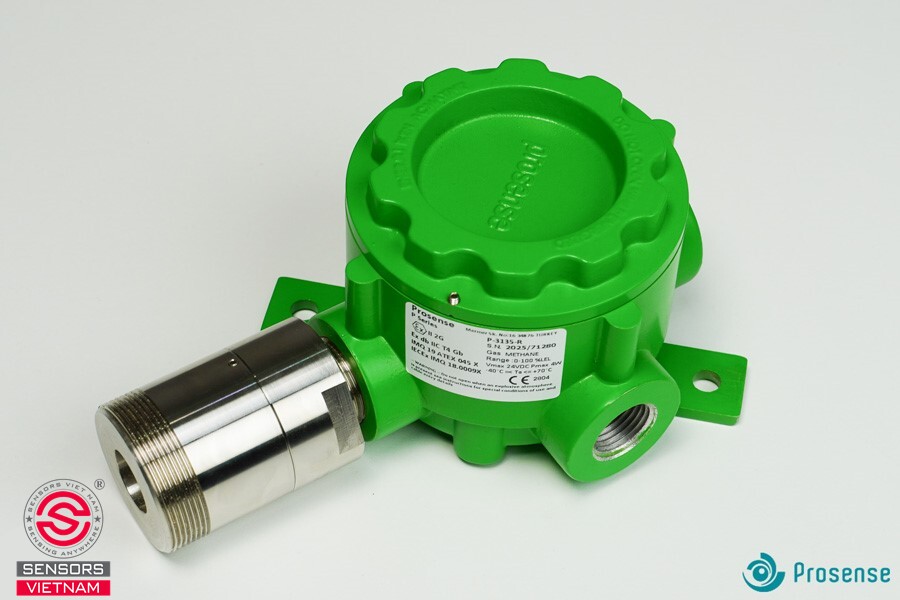
Catalytic Bead Sensors
Catalytic sensors utilize a pair of heated coils forming a Wheatstone bridge. The active bead is coated with a catalyst, while the reference bead is inert.
When combustible gas contacts the active bead, it oxidizes, increasing temperature and resistance. The resulting imbalance in the bridge corresponds to gas concentration, typically expressed as %LEL (Lower Explosive Limit).
This is the most common technology for combustible gas detection. It is cost-effective but requires the presence of oxygen (minimum ~10%) for accurate operation.
-
MOS (Metal oxide semiconductor) sensors
MOS sensors use a heated metal oxide layer (e.g., SnO2, ZnO) operating at 200-400°C. When reducing gases interact with the surface, they release electrons, causing a measurable drop in resistance.
Advantages include low cost, compact size, and low power consumption. However, they suffer from lower accuracy and are sensitive to temperature, humidity, and cross-interference. They are more suitable for residential applications than high-precision industrial use.
-
PID (Photoionization detector) sensors
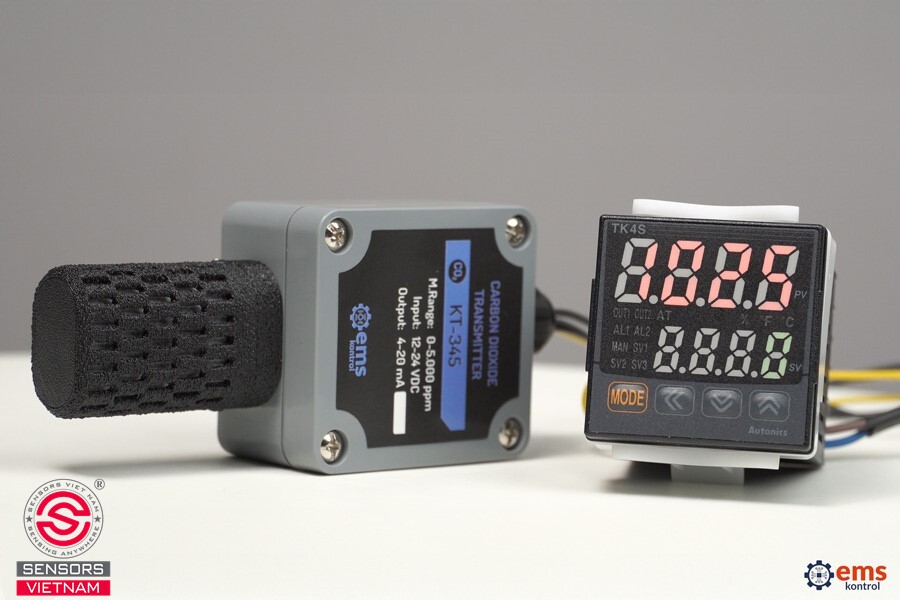
PID sensors use ultraviolet (UV) light to ionize volatile organic compounds (VOCs). The resulting ion current is amplified and converted into concentration levels (ppm or ppb).
They offer extremely high sensitivity, capable of detecting trace-level VOCs such as BTEX and solvent vapors. However, PID sensors cannot detect methane (CH4) due to its high ionization energy exceeding standard UV lamp capabilities.
PRACTICAL APPLICATIONS OF GAS SENSORS IN HVAC SYSTEMS
Gas sensors are essential components across modern HVAC and industrial systems:
- In industrial refrigeration, electrochemical and NDIR sensors monitor refrigerant leaks such as NH3 (R717), R22, and R410A. When concentrations exceed thresholds defined by EN 378 or ASHRAE 15, emergency ventilation and power shutdown are triggered.
- In building HVAC and BMS, NDIR CO2 sensors enable Demand Controlled Ventilation (DCV), optimizing fresh air supply based on occupancy. This reduces energy consumption by 20-40% while maintaining indoor air quality per ASHRAE 62.1.
- In oil & gas and chemical industries, catalytic and NDIR sensors continuously monitor combustible gases in %LEL. When thresholds are exceeded, Fire & Gas (F&G) systems activate alarms and Emergency Shutdown (ESD) procedures.
- In food processing and cold storage, NH3 and CO2 sensors ensure worker safety and optimal storage conditions, particularly in Controlled Atmosphere (CA) storage systems.
- In wastewater treatment, electrochemical sensors detect H2S, NH3, and CH4 in confined spaces. H2S is especially dangerous due to its toxicity and loss of odor at high concentrations.
- In underground parking garages, CO and NO2 sensors (per EN 50545) control ventilation systems, maintaining CO levels below 25 ppm (8-hour TWA).
 HOW TO SELECT THE RIGHT GAS SENSOR
Choosing the wrong sensing technology can lead to false alarms, missed leaks, or excessive maintenance costs.
1. Identify the target gas
Each technology is compatible with specific gases. For example: catalytic sensors cannot measure CO2, NDIR cannot detect O2, and PID cannot detect CH4.
2. Determine measurement range
Combustible gases are measured in %LEL, toxic gases in ppm, and CO2 in ppm or %vol. Avoid overly wide ranges, as they reduce resolution.
3. Evaluate installation environment
Hazardous areas (Zone 1, Zone 2) require ATEX or IECEx certification. Harsh environments demand high IP ratings (IP66+), and extreme temperatures require appropriate operating specs.
4. Ensure system compatibility
Match outputs and protocols with your system: 4-20 mA or Modbus RTU for PLCs, BACnet or 0-10 V for BMS, and MQTT or Modbus TCP for IoT platforms.
5. Consider total cost of ownership (TCO)
Electrochemical sensors have lower upfront costs but require periodic replacement. NDIR sensors have higher initial costs but lower long-term maintenance. Evaluate costs over a 5-year lifecycle. Gas sensors require correct technology selection, proper installation, regular calibration, and seamless system integration. With five core technologies including electrochemical, NDIR, catalytic, MOS, and PID, engineers can design comprehensive gas monitoring solutions tailored to any HVAC or industrial application.
Hot news


SENSORS VIETNAM CO., LTD
VAT CODE: 0313 355 473
Head Office: 03rd Floor, Indochina Tower, 04 Nguyen Dinh Chieu, Tan Dinh Ward, Ho Chi Minh City, Vietnam.
HCM Branch: 92/14/9A Vuon Lai Str., An Phu Dong Ward, Ho Chi Minh City, Vietnam.
Hanoi Branch: S106 Tower, Vinhomes Smart City, Tay Mo Ward, Hanoi City, Vietnam.

® Registered trademark – National Office of Intellectual Property Vietnam
OUR SERVICES
Specializing in the import and distribution of industrial sensors.
Sensors for HVAC/R systems and building automation applications.
Supplying gauges, transmitters, switches, controllers, PLCs, HMIs, and gas detectors.
Providing integrated consulting services for sensor and controller systems.


CONTACT US
Email: sales(at)sensors.vn
Hotline: +84 0911 660 660
Asia Commercial Bank Account (ACB):
VND: 357 246 888 | USD: 1357 246 888
Support Online ZALO Official Account
(From 8:00 am to 5:00 pm)





SENSORS VIETNAM CO., LTD
- Specialized in the import and distribution of sensors and controllers.
- Integrated data acquisition systems and industrial communication solutions.
- Design and installation of smart home systems and industrial equipment.
- Stack lights, signal beacons, LED warning horns, and RGB warning lights.